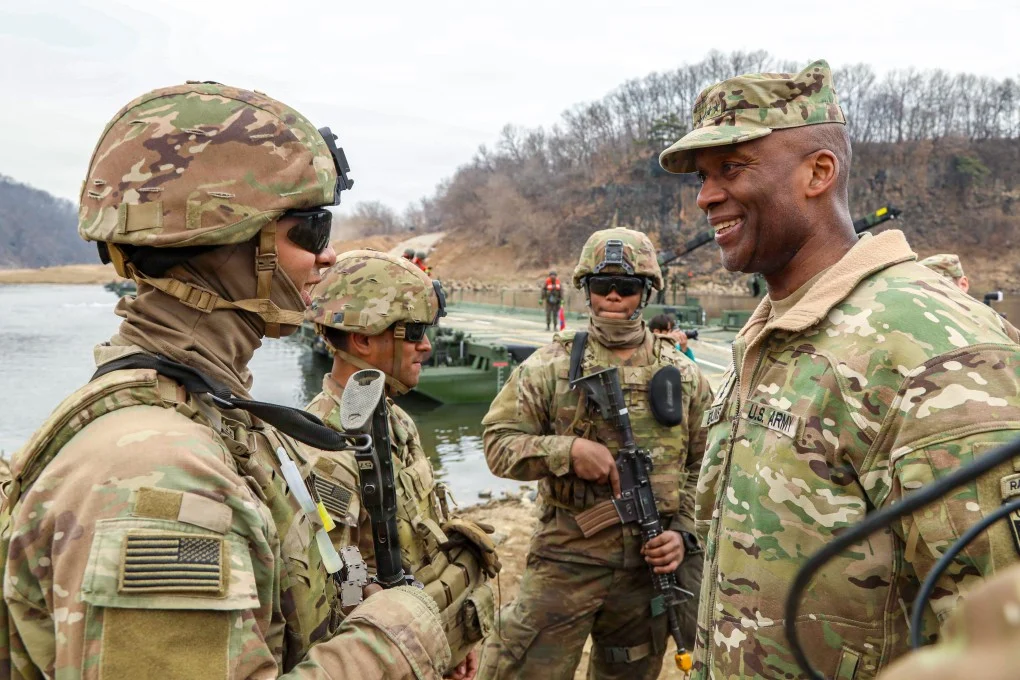
China has sharply criticized the remarks made by the US Forces Korea Commander, General Zafer Bronson, who referred to South Korea as a 'dagger' and Japan as a 'shield' in the face of China's increasing influence. These statements were made during a podcast interview hosted by the US Army War College on May 22, where Bronson indicated that these countries play a pivotal role in the United States' strategy to counter regional challenges.
China views these remarks as an escalation in tensions between Beijing and Washington, as the United States continues to expand its military presence in the Indo-Pacific region, which Beijing perceives as an effort to contain its growing influence. These comments come at a sensitive time, with rising concerns over escalating military tensions in the area.
Details of the Event
During the interview, General Bronson clarified that South Korea and Japan are considered essential parts of the United States' strategy to confront the challenges posed by China. He argued that the presence of US forces in these countries enhances their ability to respond to any potential threats. These remarks reflect current US trends in strengthening military cooperation with its allies in the region.
On the other hand, the Chinese Foreign Ministry responded to these comments, stating that describing South Korea as a 'dagger' is an unacceptable expression that reflects a mentality of hegemony. They emphasized that China will not stand idly by in the face of any attempts to contain its influence.
Background & Context
Historically, relations between the United States and China have been marked by increasing tensions, especially following the rise of China's military and economic influence in recent years. The United States seeks to strengthen its alliances with traditional allies in the region, such as South Korea and Japan, in an attempt to counter what it perceives as threats from Beijing.
In recent years, the United States has increased its military presence in the Indo-Pacific region, raising concerns in China. These steps are seen as part of a broader strategy aimed at enhancing regional security and addressing the challenges posed by China.
Impact & Consequences
These remarks by the US Forces Korea Commander serve as a wake-up call regarding the rising tensions in the region. Such statements may lead to increased military provocations between China and the United States, potentially threatening regional stability. Furthermore, these comments could impact the relations among the three countries: the United States, South Korea, and Japan.
Moreover, these statements may provoke reactions from China, complicating the security situation in the region. China might take military or diplomatic steps to counter these remarks, which could lead to further escalation of tensions.
Regional Significance
In light of the escalating tensions between the United States and China, Arab countries should closely monitor the situation. These tensions may affect Arab interests, particularly in trade and security. Any escalation in the region could impact global market stability, which may reflect on the Arab economy.
In conclusion, these remarks highlight the significant challenges facing international relations today. It is crucial for Arab countries to stay informed about developments in this region, as any changes could directly affect their interests.