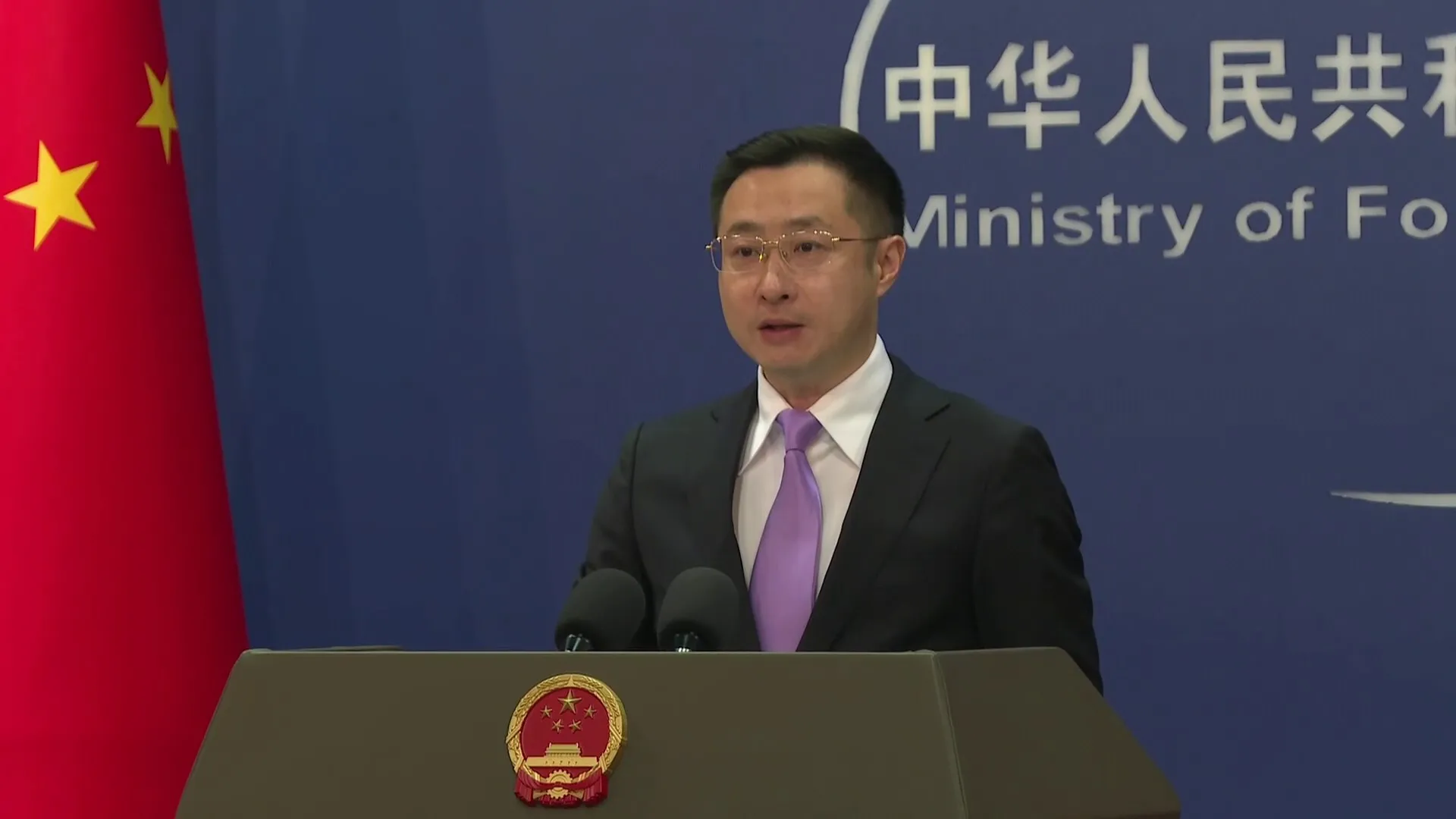
China has strongly criticized the economic sanctions imposed by the United States on several of its companies, with the spokesperson for the Chinese Foreign Ministry, Gou Jiakong, calling on Washington to change its behavior and investigate the allegations directed at Chinese companies.
In a press conference held on Monday, Gou confirmed that China rejects the blacklisting of certain Chinese companies by the US under the pretext of cooperating with Iran. He emphasized that China will continue to firmly protect its interests, rejecting what he described as "political maneuvers" by the United States.
Details of the Event
The administration of former US President Donald Trump announced last Friday the imposition of sanctions on the Hengli Petrochemical refinery, accusing it of purchasing Iranian oil worth billions of dollars. The US Treasury Department described the refinery as one of Iran's largest clients in purchasing crude oil and petroleum products.
For its part, Hengli Petrochemical denied these allegations, asserting that it has not conducted any business transactions with Iran. In a disclosure to the stock market, the company confirmed that it has never engaged in any trade with Iran, and that all its oil suppliers have assured that their crude oil sources do not fall under the scope of US sanctions.
Background & Context
These developments come at a time when tensions between the United States and China are escalating, as Washington seeks to intensify its economic pressures on Beijing. The Office of Foreign Assets Control of the US Treasury indicated the imposition of sanctions on approximately 40 shipping companies operating within what is known as the Iranian shadow fleet, reflecting Washington's strategy to limit Iran's ability to export oil.
Historically, US-China relations have seen increasing tensions, particularly in the fields of trade and technology. The sanctions are part of the US policy to pressure both China and Iran, further complicating international relations in the region.
Impact & Consequences
The Chinese statements emphasize that Beijing will not relent in the face of US pressures, which could lead to an escalation of tensions between the two countries. Additionally, these sanctions may impact global companies that deal with China, increasing uncertainty in global markets.
Moreover, the continuation of these policies could provoke reactions from other countries, especially those seeking to maintain trade relations with China, such as Italy, which was mentioned in the statements by the Chinese spokesperson.
Regional Significance
The China-Iran relationship is pivotal in the context of the Middle East, as China seeks to enhance its presence in the region through significant investments. US sanctions may lead to increased cooperation between China and Iran, reflecting on the economic and political situations in the region.
In conclusion, international relations remain intertwined and complex, requiring countries to adopt cautious stances amid escalating tensions between major powers.