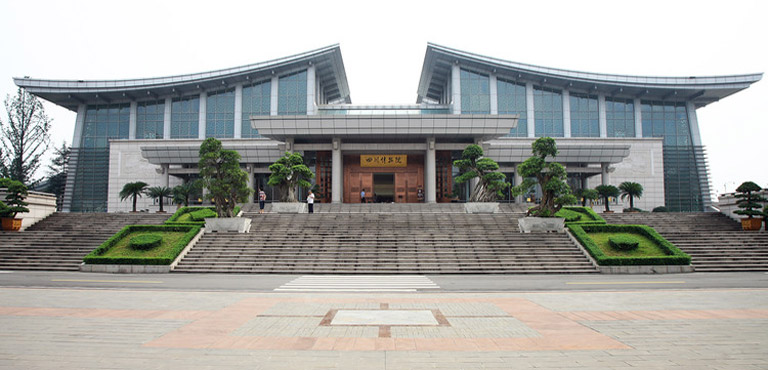
In a strategic move reflecting China's intent to enhance its nuclear power, a former nuclear base in the city of Zigong, Sichuan province, symbolizes the history of the Chinese nuclear program. This base, now transformed into a museum, narrates the origins of the nuclear program in China and highlights the transformations the country has undergone in this field.
Sichuan province currently hosts key sites related to the Chinese nuclear program, which are witnessing increased activity. This development is part of the Chinese government's efforts to strengthen its nuclear deterrence capabilities, as Beijing seeks to catch up with major nuclear powers like the United States and Russia in terms of the number of nuclear warheads.
Event Details
The Zigong base is considered one of the historical sites reflecting the evolution of the Chinese nuclear program, having been previously used for military purposes. With its transformation into a museum, the base has become an attraction for visitors eager to understand China's history in nuclear energy. This transformation demonstrates how history can be utilized as a tool to enhance national pride.
In recent years, China has increased its investments in developing its nuclear capabilities, announcing new projects aimed at modernizing nuclear weapons and enhancing the associated infrastructure. This trend comes at a time when international relations are experiencing heightened tensions, underscoring the importance of nuclear power as a means of deterrence.
Background & Context
The history of the Chinese nuclear program dates back to the 1950s when China began developing its nuclear capabilities as part of its strategy to enhance its status as a superpower. Over the years, China has faced numerous challenges, including international sanctions and political pressures, yet it has managed to achieve significant progress in this field.
Recently, the Chinese nuclear program has undergone significant transformations, with plans announced to expand the nuclear arsenal and modernize weapons. This trend reflects China's desire to bolster its deterrence capabilities in the face of regional and international challenges.
Impact & Consequences
These developments in the Chinese nuclear program signify a shift in the global balance of power, as Beijing seeks to strengthen its position against other nuclear powers. This trend could lead to a new arms race in the region, intensifying tensions among major nations.
Moreover, the enhancement of China's nuclear capabilities may impact regional security, as neighboring countries could feel alarmed by these moves, prompting them to bolster their defensive capabilities. This situation could escalate tensions in the region and increase the likelihood of future conflicts.
Regional Significance
Considering the geopolitical landscape in the Arab region, the enhancement of Chinese nuclear capabilities could have multiple implications. Some Arab countries may seek to strengthen their cooperation with China in energy and technology sectors, potentially opening new avenues for economic collaboration.
Furthermore, the tensions arising from the arms race in the region could affect Arab security, necessitating proactive measures from Arab states to ensure their stability and security.
In conclusion, the Chinese nuclear program represents a strategic shift that could influence international and regional balances, prompting Arab nations to closely monitor these developments.