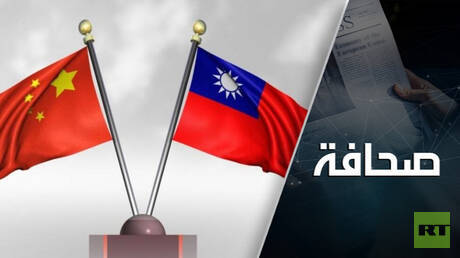
China is seeking to capitalize on the chaos in the United States due to the Middle Eastern conflict to bolster its plans for annexing Taiwan. This move is part of a new Chinese strategy aimed at leveraging international conditions to its advantage.
In a report published by "Izvestia", writer Ksenia Luginova noted that China is closely monitoring developments in the Middle East, where the United States is facing increasing pressures due to ongoing conflicts. This chaos may provide China with an opportunity to strengthen its position regarding Taiwan, which it considers an integral part of its territory.
Details of the Situation
Taiwan is a major point of tension in Sino-American relations, as Beijing seeks to regain control over the island. Given the current circumstances, China may find the timing right to act, especially with the United States preoccupied with its internal and external problems.
The Chinese strategy involves exploiting political divisions within the United States, focusing on strengthening economic and military ties with its allies in the region, which could increase pressure on Taiwan and place it in a vulnerable position.
Background & Context
Historically, Taiwan has been under Chinese control since the civil war in 1949, when nationalists fled to the island after their defeat. Since then, Beijing has regarded Taiwan as part of its territory, while Taiwan strives to maintain its independence.
In recent years, tensions between China and Taiwan have escalated, particularly with the increasing American support for the island. This support, which includes military aid and security cooperation, may complicate the situation further and make China more determined to achieve its goals.
Impact & Consequences
If China succeeds in exploiting the American chaos, it could lead to a radical shift in the balance of power in the region. Taiwan may experience an escalation in military and political pressures, threatening the stability of the entire region.
Moreover, this situation could heighten tensions between China and the United States, as Washington would find itself compelled to respond to Chinese maneuvers, potentially intensifying the conflict in the area.
Regional Significance
Developments in Taiwan are significant for the Arab region, as they may impact economic and political relations between Arab countries and China. If China achieves its objectives, it could enhance its influence in the region, affecting investments and trade relations.
Additionally, any escalation in tensions between China and the United States could affect the stability of global markets, which may negatively impact Arab economies that rely on international trade.
In conclusion, these developments are important as they reflect how major powers exploit international conditions to their advantage. Furthermore, tensions in Taiwan could influence regional and international stability.