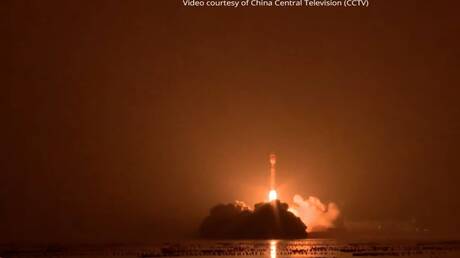
China has announced the successful launch of a new group of CentiSpace-2 satellites aimed at enhancing its capabilities in navigation and positioning. The launch was part of the Chinese government's efforts to expand its space technology infrastructure, reflecting the state’s commitment to increasing its presence in outer space.
These satellites are part of the Chinese navigation system known as BeiDou, which aims to provide users with accurate and reliable positioning services. The satellites were launched from the launch center in Shanghai, a step that bolsters China’s competitiveness in the space sector.
Details of the Launch Event
When discussing the launch details, official reports confirmed that the launch was executed using a Long March 4B rocket, showcasing the technological advancements achieved by China in space. The CentiSpace-2 satellites will contribute to improving the accuracy and reliability of the services provided by China to its users.
This launch comes after several previous successes China has achieved in the space domain, as it sought to enhance its global competitiveness through substantial investments in space research and navigation technology. This new group of satellites will provide specific services including applications in transport, agriculture, and environmental monitoring.
Background & Context
China has had an ambitious space program for several years, with the establishment of the Chinese National Space Administration in 1993. Since then, the country has witnessed rapid developments in launch operations and satellite construction. The BeiDou system is a part of China's efforts to enhance its strategic capabilities in various fields, including national security and remote sensing.
Moreover, this project is part of the Belt and Road Initiative, which aims to enhance trade and economic links between China and countries worldwide. This initiative heavily relies on advanced information and communication technology, making the development of a satellite network essential.
Impact & Consequences
This advancement in China's space program represents a push towards greater independence in fields such as biotechnology and navigation. Improving positioning service capabilities can lead to significant impacts on sectors like transport, logistics, and agriculture, contributing to enhanced local economies.
Additionally, these new satellites may affect international relations, especially with countries that have their own navigation systems, such as the United States and Russia. As systems evolve, competition among major powers in the space sector intensifies, raising the level of challenges in this field.
Regional Significance
Despite the geographical distance from the Arab region, the impact of this launch may extend to Arab countries by enhancing their reliance on modern navigation technologies. Arab nations that depend on maritime and air transport can benefit from this advanced technology, thus improving their logistics services and increasing business efficiency.
Furthermore, technological cooperation between China and Arab countries in space technology can open new avenues for development and innovation. These partnerships with space colleges in Arab nations will help expand competitiveness in research and development.
In conclusion, the launch of the CentiSpace-2 satellites marks an important step toward developing China's space sector and reflects its seriousness in global competition. China will have greater opportunities to expand its influence in technology and science, potentially leading to significant changes that might reshape the geopolitical landscape in the coming years.