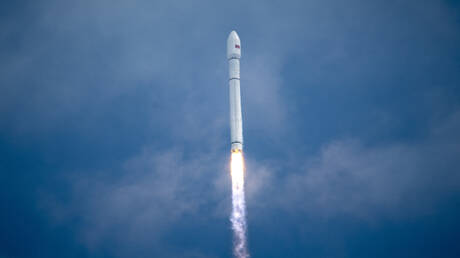
On Friday, China launched the experimental satellite Shiyan-33, equipped with advanced technology to study the space environment. This initiative is part of Beijing's efforts to enhance its capabilities in space exploration, as this satellite represents a significant component of the Chinese space program, which has seen remarkable development in recent years.
The Shiyan-33 satellite aims to collect precise data about environmental conditions in space, including radiation and atmospheric pressures, which will assist scientists and researchers in gaining a better understanding of the challenges faced in space activities. It will also contribute to the development of new technologies to improve the safety of space missions.
Event Details
The satellite was launched from the Jiuquan Satellite Launch Center, one of China's primary launch facilities. The Shiyan-33 is equipped with the latest technologies that allow it to efficiently collect and analyze data. This satellite is part of a series of satellites aimed at enhancing scientific research in space.
This step follows a series of successes achieved by China in the field of space, including sending astronauts to the Chinese space station and developing unmanned spacecraft. The launch of Shiyan-33 demonstrates China's commitment to expanding its space exploration efforts and enhancing its technological capabilities.
Background & Context
In recent years, China has made significant advancements in space, becoming one of the leading countries in this field. Since launching its first satellite in 1970, China has invested heavily in developing its space programs. It has launched numerous satellites for various purposes, including communications and environmental monitoring.
China is also seeking to enhance international cooperation in space, having participated in several joint projects with other countries. The launch of Shiyan-33 is part of these efforts, aimed at enhancing global understanding of the space environment and the associated challenges.
Impact & Consequences
The launch of Shiyan-33 could have far-reaching effects on scientific research in space. By collecting data on the space environment, the satellite can help improve our understanding of the challenges faced during space missions, potentially leading to the development of new technologies to enhance the safety and security of these missions.
Furthermore, this satellite may contribute to strengthening international cooperation in space, as the data it collects can be utilized in joint research efforts with other countries. Such collaboration is essential to address global challenges, such as climate change and environmental threats.
Regional Significance
The launch of the Shiyan-33 satellite presents an opportunity for Arab countries to enhance their cooperation in the field of space. Arab nations can benefit from China's experiences in this area, as many of these countries seek to develop their own space programs. Collaborating with China could lead to knowledge and technology exchange, thereby boosting the capabilities of Arab nations in space.
Additionally, cooperation in space can open new horizons for Arab countries in scientific research and technology, contributing to sustainable development. This collaboration is part of a future vision that Arab nations aspire to achieve amid global challenges.