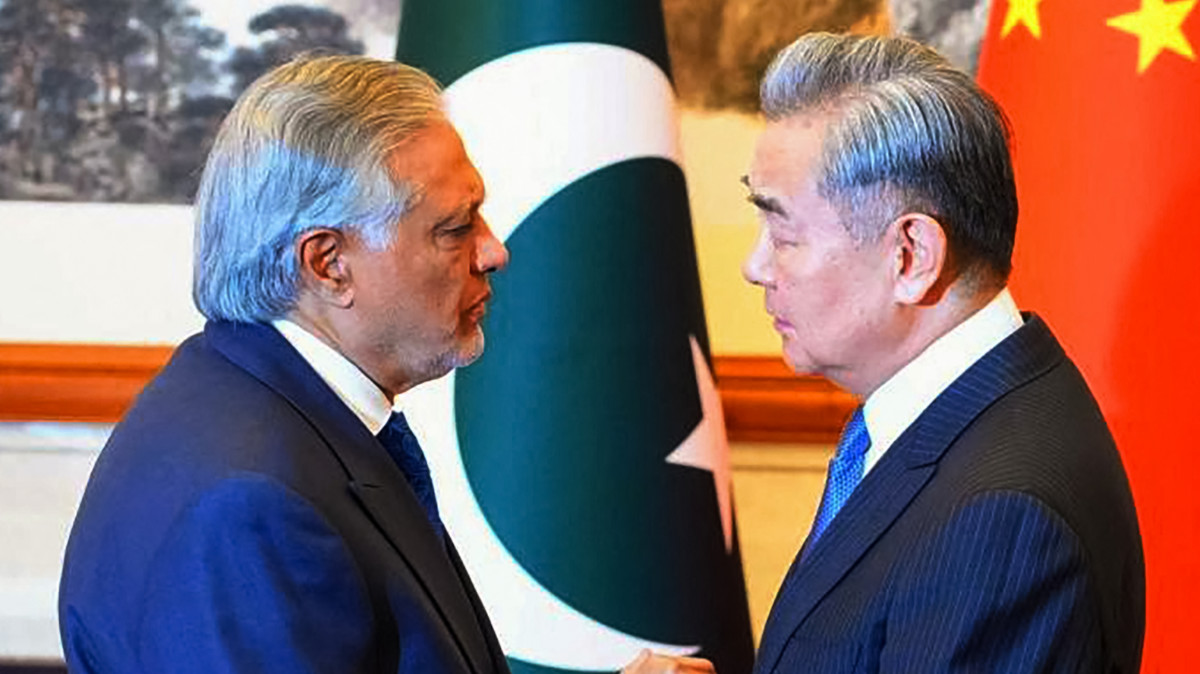
In a new move aimed at ending the ongoing conflict in the Middle East, both China and Pakistan have announced a five-point plan calling for an immediate ceasefire in the U.S.-Israeli war on Iran. This announcement came after a meeting between Pakistani Foreign Minister Isaac Dar and his Chinese counterpart Wang Yi in the Chinese capital, Beijing.
The plan includes a call to restore normal shipping for vessels through the Strait of Hormuz, which is seen as a rejection of the toll system imposed by Iran on passing ships. This initiative is the first of its kind proposed by a major global power like China, as it seeks to chart a course for ending the conflict that began on February 28 of this year.
Details of the Meeting
During the meeting, the two ministers agreed to enhance strategic communication and coordination regarding the situation in Iran, emphasizing the importance of making new efforts to advocate for peace. China, which is the world's second-largest economy, is the largest buyer of oil from both Iran and Saudi Arabia, and has close military and diplomatic ties with Pakistan, which plays a mediating role between Washington and Tehran.
Previous reports have revealed that China has provided military support to Iran, as the latter has bolstered its defense arsenal following the U.S.-Israeli attack in June 2025, by importing Chinese batteries in exchange for oil. Iran has also acquired small offensive weapons and drones from China, according to regional sources.
Context and Background
These developments come at a time when the Middle East is experiencing heightened tensions, with Iran facing several attacks from Israel, which has targeted Iranian gas fields and energy facilities. In response, Iran has launched thousands of missiles and drones at civilian and military facilities in Israel and Gulf Arab states.
It is noteworthy that the war over energy production has led to a significant rise in oil and gas prices, while Iran's control over the Strait of Hormuz has become a focal point in the conflict. The Iranian parliament has approved a plan to collect tolls on passing ships, which contradicts the United Nations Convention on the Law of the Sea.
Implications and Effects
This plan carries significant implications for regional and international security, as it may help alleviate tensions between Iran and the United States and its allies. Furthermore, the call by China and Pakistan to cease attacks on civilians and non-military facilities reflects a desire for long-term stability in the region.
If this initiative succeeds, it could open the door to comprehensive peace negotiations, potentially reshaping relationships between major powers in the region. Additionally, the emphasis on the importance of normal shipping through the Strait of Hormuz reflects a desire to maintain navigational security in one of the world's most crucial maritime corridors.
Impact on the Arab Region
For Arab countries, these developments could signify a new beginning in relations with Iran, especially in light of the ongoing tensions between some Gulf states and Tehran. Moreover, regional stability could enhance economic and trade cooperation between Arab nations and Iran, benefiting all parties involved.
In conclusion, this initiative remains under observation, as it is expected to provoke varied reactions from different stakeholders, but it represents a positive step towards achieving peace and stability in a region plagued by ongoing conflicts.