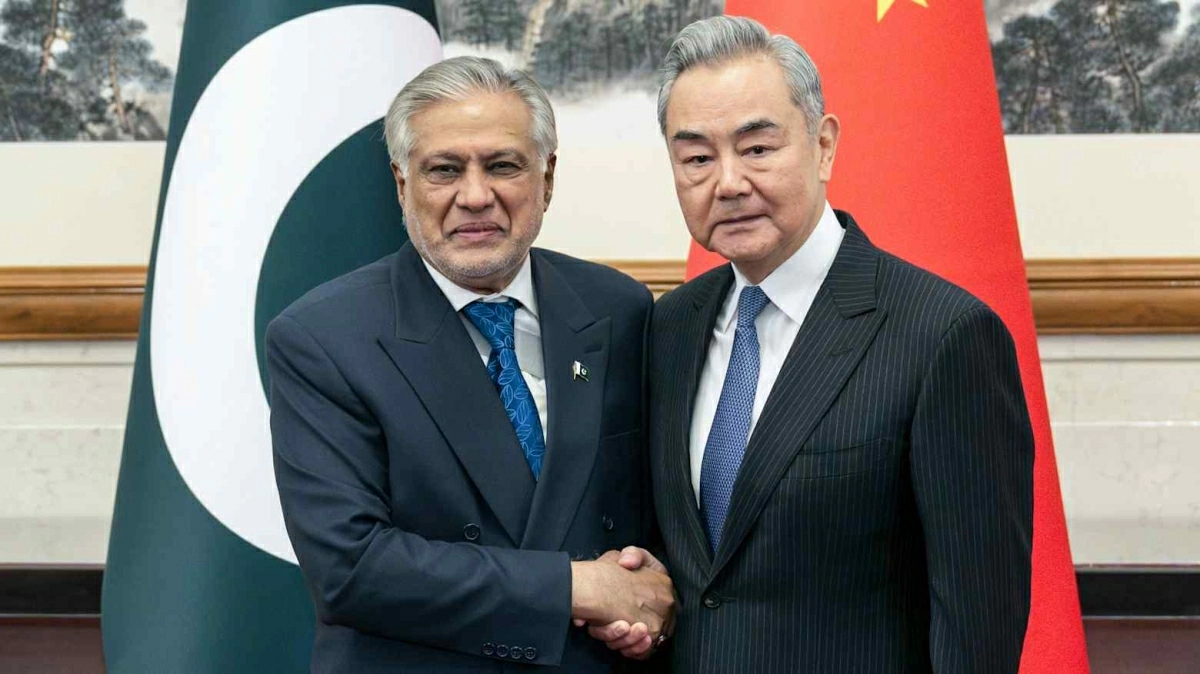
In a new step aimed at alleviating the escalating tensions in the Middle East, China announced on Wednesday its collaboration with Pakistan to create a dialogue window between the United States and Iran. This announcement comes as the armed conflict in the region continues for the fifth consecutive week, raising international concerns about the ramifications of this conflict.
The spokesperson for the Chinese Foreign Ministry, Mao Ning, stated that the situation in the Middle East has become a focal point for all parties, noting that the ongoing tensions do not align with the interests of any side. The five-point peace plan was unveiled during a meeting between Chinese Foreign Minister Wang Yi and his Pakistani counterpart Ishaq Dar.
Details of the Initiative
The proposed plan includes an immediate cessation of hostilities, the commencement of peace talks as soon as possible, ensuring the security of non-military targets, protecting shipping routes, and emphasizing the importance of the United Nations Charter. The plan also calls for the safe passage of civilian and commercial vessels and the restoration of normal traffic through the Strait of Hormuz as quickly as possible.
In this context, Mao emphasized that the mediation efforts by China, Pakistan, and other parties should be welcomed by all, stressing China's readiness to work with Pakistan to avoid any disruptions, halt fighting, and open a window for peace talks. She pointed out that the top priority is to initiate peace discussions as soon as possible.
Background & Context
Pakistan, which shares a border of over 900 kilometers with Iran, is a key player in mediation efforts, having a reputation as a neutral party and long-standing relations with Iran. Dar's visit to Beijing followed Pakistan hosting talks with Turkey, Egypt, and Saudi Arabia, reflecting its active role in seeking a peaceful resolution to the conflict.
It is noteworthy that tensions in the region have escalated since Israel and the United States launched a joint attack against Iran on February 28, resulting in the deaths of over 1,340 individuals, including former Supreme Leader Ayatollah Ali Khamenei. Iran responded with drone and missile attacks targeting Israel, Jordan, Iraq, and Gulf states hosting U.S. military forces, leading to casualties and damage to infrastructure.
Impact & Consequences
This initiative is considered an important step towards de-escalating tensions in the Middle East, as dialogue and diplomacy are the only viable means to resolve conflicts. China and Pakistan have underscored the necessity for the involved parties to support the commencement of negotiations and for everyone to commit to resolving disputes peacefully.
Moreover, this initiative could contribute to safeguarding the sovereignty, independence, and security of Iran and Gulf states, calling for the protection of civilians, civilian infrastructure, and peaceful nuclear facilities. The success of these efforts could pave the way for greater stability in the region and reduce risks threatening regional and international security.
Regional Significance
Developments in the Middle East directly affect Arab countries, as any escalation in the conflict between the United States and Iran could negatively impact security and stability in the region. The success of the Chinese-Pakistani mediation could help ease tensions, benefiting Arab nations striving for peace and stability.
In conclusion, this initiative represents a new opportunity for peace in a region suffering from ongoing conflicts, and the international community hopes that these efforts will yield positive results that contribute to ending the conflict and achieving stability.