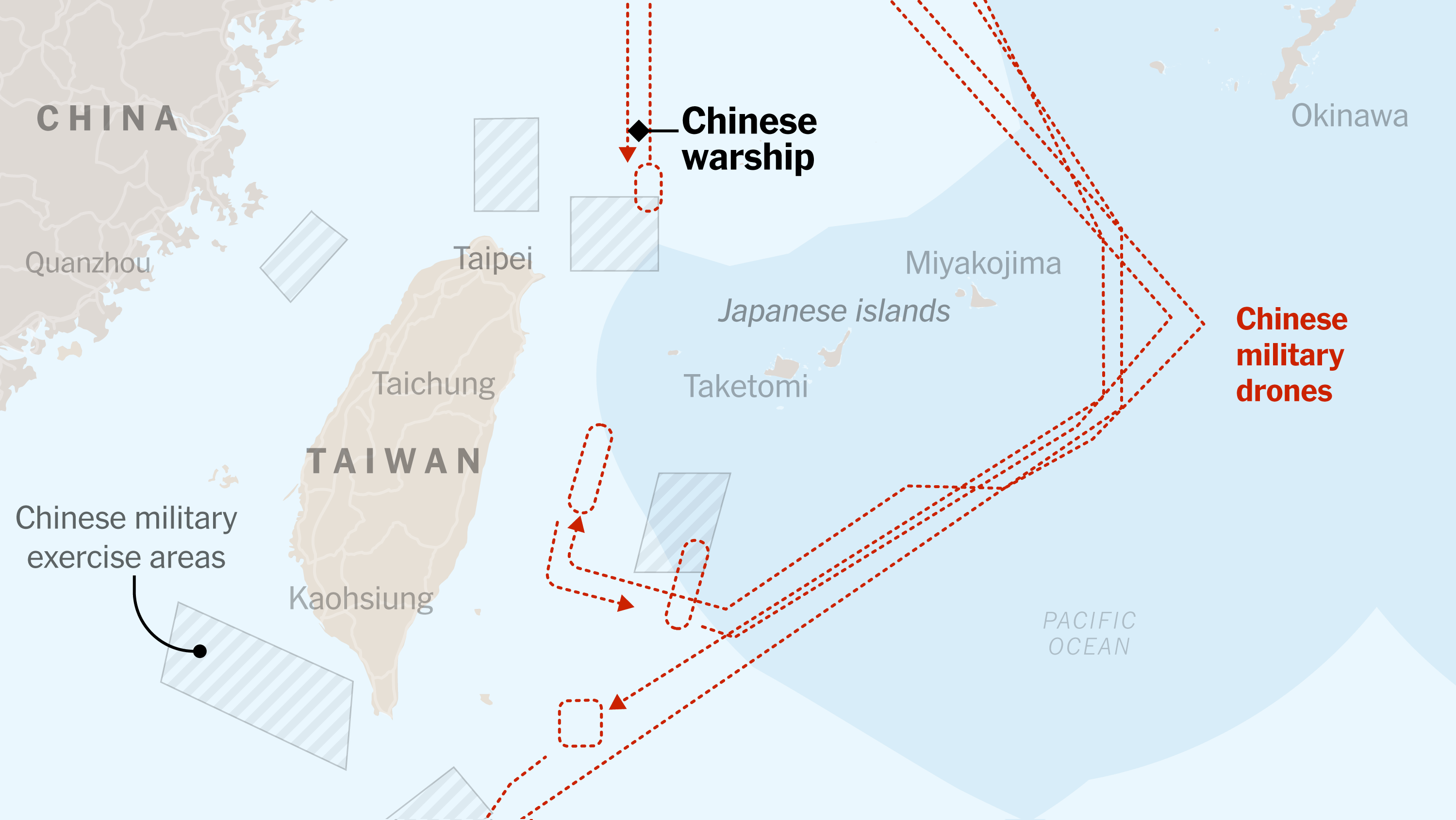
China is attempting to replicate the strategy employed by Iran in the Strait of Hormuz, in the context of escalating tensions in the Taiwan Strait. This move could result in global economic impacts that may be more severe than those experienced during previous crises. These developments come at a sensitive time, as concerns grow over the escalation of conflicts in the region.
The Taiwan Strait is a vital strategic point, through which a significant portion of global trade passes. If China were to close this strait, it would lead to major disruptions in global supply chains, affecting many economies around the world.
Details of the Situation
Tensions between China and Taiwan are escalating, with Beijing considering Taiwan a part of its territory. In recent years, China has increased its military activities in the region, raising alarms for the Taiwanese government and Western nations. If China follows the same strategy that Iran used in the Strait of Hormuz, global markets could face a new economic crisis.
Historically, the Strait of Hormuz has seen repeated closures by Iran, significantly impacting oil prices and global energy markets. Should a similar situation occur in the Taiwan Strait, it could lead to rising prices for essential commodities and increased inflation in many countries.
Background & Context
The roots of the tensions in the Taiwan Strait date back decades, with China asserting that Taiwan is part of its territory, while Taiwan strives to maintain its independence. In recent years, China has intensified its pressure on Taiwan, leading to heightened military and political tensions in the region.
Historically, there have been numerous attempts by China to reunify Taiwan by force, raising fears of military conflict. In this context, the Iranian strategy in the Strait of Hormuz serves as a model for Beijing, which could use it as a means to exert pressure on Taiwan and its supporting nations.
Impact & Consequences
If China were to close the Taiwan Strait, it would have serious economic repercussions on a global scale. Supply chains would be significantly affected, leading to rising prices for essential goods and increased shipping costs. Financial markets would also experience substantial volatility, potentially resulting in a loss of confidence in the global economy.
Moreover, this move could escalate military tensions in the region, increasing the likelihood of armed conflict. Such a scenario could destabilize the region and impact global security overall.
Regional Significance
The Arab region is part of the global economic network, and thus any disruption in the Taiwan Strait will directly affect Arab economies. Rising oil and commodity prices could increase economic pressures on Arab countries, particularly those reliant on imports.
Furthermore, trade relations between Arab nations and major powers may be affected, potentially leading to a reassessment of economic and political strategies in the region. It is crucial for Arab nations to stay informed about developments in the Taiwan Strait, as any escalation could impact their economic interests.
In conclusion, it appears that China is seeking to replicate Iran's strategy in the Strait of Hormuz, which could lead to serious global economic repercussions. The international community must be prepared to face these potential challenges.