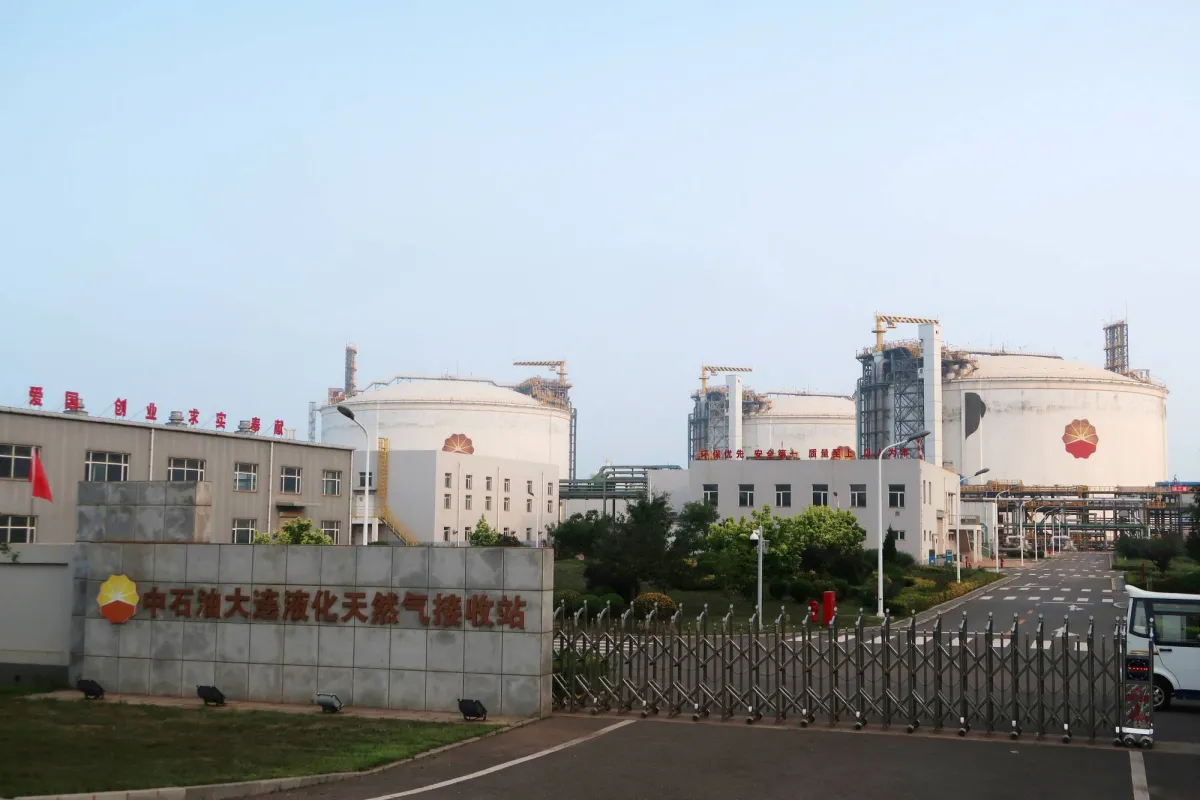
Chinese companies have announced the reselling of record amounts of liquefied natural gas (LNG), benefiting from rising spot market prices. China has enough domestic and pipeline gas to meet its declining local demand, highlighting its contrast with other Asian buyers who are seeking to compensate for supply disruptions caused by the Iranian war.
China is the world's largest importer of LNG and resold between 8 to 10 shipments in March, marking its highest monthly total ever, according to analytics firms such as ICIS, Kepler, and Fortexa. So far this year, China has resold 1.31 million metric tons of LNG, equivalent to 19 shipments, a record figure, with 10 shipments delivered to South Korea, five shipments to Thailand, and the remainder to Japan, India, and the Philippines.
Details of the Event
In comparison to previous years, China resold 0.82 million tons in 2025 and 0.98 million tons in 2023, the second-highest annual total recorded. China has been able to resell larger quantities due to stable LNG needs, as weak economic activity has led to a decline in industrial demand, while local gas production and Russian pipeline supplies are increasing.
This LNG reselling contrasts with China's decision last month to ban the export of refined fuels to preserve supplies for domestic consumption amid crude oil supply constraints resulting from the war. Wang Yuanda, an analyst at ICIS, confirmed that weak domestic demand made it logical for buyers to resell LNG shipments abroad.
Background & Context
Asian LNG prices have surged by 85 percent since the United States and Israel launched strikes on Iran on February 28, disrupting energy shipments through the Strait of Hormuz, which accounts for about one-fifth of global LNG flows. Analysts from Fortexa noted that the Binhai terminal operated by Knock in Jiangsu province accounted for nearly half of China's reselling activities in March.
China is the largest market for Qatari LNG, having accounted for nearly a quarter of shipments from the Gulf producer last year. However, Chinese gas exports fell to their lowest levels in March following Iran's bombing of Qatari gas facilities and the near-total closure of the Strait of Hormuz. Data from Kepler showed that China's gas imports in March were 3.68 million tons, the lowest monthly level since April 2018.
Impact & Consequences
The decline in imports reflects weak demand for industrial gas amid rising prices resulting from disruptions in the Strait of Hormuz. Meanwhile, expectations regarding pipeline gas imports and local gas production remain stable. Chinese buyers can also rely on declining LNG inventories to meet part of the local demand. ICIS forecasts indicate that April imports will remain low at 3.7 million tons.
Under these circumstances, Wang confirmed that China will not enter the market to compete with other countries for shipments. This situation reflects the challenges facing the global market, where demand and supply are mutually affected.
Regional Significance
These developments are particularly significant for the Arab region, where Gulf countries play a pivotal role in the LNG market. Rising gas prices may open new opportunities for gas-producing countries in the region, but at the same time, they may lead to challenges in meeting local and international demand.
In conclusion, the conditions in the global LNG market remain volatile, requiring both producing and consuming countries to adopt flexible strategies to adapt to these changes.