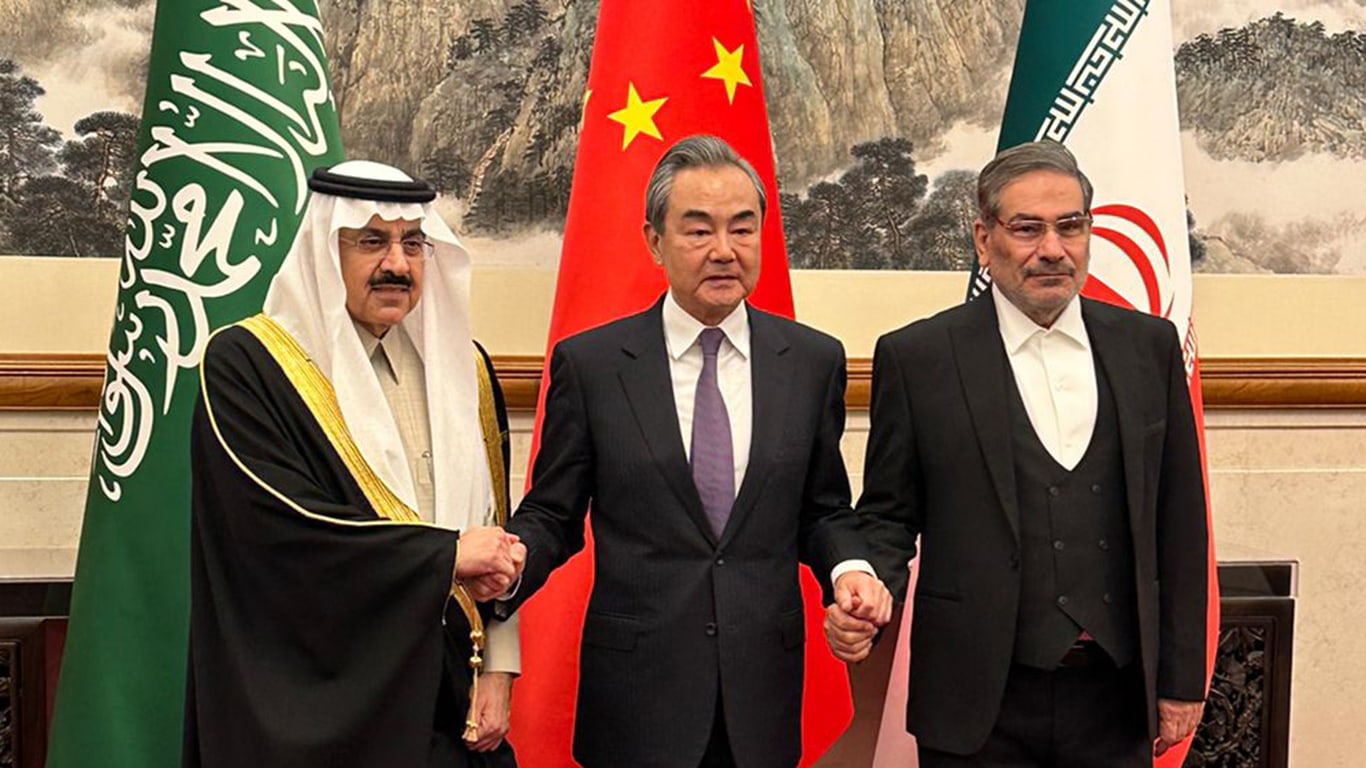
Today, China urged all parties involved in the Middle Eastern conflict to cease military operations and resume negotiations in order to avoid escalating tensions, warning of a potential slide into total chaos in the region. This statement came from Chinese Foreign Ministry spokesman Lin Jian, who noted that the increase in hostilities threatens security and stability in the area.
China stated that the war should never have started in the first place, and all concerned parties must exercise wisdom to ensure the safety of vital maritime navigation routes, including the Strait of Hormuz.
Details of the Situation
As tensions are concentrated in the Gulf region, the Russian Foreign Ministry has reiterated its rejection of the closure of the Strait of Hormuz, stressing the need to address this issue within the broader context of regional crises. Moscow warned the United States that military movements, including threats against the Bushher nuclear power plant, could lead to serious repercussions.
Russian officials expressed their concern over U.S. and Israeli military actions against Iran, considering that any ground operations conducted by the American military are unrealistic and likely to exacerbate the existing conflict in the region.
Context and Background
This development comes in light of escalating tensions in the Gulf region connected to Iranian nuclear issues. Earlier, former Russian diplomat Vyacheslav Matuzov warned that ongoing attacks on Iran's nuclear facilities, such as the Natanz uranium enrichment facility, raise significant concerns not only in Russia but also among the general population throughout the region.
The Gulf region is close to Russia's southern borders, making its security and balance a strategic priority for Moscow. The turbulent history of conflict in the area, including wars and military confrontations, necessitates that major powers adopt wise policies to promote stability.
Consequences and Effects
The statements from China and Russia are seen as a crucial step toward de-escalating tensions in the Middle East. With global reliance on energy from the region continuing, any military escalation could significantly impact global markets.
Moreover, targeting nuclear facilities poses serious environmental risks, as Russia has pointed out based on its past experiences with such dangers, whether in Ukraine or in other contexts that have left a scar on global peace.
Impact on the Arab Region
These developments indicate that major powers recognize the importance of stability in the Middle East for regional and international security. Ongoing tensions threaten to have catastrophic repercussions for Arab countries, especially those located near conflict hotspots.
In conclusion, the calls from China and Russia highlight the urgent need for an international conference that brings together the conflicting parties and urges them back to the negotiating table, as dialogue is the most effective path to resolving ongoing disputes in the region.