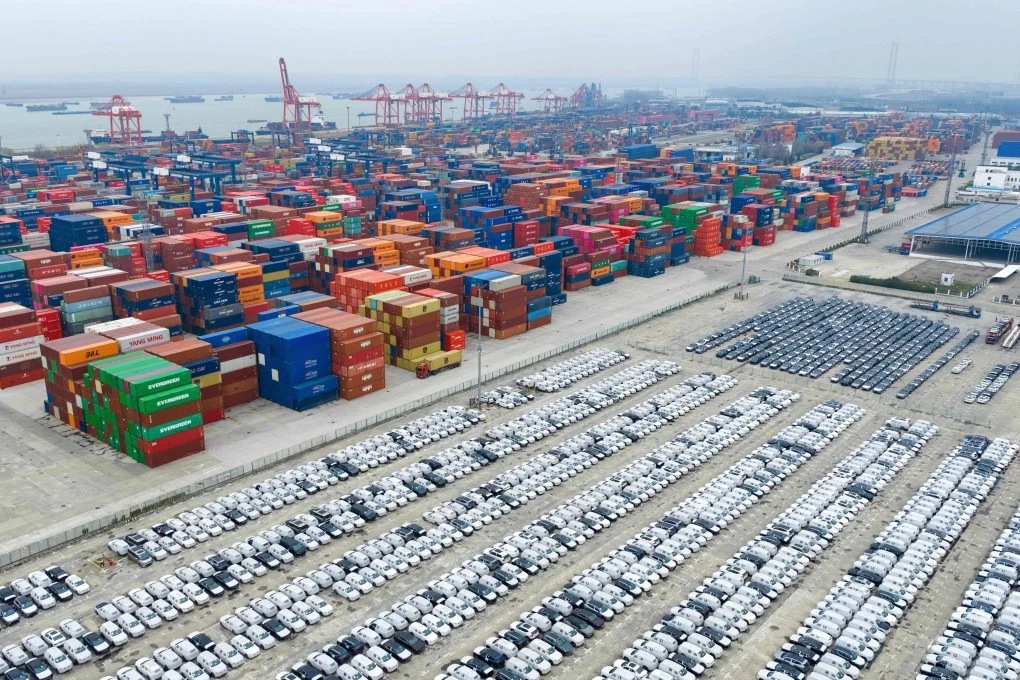
The official magazine of the Chinese Communist Party emphasized the importance of rebalancing trade in the country, citing increasing protectionism and geopolitical tensions that are putting pressure on export-driven growth. These shifts come at a time when China faces deep challenges in its foreign trade sector.
The magazine clarified that the fundamental conditions, both internal and external, shaping China's trade balance are undergoing profound changes, while the inherent weaknesses in the foreign trade sector remain evident. These statements come at a time of growing concern about global economic growth, reflecting China's urgent need to adopt a more sustainable growth model.
Details of the Event
Amid rising trade tensions between China and the United States, along with increasing protectionism in many countries, China finds itself compelled to rethink its trade strategies. The magazine confirmed that export-driven growth is no longer a sustainable model, necessitating a shift towards a model that relies more on domestic consumption and investment in innovation.
This new direction also reflects China's response to increasing global challenges, as it seeks to enhance its competitiveness in global markets. Additionally, shifts in global trade policies, such as the United Kingdom's exit from the European Union, complicate the trade landscape, prompting China to take proactive steps to ensure the stability of its economy.
Background & Context
Historically, China has relied on an export-driven growth model since its economic opening in the late 1970s. This growth has contributed to transforming China into one of the largest economies in the world. However, this growth has been accompanied by several challenges, including excessive reliance on foreign markets and fluctuations in global demand.
In recent years, the Chinese government has begun to recognize the need to diversify growth sources, launching initiatives such as "Made in China 2025," aimed at enhancing local innovation and technology. These initiatives reflect China's desire to reduce reliance on exports and boost domestic consumption.
Impact & Consequences
These shifts in Chinese trade policy have significant implications for the global economy. If China can achieve this balance, it may lead to reduced trade tensions with other countries, particularly the United States. However, challenges remain, as China must confront resistance from certain sectors that depend on export-driven growth.
Moreover, the shift towards domestic consumption could lead to changes in global supply chains, affecting countries that rely on exporting raw materials to China. Therefore, China's response to these challenges will be pivotal in determining the future of global trade.
Regional Significance
For Arab countries, changes in Chinese trade policy may open new avenues for economic cooperation. China is considered an important trading partner for many Arab nations, particularly in energy and infrastructure sectors. If China succeeds in rebalancing its trade, it could lead to increased Chinese investments in the region, contributing to the enhancement of Arab economic growth.
At the same time, Arab countries must be prepared to adapt to changes in global trade policies, including shifts in demand for goods and services. Cooperation with China in innovation and technology may be key to promoting sustainable growth in the region.