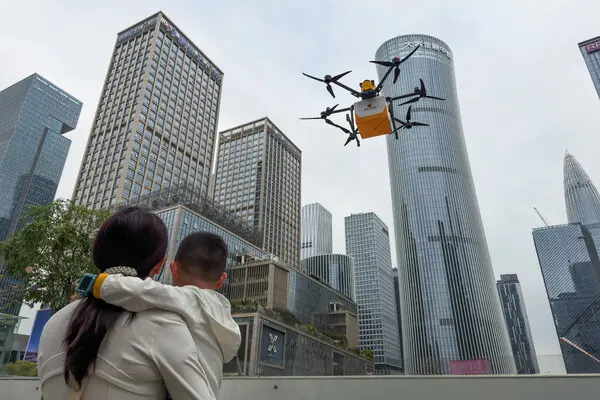
The Chinese government has announced a set of new measures aimed at regulating the use of drones, marking a significant shift in how this technology is managed. Since the beginning of the year, authorities have begun imposing strict penalties on drones used illegally, leading to widespread concern among users.
The new laws, which will come into effect in May, require all drones to be registered under the real names of their owners, meaning operators must link their equipment to an official ID number or mobile phone number. Additionally, drones will need prior permits before taking off in restricted areas, which include most major cities.
Details of the New Regulations
The new regulations also include real-time transmission of flight data to the government, reflecting a trend towards increased oversight of airspace. In a further step, the Beijing government has decided to impose a near-total ban on drones within the capital's borders, prohibiting the sale, rental, or entry of drones or their components into the city. Bags of individuals arriving from other provinces will also be inspected.
Current drone owners are exempt from some of these laws if they register their drones with the police before April 30, but they are prohibited from owning more than three drones at the same address. Exceptions may be granted for drones used for specific purposes such as counter-terrorism and scientific research.
Background & Context
China is considered a leading country in the drone manufacturing industry, dominating the global market thanks to innovations and advanced technology. However, the increasing use of drones in recreational and commercial activities has raised safety and security concerns, prompting the government to take these measures.
Historically, China has seen a significant rise in the number of drones used in recent years, leading to new challenges regarding airspace control. With the increase in incidents related to drones, it has become essential to establish a legal framework to regulate this sector.
Impact & Consequences
Analyses suggest that these measures could significantly impact the drone industry in China, as the new restrictions may lead to a decrease in the number of users and investors in this sector. Additionally, the imposition of strict penalties could stifle innovation in drone technology, as developers might avoid taking risks in developing new products under these constraints.
Moreover, these policies could affect global companies that rely on drones for their operations, potentially creating new challenges in supply chains and distribution.
Regional Significance
As the Arab region shows increasing interest in drone technology, these Chinese measures may serve as a model or a warning for Arab countries. While many Arab nations are seeking to develop drone usage in areas such as agriculture and surveillance, the need to establish a legal framework that ensures the safe and effective use of this technology becomes urgent.
Ultimately, these developments in China represent an opportunity for Arab countries to reassess their strategies in using drones, considering the importance of balancing innovation with compliance to laws.