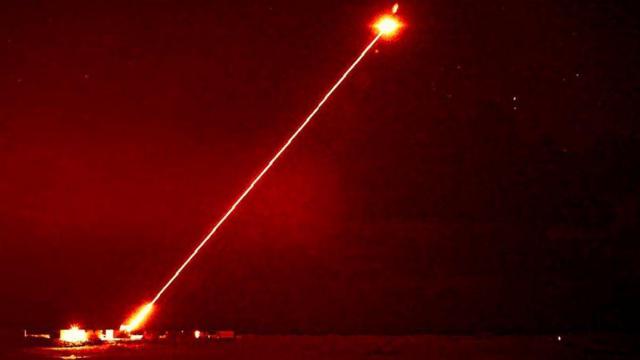
China has announced the development of two new laser systems designed to counter drones, reflecting Beijing's technological advancements in defense. The two new systems, revealed through the Global Times, are specifically designed to engage drones flying at low altitudes and slow speeds, making them difficult targets for traditional systems.
The first system, known as Guangjian‑11E or Light Arrow‑11E, is considered a multi-mode jamming system. It is capable of disrupting the sensing and targeting functions of drones by using laser pulses that target sensitive components, leading to their blinding and confusing their reconnaissance and data transmission missions.
Details of the New Systems
The second system, Guangjian‑21A or Light Arrow‑21A, is a drone counter-laser system mounted on a vehicle, allowing it to operate while in motion. This system relies on direct destruction technology, utilizing high-density energy beams that can extend several kilometers, capable of penetrating the drone's structure and destroying its internal devices.
Both systems incorporate advanced technologies such as phased array radars and infrared detection systems, enabling them to exchange data and accurately identify targets. Chinese military experts have noted that these platforms are integrated into a broader combat system, enhancing their ability to link soft kill and hard kill strategies.
Background & Context
These developments come amid rising aerial threats posed by drones, which are increasingly being used in armed conflicts around the world. China, recognized as a leading country in developing defense technologies, is striving to enhance its military capabilities to address these growing challenges.
Historically, China has made significant progress in military technology, having invested heavily in the development of advanced weaponry. This new step reflects Beijing's commitment to strengthening its national security and its ability to confront potential threats.
Impact & Consequences
These new systems represent a strategically important step for China, enhancing its ability to protect its airspace from external threats. The integration of laser and microwave technologies in counter-drone operations demonstrates a technological superiority that could impact the balance of power in the region.
These developments are expected to increase military tensions in the region, as other countries will likely seek to develop similar technologies to counter new threats. This could contribute to a new arms race in the area, raising concerns about regional stability.
Regional Significance
For Arab countries, these developments highlight the importance of enhancing defensive capabilities in response to the increasing threats posed by drones. Many countries in the region may be vulnerable to the rising use of these drones in conflicts, necessitating the consideration of effective defensive strategies.
Moreover, advancements in weapon technology may drive Arab nations to seek strategic partnerships with leading countries in this field, such as China, to bolster their defensive capabilities.
In conclusion, the unveiling of these new systems in China illustrates a global trend towards developing advanced technologies to counter aerial threats, prompting Arab nations to seriously consider enhancing their defensive capabilities to address future challenges.