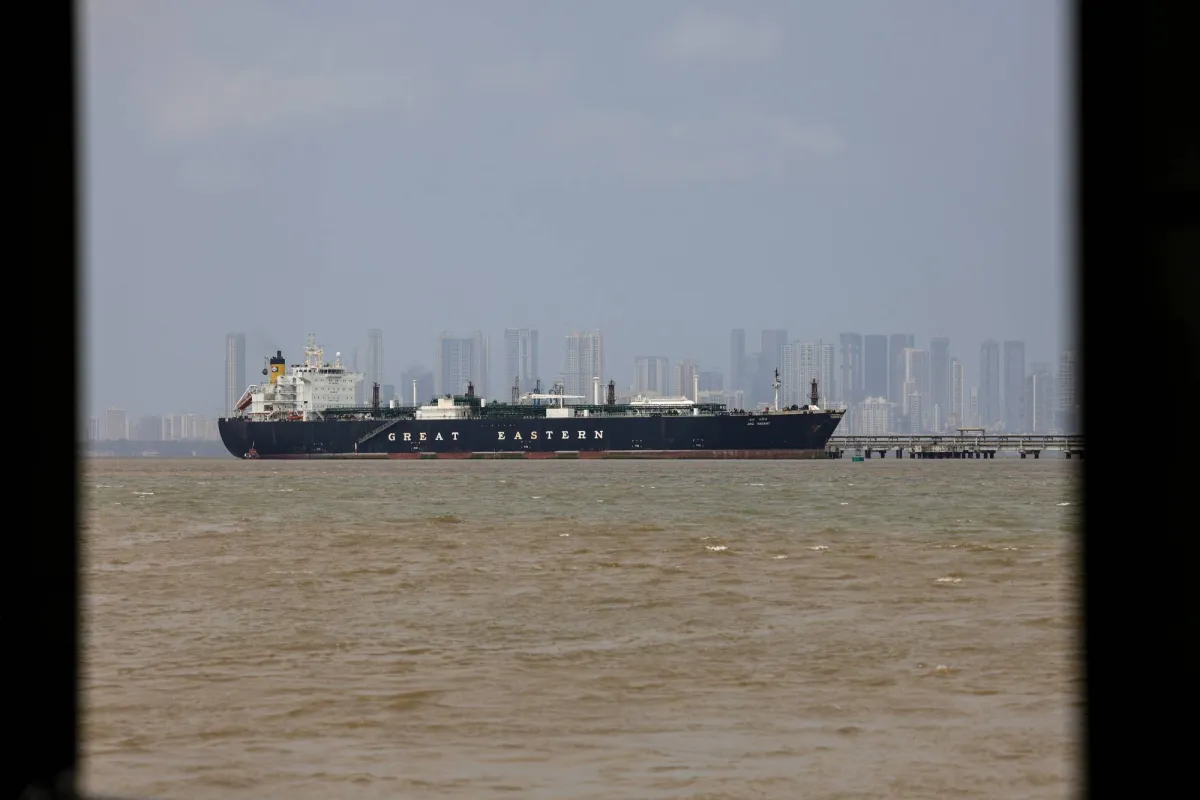
French Admiral Nicolas Vaujour stated at the 'War and Peace' security conference held in Paris that China will find itself compelled to directly engage in discussions on how to reopen the Strait of Hormuz. This statement comes amid rising tensions in the region, where Vaujour noted that the current number of ships passing through the strait is insufficient to ensure the restoration of normal maritime traffic.
The admiral added that the Chinese navy has not yet intervened in efforts to reopen the strait, while there is direct political dialogue between Chinese and Iranian authorities to ensure a certain number of ships can pass. He questioned whether this dialogue is sufficient to restore normal maritime traffic, answering that he does not believe it is.
Details of the Situation
The Strait of Hormuz, one of the world's most important maritime passages, sees significant traffic of oil and natural gas. Any closure of the strait or restrictions on ship movement poses a threat to global energy security. In recent years, the strait has witnessed increasing tensions, especially with the rise of military activities in the region.
In this context, Vaujour pointed out that China, as a country with substantial economic interests in the region, will eventually have to take a more active stance. He explained that China's lack of intervention so far may be due to political or economic calculations, but he affirmed that the situation may require it to take more decisive steps.
Background & Context
Historically, the Strait of Hormuz has been the stage for numerous political and military crises. The past years have seen an escalation of tensions between Iran and the United States, affecting maritime traffic in the strait. There is also increasing international concern that any escalation in the region could lead to negative impacts on global markets.
China is one of the largest oil importers from the Gulf region, making it directly concerned with any developments occurring in the Strait of Hormuz. In recent years, China has strengthened its relations with Iran, which may influence its position in the event of military escalation in the region.
Impact & Consequences
If China decides to engage directly in discussions about reopening the Strait of Hormuz, it could alter the dynamics of international relations in the region. China is considered a global power seeking to enhance its influence in the Middle East, and its intervention could shift the balance of power in the area.
On the other hand, instability in maritime traffic through the strait could lead to increased global oil prices, affecting energy-dependent economies. Any military escalation could also have negative repercussions on regional and international security.
Regional Significance
The Arabian Gulf region is one of the most sensitive areas in the world, where the political and economic interests of major countries intersect. Any escalation in the Strait of Hormuz could directly impact neighboring Arab countries that rely on the stability of maritime traffic in the region.
Moreover, China's involvement in this issue could open the door for further cooperation between Arab countries and China, potentially contributing to the enhancement of economic and political relations in the future. At the same time, the current situation requires Arab countries to take clear positions to protect their interests amid rising tensions.
In conclusion, the Strait of Hormuz remains a vital hub that requires careful monitoring by all concerned parties. International dialogue and cooperation will be essential to ensure regional stability and protect the economic interests of all nations.