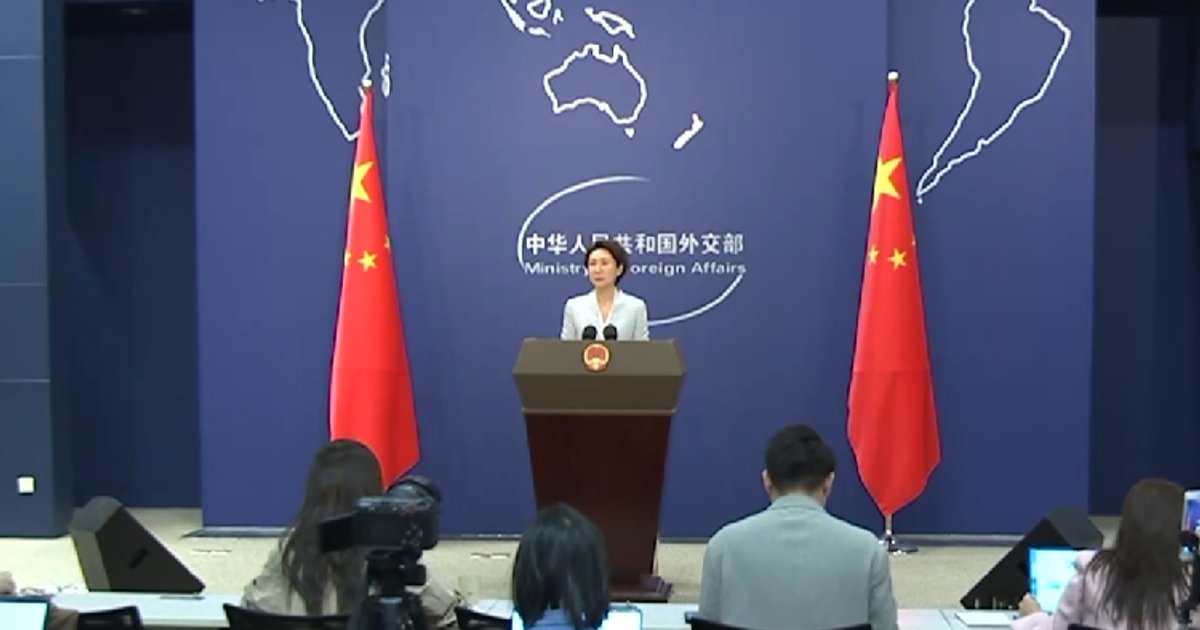
Chinese Foreign Ministry spokesperson, Mao Ning, confirmed in a press statement on Thursday that the disruption of navigation in the Hormuz Strait is a result of illegal military operations carried out by the United States and Israel against Iran. She explained that these actions negatively impact regional security, stressing the need to end the fighting to achieve peace and stability in the Middle East and the Gulf region.
Mao Ning pointed out China's readiness to play a constructive role in resolving conflicts, underscoring the importance of dialogue and negotiation as a means to address outstanding issues. These statements come at a time when tensions between Iran and both the United States and Israel are escalating, increasing the risks to navigation in one of the world's most critical maritime corridors.
Details of the Incident
The Hormuz Strait is considered one of the most strategically important points in the world, through which approximately 20% of the world's total oil passes. In recent years, this area has witnessed an escalation of military actions, leading to heightened fears of armed conflicts that could affect navigation and global trade.
In this context, Mao Ning asserted that the continuation of American and Israeli military operations against Iran reflects an irresponsible policy, calling for the necessity of respecting the sovereignty of nations and refraining from interfering in their internal affairs. She also stated that China is closely monitoring the situation and urges all parties to exercise restraint.
Background & Context
The roots of the tensions in the Hormuz Strait stem from several historical and political factors, most notably the Iranian nuclear program and the American military presence in the region. Since the United States withdrew from the nuclear agreement with Iran in 2018, tensions have significantly escalated, leading to a series of attacks and military responses between Iran and its allies on one side, and the United States and Israel on the other.
Iran views the Hormuz Strait as a vital artery, as many countries depend on the oil exported through this corridor. With the escalation of threats, it has become clear that any further escalation could lead to dire consequences for the global economy.
Impact & Consequences
Analyses indicate that the continuation of tensions in the Hormuz Strait could lead to a significant rise in oil prices, impacting the global economy and increasing pressure on oil-importing countries. Additionally, any military escalation could cause the region to slip into a broader conflict, threatening security and stability in the Middle East.
Moreover, military escalation could affect relations between major powers, as China seeks to enhance its role as a mediator in regional disputes, potentially altering the power dynamics in the area.
Regional Significance
Arab countries are directly affected by the tensions in the Hormuz Strait, as many of these nations rely on oil exported through this corridor. Any escalation in the region could lead to increased economic costs and impact political stability in Gulf states.
Furthermore, relations between Arab countries and Iran could be significantly affected, as some nations seek to strengthen their alliances with the United States to address security challenges. In this context, the importance of dialogue and cooperation between Arab nations and Iran emerges as essential for achieving security and stability in the region.