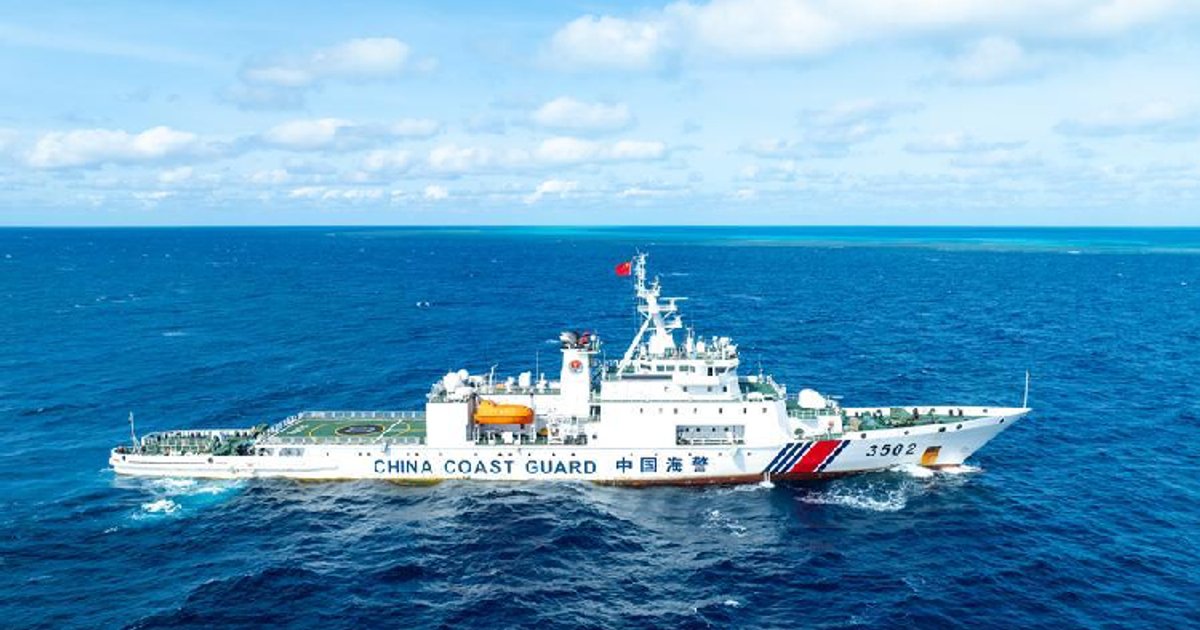
China has warned the Philippines against continuing what it describes as provocative actions, emphasizing the need for an immediate halt to such behaviors. This warning was issued by Liu Jiuan, spokesperson for the Chinese Coast Guard, on Wednesday. These warnings come at a sensitive time marked by increasing tensions in the South China Sea, where disputes between the two countries over maritime sovereignty are escalating.
In his statements, Liu Jiuan pointed out that the Philippines is conducting smear campaigns against China, which exacerbates tensions in the region. He affirmed that China will take all necessary measures to protect its national interests, stressing the importance of dialogue and understanding between the two sides.
Details of the Incident
Tensions between China and the Philippines in the South China Sea are on the rise, as both countries compete for control over resource-rich areas. Recently, there have been several maritime incidents involving vessels from both nations, raising concerns within the international community. China asserts that it has historical rights to these waters, while the Philippines seeks to bolster its sovereignty with the help of allies, including the United States.
In this context, the Chinese warning is part of a broader strategy aimed at strengthening Beijing's position in regional disputes. China has shown readiness to confront any actions it deems provocative, further complicating the situation in the region.
Background & Context
Historically, the South China Sea has seen multiple disputes among the countries bordering it, including the Philippines, Vietnam, and Malaysia. In 2016, an international court ruled in favor of the Philippines, denying China's claims to most of the contested areas. However, Beijing did not recognize this ruling and has continued to bolster its military presence in the region.
The Philippines is part of regional alliances aimed at countering China's growing influence, seeking to enhance its relations with the United States and other countries in the area. In this context, the significance of the Chinese warnings emerges as part of the broader struggle for influence in the South China Sea.
Impact & Consequences
The Chinese warnings could escalate tensions in the South China Sea, threatening stability in the region. If the Philippines continues what China considers provocations, Beijing may take military or diplomatic actions to reinforce its position. This could affect relations between China and the Philippines and complicate the situation further.
Moreover, these tensions could impact maritime traffic in the South China Sea, which is one of the world's most important shipping lanes. Any escalation in the conflict could affect international trade, prompting the global community to monitor the situation closely.
Regional Significance
The tensions in the South China Sea hold particular importance for the Arab region, as many Arab countries rely on maritime trade that passes through these waters. Any escalation in the conflict could disrupt shipping and trade, negatively impacting the Arab economy.
Furthermore, relations between Arab countries and China are increasingly developing, as many Arab nations seek to enhance economic cooperation with Beijing. Therefore, any tension in the relationship between China and the Philippines could affect these dynamics.