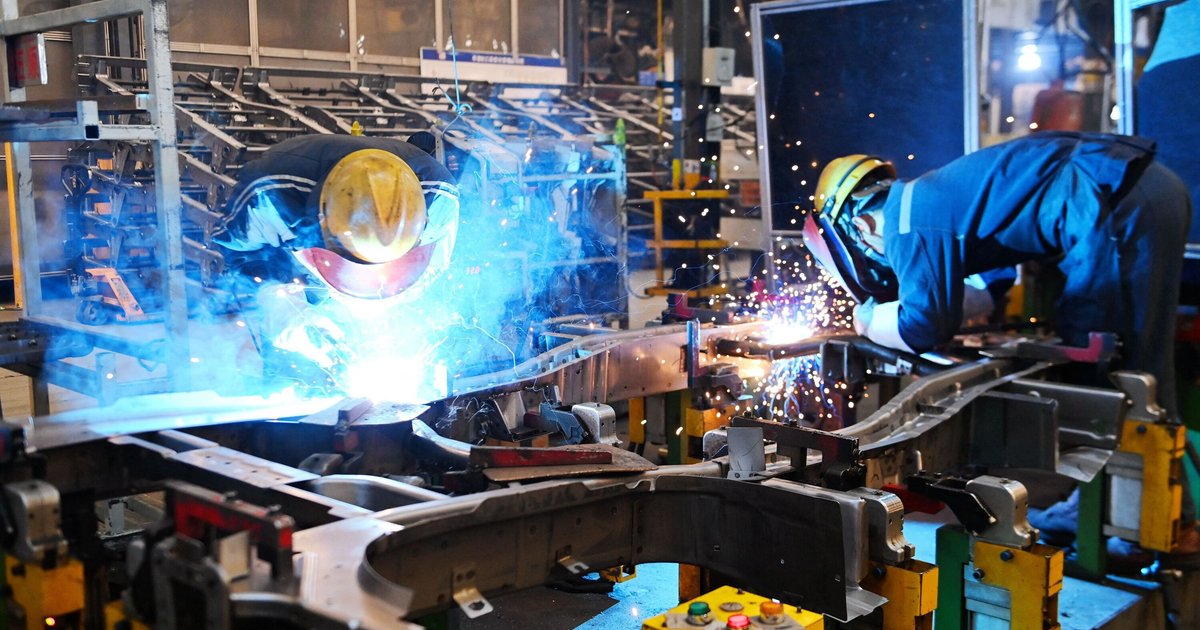
Reports indicate that manufacturing activity in China slowed in March, particularly among export-oriented companies, amid rising tensions from the Iranian war. This occurs despite official indicators showing improvements in the manufacturing sector, raising questions about the impact of geopolitical conditions on the Chinese economy.
According to a special survey, industrial activities in China have declined, indicating significant challenges faced by export-oriented companies. This slowdown coincides with escalating tensions in the Middle East, where threats of war with Iran loom, potentially affecting global supply chains.
Details of the Event
Data shows that Chinese companies focused on exports are facing increasing difficulties in meeting demand, leading to a decrease in production. This decline contrasts with official indicators that suggest an overall improvement in the manufacturing sector's performance, reflecting a gap between economic reality and expectations.
Despite the general improvement, companies heavily reliant on foreign markets are concerned about the impact of geopolitical tensions, especially with increasing news about conflicts in the Middle East. These factors make it challenging for Chinese companies to maintain the required production levels.
Background & Context
Historically, China has relied heavily on its exports to boost economic growth. However, geopolitical tensions, such as those related to Iran, can lead to fluctuations in global markets. In recent years, China has faced significant challenges due to trade wars and imposed trade restrictions, affecting its export capabilities.
Iran, on its part, plays an important role in the global energy market, and any escalation in the conflict could significantly impact oil prices and supply chains. This situation places Chinese companies in a difficult position, as they must adapt to rapidly changing conditions.
Impact & Consequences
The slowdown in manufacturing activity could have wide-ranging implications for the Chinese economy, including job losses and increased unemployment rates. Additionally, this decline may affect overall economic growth, prompting the Chinese government to consider stimulus measures to support the economy.
Furthermore, the impact of Iranian tensions may extend to global markets, increasing uncertainty in the global economy. Companies relying on global supply chains may face additional challenges in meeting demand, potentially leading to price increases and market volatility.
Regional Significance
For the Arab region, tensions in Iran directly affect energy markets, as Iran is a key player in the oil market. Any escalation in the conflict could lead to rising oil prices, impacting the economies of Arab countries that rely on oil exports.
Moreover, the slowdown in the Chinese economy could affect trade with Arab countries, as China is one of the largest trading partners for many Arab nations. This situation requires Arab countries to reassess their trade and economic strategies in light of changing conditions.
The challenges faced by China due to Iranian tensions reflect the importance of geopolitical stability in fostering economic growth. Arab countries must be aware of the implications of these events and take proactive steps to adapt to potential changes.