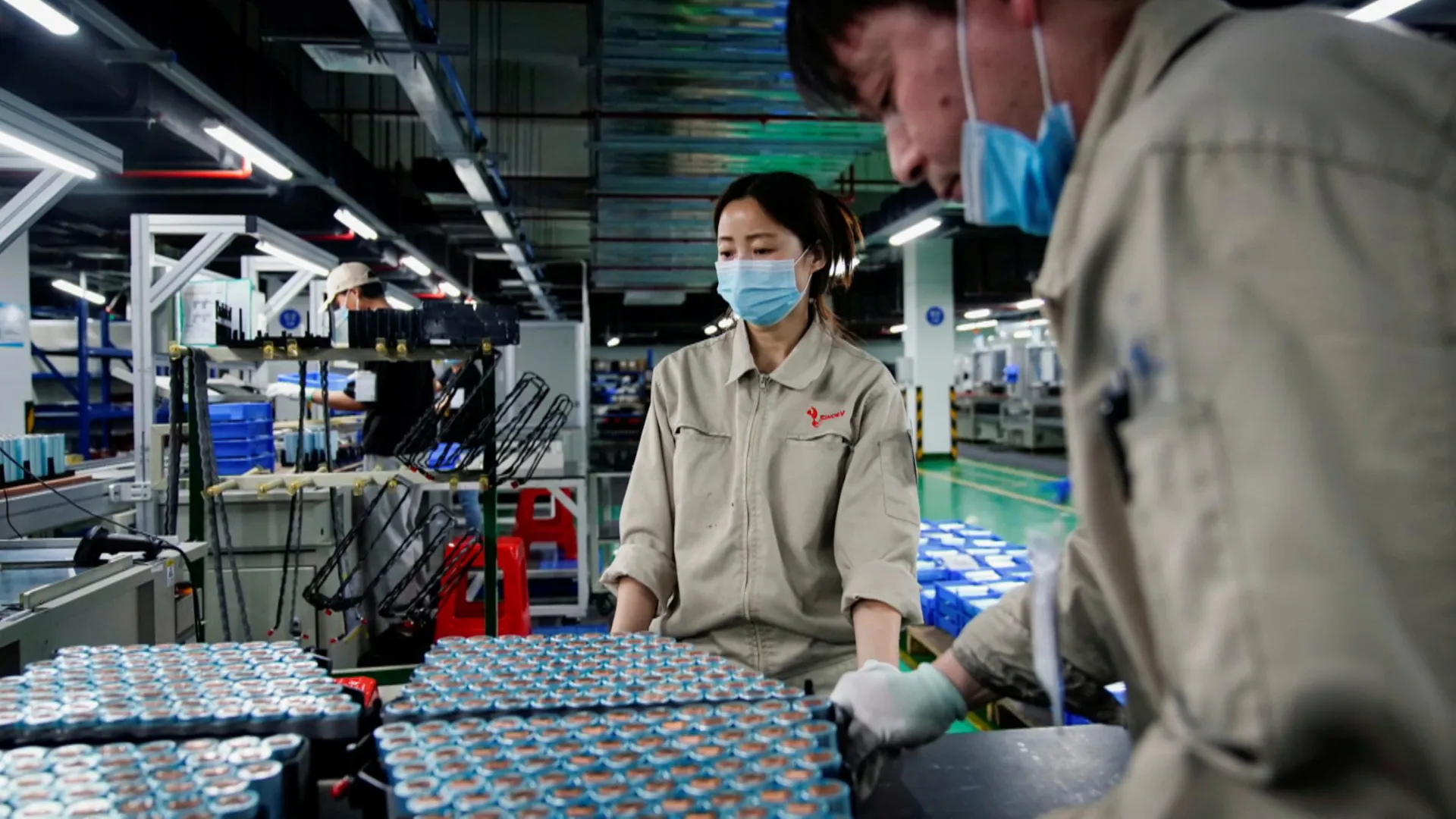
Chinese battery companies have recorded an unprecedented surge in their market value, increasing by approximately $70 billion since the outbreak of war in February. This increase reflects Beijing's intelligence in leveraging global crises to strengthen its position in the alternative energy market, sparking widespread discussions on social media about the future of oil dependency.
This leap comes amid ongoing tensions in the Middle East, which threaten the stability of traditional energy sources. China has managed to turn these crises into strategic opportunities to enhance its dominance in the renewable energy market, raising questions about the future of energy globally.
Details of the Event
Since the onset of the war, shares of major Chinese battery companies such as CATL, SunGrow, and BYD have seen notable increases ranging from 19% to 21%. Solar energy companies like GCL have also achieved record growth in their stocks, rising by 48% within a month. Currently, China controls about 70% of global lithium battery production, making it a cornerstone in the shift towards electric industry and energy storage.
A segment of the program "Networks" captured social media users' opinions on this economic leap. Activist Khalil noted that this increase reflects long-term planning by China, pointing to its investments in renewable energies over the years.
Background & Context
Historically, China has sought to enhance its capabilities in renewable energy, especially given the challenges posed by reliance on imported oil. With the escalation of global crises, the need to secure alternative energy sources has become urgent. This strategy has bolstered China's position in the global market, allowing it to surpass many other countries in this field.
This surge in the battery market is part of China's ambitious vision to transition to an economy that relies more on renewable energy, aligning with its environmental and economic goals. As geopolitical tensions continue, it appears that Beijing is preparing to lead the countries driving this transformation.
Impact & Consequences
Economic reports predict that the value of the battery energy storage market in China will reach $199 billion by 2032, compared to $48 billion in 2024. This trend not only reflects Beijing's desire to secure its needs but also establishes a new phase where energy storage becomes a powerful weapon against political fluctuations and wars.
These developments could significantly impact global markets, potentially reducing reliance on oil and natural gas, thus altering the balance of power in the energy sector. At the same time, these shifts may raise concerns among oil-exporting countries, which could find themselves in a vulnerable position amid these changes.
Regional Significance
For the Arab region, this Chinese trend may have significant implications. Countries heavily reliant on oil exports may face new challenges as demand for traditional fuels declines. Furthermore, the shift towards renewable energy could open new avenues for cooperation between Arab nations and China in technology and energy sectors.
In conclusion, it seems the world is on the brink of a new phase of transformations in the energy sector, with China poised to play a pivotal role in shaping the future of global energy. As tensions in the region persist, all eyes will remain on Beijing and how the balance of power will evolve in the post-oil era.