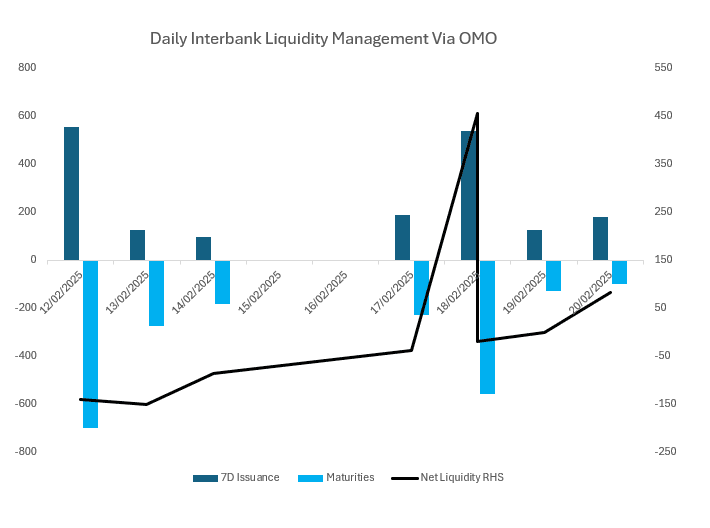
The Chinese central bank has taken new steps to limit the liquidity surplus in the financial system by reducing the medium-term funds it lends to banks. This action is part of the Chinese government's efforts to address the economic challenges facing the country, which include slowing growth and increasing inflationary pressures.
This step is part of a broader strategy aimed at achieving greater financial stability in China, as the central bank seeks to mitigate the risks associated with liquidity surplus that could lead to asset bubbles or excessive inflation. The bank indicated that this reduction will affect banks' lending capacity, which may, in turn, impact economic activity.
Details of the Event
Recently, China has witnessed a notable increase in cash liquidity in the markets, prompting the central bank to take stringent measures. The volume of medium-term loans has been reduced by 200 billion yuan (approximately 31 billion dollars), reflecting a shift towards reducing reliance on cheap liquidity. This reduction follows a series of previous measures taken by the central bank to limit financial risks.
This measure is considered part of a tighter monetary policy, as the central bank aims to strike a balance between supporting economic growth and maintaining financial stability. Experts have noted that this step may lead to increased borrowing costs, which could affect investments across various sectors.
Background & Context
Historically, China has undergone significant transformations in its financial system, transitioning from a centralized system to a more open one. However, the current economic challenges, including growth slowdown due to the repercussions of the COVID-19 pandemic, have prompted the government to reassess its monetary policies. In recent years, China has taken multiple steps to enhance its financial stability, including imposing lending restrictions and increasing oversight of financial markets.
These measures are part of a larger strategy aimed at promoting sustainable growth and reducing reliance on debt. Nevertheless, challenges remain, as the Chinese economy faces increasing external pressures, including trade tensions with the United States.
Impact & Consequences
Analyses predict that this step will significantly impact the Chinese economy. Reducing liquidity may lead to higher borrowing costs, potentially deterring companies from investing and affecting economic growth. Additionally, these measures could result in volatility in financial markets, as investors seek to reassess their investments under the new conditions.
Moreover, these policies may affect trade relations with other countries, as exports and imports could be impacted by currency fluctuations and monetary policies. Thus, these steps reflect the significant challenges China faces in its pursuit of economic stability.
Regional Significance
Given the economic ties between China and Arab countries, this move may influence trade and investments between both sides. China is a key trading partner for many Arab nations, and any changes in Chinese monetary policy could affect investment flows and joint projects. Additionally, rising borrowing costs may impact Arab companies that rely on Chinese financing.
In conclusion, the steps taken by the Chinese central bank reflect the economic challenges the country is facing and highlight the importance of liquidity stability in the financial system. These policies are expected to continue influencing the global economy, including Arab nations.