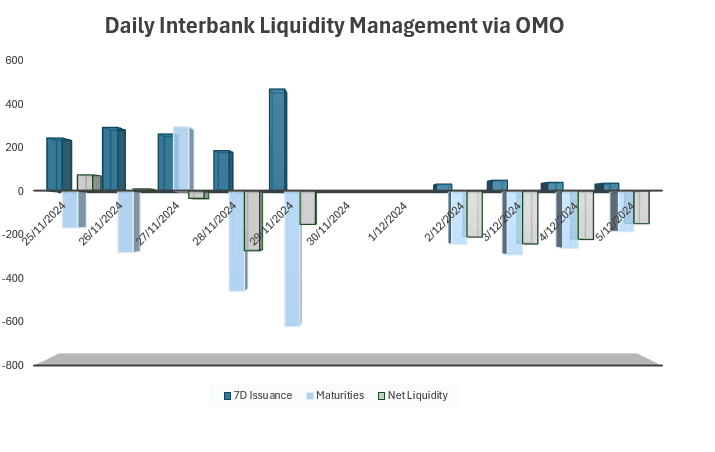
The Chinese central bank has withdrawn liquidity from the financial system for the first time in a year, in a move that reflects its caution amid rising oil prices and their impact on the economy. This step indicates that the bank is keeping its options open in the face of economic challenges.
This action comes at a time when the global economy is experiencing increasing pressures due to rising oil prices, which affect production costs and prices in general. Data has shown that oil prices have risen significantly, prompting the central bank to take precautionary measures to ensure the stability of the financial system.
Details of the Event
The liquidity withdrawal by the Chinese central bank is a rare step, as such measures have not been taken in a year. This decision reflects the bank's concern about the impact of rising oil prices on the domestic economy, which could lead to increased inflation and negatively affect economic growth. Additionally, this move may impact the liquidity available in the market, which could reflect on companies' ability to borrow and invest.
The Chinese central bank, facing multiple challenges including slowing economic growth, seeks to maintain financial system stability through proactive measures. The liquidity withdrawal could have direct effects on interest rates, potentially leading to increased borrowing costs.
Background & Context
In recent years, China has witnessed significant economic growth, but with rising oil prices, signs of economic pressures have begun to emerge. Rising oil prices affect all aspects of the economy, from transportation costs to commodity prices. In this context, the central bank is seeking to take actions that ensure economic stability.
Historically, China has relied on stimulus strategies to support its economic growth, but with current changes in the global market, it seems that the central bank is adopting a more cautious approach. This move may reflect a shift in China's monetary policy, as the bank seeks to adapt to changing economic conditions.
Impact & Consequences
The liquidity withdrawal by the central bank is considered a strategic move aimed at addressing economic challenges. This step is expected to affect financial markets, potentially leading to increased interest rates. Furthermore, these measures may impact both foreign and domestic investments, which could result in slower economic growth.
Moreover, this step may increase pressures on companies, as they will face higher borrowing costs. Under these circumstances, companies may hesitate to make new investment decisions, which could negatively affect long-term economic growth.
Regional Significance
The Arab region is significantly affected by economic changes in China, as China is one of the largest trading partners for many Arab countries. Rising oil prices in China could influence global oil prices, which would reflect on the economies of Arab countries that heavily rely on oil revenues.
Additionally, any changes in Chinese monetary policies could affect Chinese investments in the region, impacting developmental and economic projects. Therefore, it is crucial for Arab countries to closely monitor these developments, as they could have far-reaching effects on their economies.