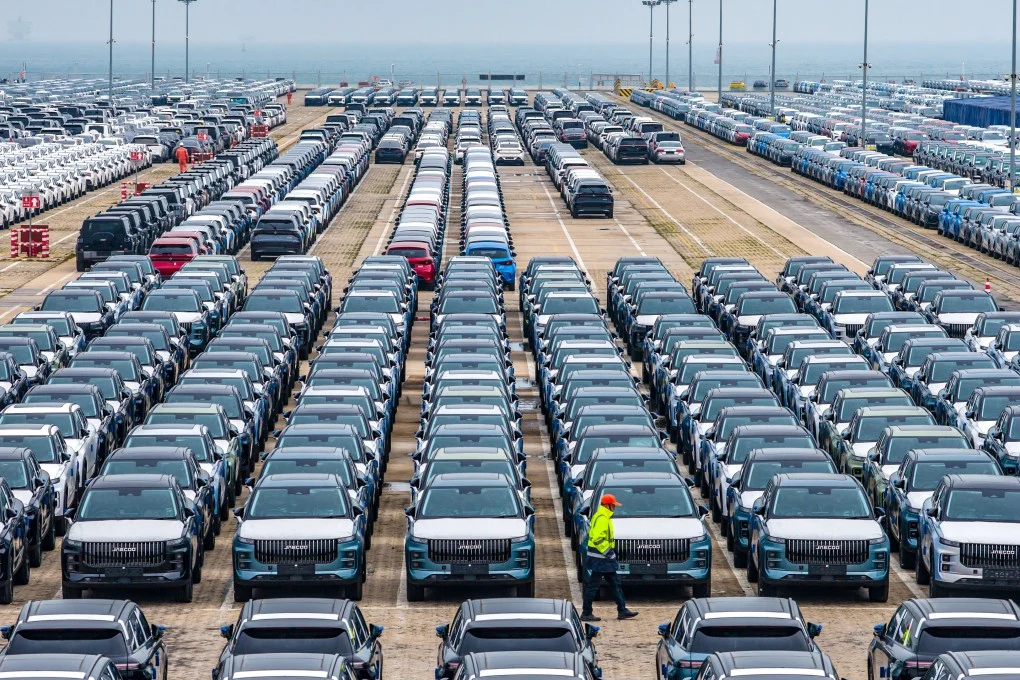
Chinese-manufactured electric vehicles (EVs) are experiencing significant growth in South Korea, now accounting for one in three new registrations. This trend reflects a major success for the Chinese industry, driven by Tesla models produced in Shanghai, which enhances China's position in the Korean market, one of the most competitive in the world.
Reports indicate that car manufacturers in South Korea have greater room for expansion, supported by rising fuel prices linked to geopolitical conflicts, such as the American-Israeli war in Iran. Additionally, fewer restrictions compared to traditional markets contribute to this growth.
Event Details
Data shows that Chinese electric cars are gaining an increasing market share, with expectations that these trends will continue in the near future. However, analysts warn that tightening regulations related to government support may slow the pace of this expansion.
Attention is turning to how South Korean companies will respond to this challenge, as they may need to enhance their technologies and offer more competitive products to face this new competition.
Background & Context
Historically, South Korea has been one of the leading markets in the automotive industry, dominated by local companies such as Hyundai and Kia. However, the entry of Chinese companies into the Korean market reflects a shift in industry dynamics, as China seeks to strengthen its position in the electric vehicle sector.
Electric vehicles are part of China's strategy to transition to clean energy and reduce dependence on fossil fuels, making this success in the Korean market a component of a broader vision for the Chinese automotive industry.
Impact & Consequences
These developments could lead to significant changes in the global automotive market, as traditional companies may need to reassess their strategies. This success could also encourage more investments in the electric vehicle sector, fostering innovation and competitiveness.
This trend is likely to increase pressure on South Korean companies to develop new technologies and improve production efficiency, which could contribute to enhancing innovation in this sector.
Regional Significance
In the Arab region, this success may have multiple implications, especially in light of trends toward clean energy. Arab countries could benefit from Chinese experiences in developing the electric vehicle sector, contributing to achieving sustainable development goals.
Moreover, rising fuel prices may prompt Arab nations to consider new strategies to promote the use of electric vehicles, potentially opening the door for new investments in this sector.
The increasing success of Chinese electric cars in South Korea reflects a significant shift in the global automotive industry and underscores the importance of innovation and adaptation to market changes.