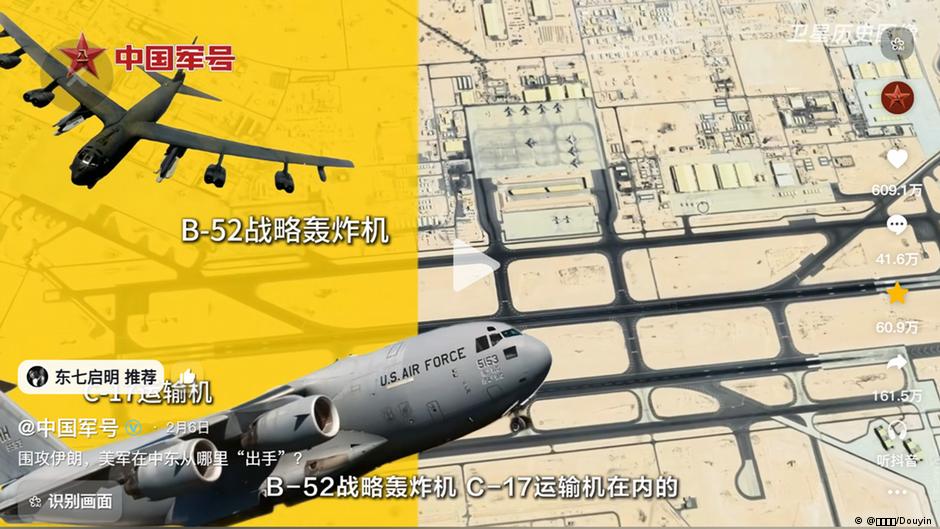
In a move reflecting the trends of Chinese media policy, state media has produced an AI-generated video highlighting the war between Iran and the United States, where Persian cats symbolize Iranian power in confrontation with the American eagle. The video has gained widespread attention on social media, garnering nearly a million likes within just a few hours, indicating the Chinese public's interest in the topic.
The video, produced by CCTV, presents a symbolic view of the conflict, showcasing angry Persian cats seeking revenge against the white eagle that dominates a desert region known as the "Valley of Golden Flow." The eagle imposes resource exchanges in the region, known as "black iron essence," using its own special "golden tickets."
Details of the Event
The video illustrates how the eagle assassinates the leader of the Persian cats, leading to an uneven war of attrition, where the eagle uses expensive "golden anti-aircraft needles" to shoot down cheap "wooden birds." This precise symbolism reflects the political message that Beijing has been trying to convey since the beginning of the conflict.
According to W. A. Figueroa, a professor of history and international relations at the University of Groningen in the Netherlands, Chinese officials have described the war as illegal and a threat to global stability. The image presented is of China as a stable diplomatic power, in contrast to the United States, which is portrayed as an aggressive and unpredictable force.
Background & Context
Since the onset of the conflict between Iran and the United States, China has sought to enhance its image as a stable power in the region. This approach aligns with its broader strategy to increase its influence in the Middle East, where China views the United States as attempting to dominate the area by creating chaos.
Historically, Chinese-Iranian relations have been characterized by cooperation in various fields, including energy and trade. As tensions between Iran and the United States escalate, Beijing aims to strengthen these relations as part of its strategy to counter American influence.
Impact & Consequences
The video demonstrates how China is using media to promote its narrative regarding the conflict, reflecting a shift in government propaganda. The use of artificial intelligence in content production makes official messages more appealing to the local audience, integrating geopolitical points into popular culture.
This type of propaganda contributes to the enhancement of Chinese nationalism, portraying the United States as a retreating imperial power while depicting China as an emerging force striving for stability. These messages may influence how the Chinese people understand international conflicts and foreign policy trends.
Regional Significance
For the Arab region, these messages may affect how Arab countries engage with both the United States and China. Amid increasing tensions, some Arab nations may seek to strengthen their relations with China as an alternative to traditional reliance on the United States.
Ultimately, these developments reflect how international conflicts are used as tools to promote political narratives, impacting relationships between nations and shaping public opinion worldwide.