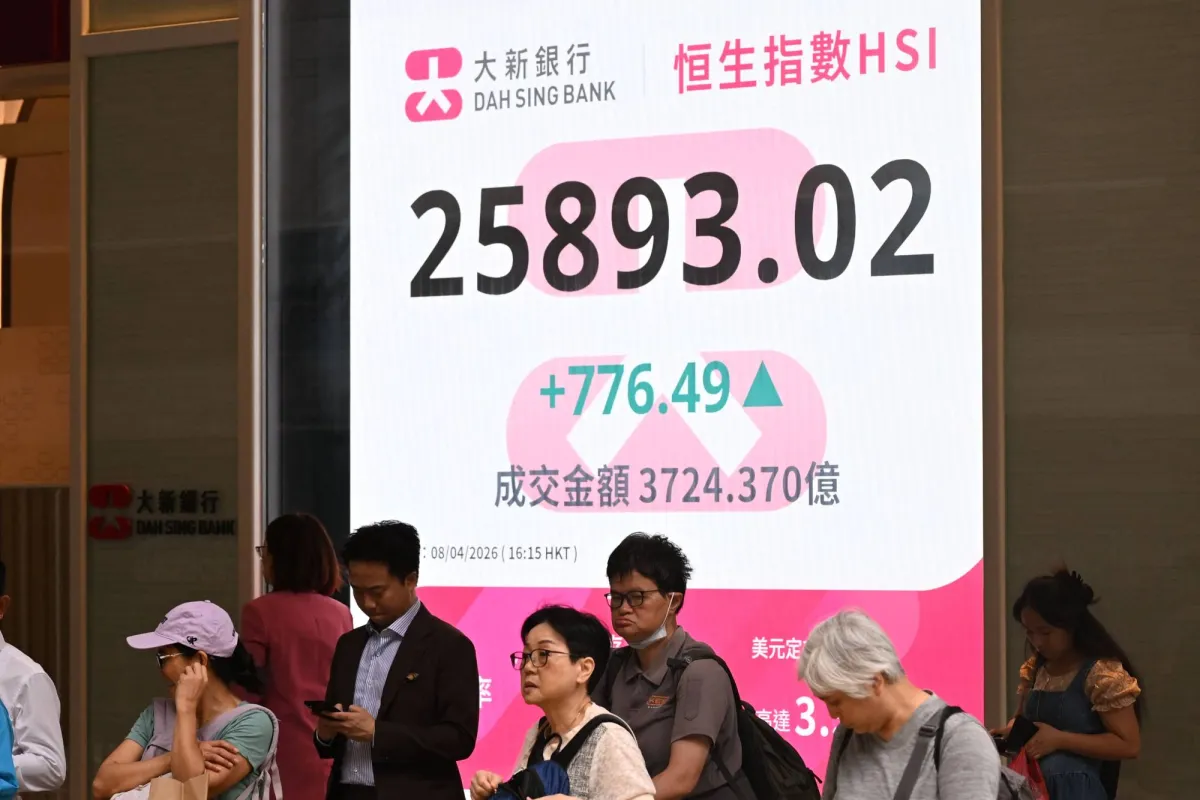
Chinese and Hong Kong stock markets experienced notable gains on Wednesday, fueled by improved sentiment following a ceasefire agreement between the United States and Iran. The CSI 300 index of leading Chinese stocks rose by 2.8% by lunchtime, while the Shanghai Composite index recorded an increase of 1.9%. The Hang Seng index in Hong Kong jumped by 2.8%, with shares of major technology companies listed in Hong Kong rising by 4.4%.
The two-week ceasefire agreement led to a rebound in Asian stock and currency markets, contributing to a reduction in geopolitical tensions. The gold and semiconductor sectors led this rise, each increasing by more than 6%, while energy stocks fell by 2.8%.
Event Details
In Hong Kong, shares of Meituan, one of the largest stocks in the index, surged by 9.9%, driven by a reduction in regulatory risks. Semiconductor and real estate companies also performed exceptionally well, reflecting investor responses to improved market demand.
Sharu Chanana, chief investment strategist at Saxo, confirmed that the market's rise on Wednesday appears broader than mere movements driven by geopolitical recovery. She noted that the surge in Hong Kong real estate stocks reflects investor responses to improved demand, which may lead to sustained growth in the near term, especially if oil prices continue to decline and the yuan remains strong.
Background & Context
Markets believe that Chinese policymakers will maintain a wait-and-see approach unless external shocks to the economy significantly worsen. Some investors expect the recovery of Chinese stocks to be relatively moderate, given that they have not faced intense sell-offs amid the Iranian conflict.
In this context, the Shenzhen Small Cap index rose by 3.45%, the ChiNext Composite index for startups increased by 4.81%, and the STAR 50 index focused on the technology sector rose by 5.05%.
Impact & Consequences
The Chinese yuan surged to its highest level in over 3 years against the US dollar, following a decline in the dollar's value after the US president agreed to a two-week ceasefire with Iran. The exchange rate of the yuan in the domestic market reached 6.8287 yuan per dollar, while its exchange rate in the external market rose to 6.8270 yuan per dollar.
Analysts see that the yuan's rise occurred in parallel with other Asian currencies, as the ceasefire agreement improved risk appetite and alleviated concerns about energy shortages in many Asian countries. The People's Bank of China set the average exchange rate at 6.8680 yuan per dollar, the highest level since April 17, 2023.
Regional Significance
These developments highlight the importance of geopolitical stability and its impact on global financial markets, including Arab markets. The improvement in sentiment in Asian markets could positively reflect on Arab investments, especially amid ongoing tensions in the Middle East.
In conclusion, analysts express cautious optimism regarding energy prices as tensions in the Middle East ease, believing that China is in a relatively better position, which could open new avenues for economic cooperation with Arab countries.