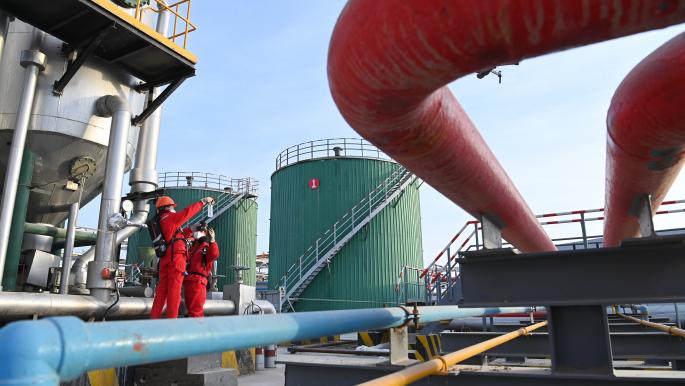
The Chinese government has urged private oil refineries to maintain production levels from last year, despite the challenges these refineries face due to a decline in cheap oil purchases resulting from sanctions imposed on Iran. This warning comes at a sensitive time as China seeks to maintain stability in the domestic oil market amid global price fluctuations.
Private oil refineries in China are under increasing pressure due to a decline in demand for imported oil, particularly in light of the current geopolitical circumstances. The ongoing war in Iran has reduced the quantities of oil available at low prices, affecting these refineries' ability to achieve profitability.
Details of the Warning
In an official statement, the Chinese government emphasized the importance of maintaining current production levels, indicating that any reduction in output could exacerbate the energy crisis in the country. The Ministry of Energy has issued clear directives to private refineries to adhere to the production rates set for last year to ensure that the local market's needs are met.
China is considered one of the largest oil consumers in the world, heavily relying on imports to meet its needs. With increasing global economic pressures, the Chinese government aims to boost domestic production and reduce reliance on imports.
Background & Context
Historically, China has depended on imported oil to meet its growing needs. However, geopolitical tensions, particularly those related to Iran, have significantly impacted the stability of the oil market. The sanctions imposed on Iran have led to a decrease in the available oil quantities, prompting the Chinese government to take proactive steps to maintain market stability.
Concerns are rising that any reduction in production by private refineries could lead to supply shortages, potentially driving up prices and affecting the Chinese economy overall. Therefore, the government is seeking to implement strict measures to ensure that this does not occur.
Impact & Consequences
The Chinese government's continued pressure on private refineries to maintain production levels could have far-reaching effects on the global oil market. If refineries continue to produce at high rates, this may lead to an increase in oil supply in the market, contributing to price stabilization.
On the other hand, private refineries may face significant challenges in achieving profitability amid declining demand for cheap oil. Consequently, the Chinese government needs to find a balance between maintaining production and ensuring profitability for the refineries.
Regional Significance
The Arab region is one of the largest oil producers in the world, and any changes in Chinese production policy could directly impact global oil prices. If China continues to increase its production, this could lead to a decrease in prices, affecting the economies of producing countries in the region.
Moreover, tensions in Iran may influence market stability, prompting Arab countries to take proactive measures to adapt to these changes. Therefore, monitoring developments in China will be essential for understanding future trends in the oil market.
In conclusion, the Chinese warning to private oil refineries not to reduce production reflects the challenges the country faces amid current geopolitical conditions. It is crucial to follow these developments to understand their impact on both the local and international markets.