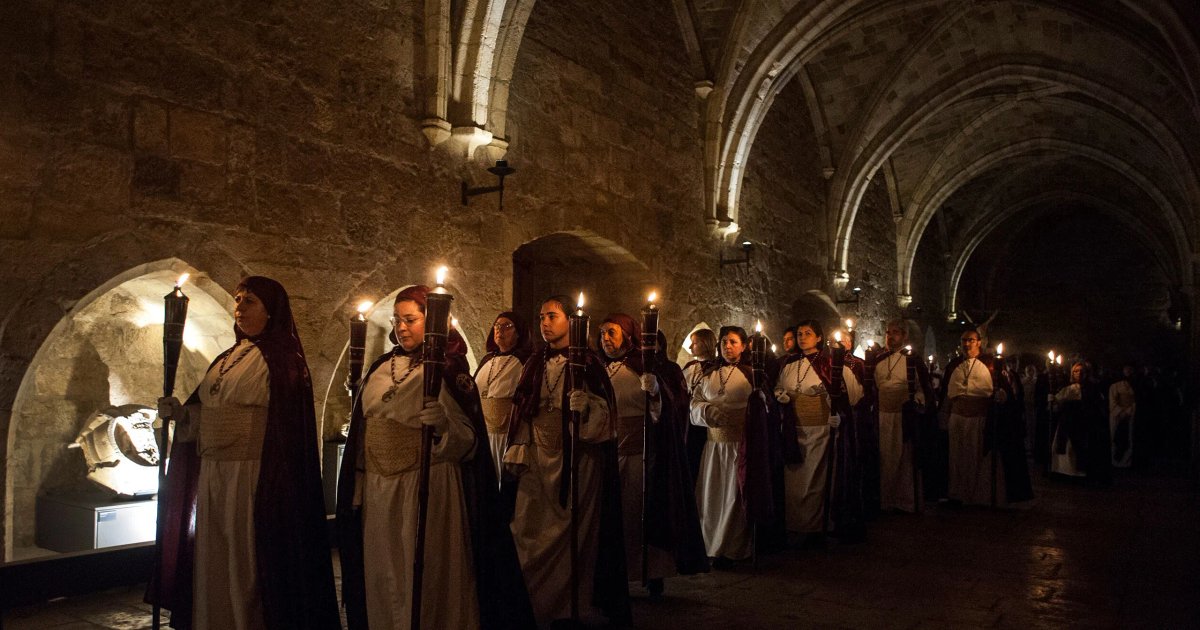
Christians around the world celebrated Holy Week, with churches and public areas hosting religious events that reflect deep faith and traditions. Through rituals and prayers, the annual commemoration of Christ's suffering was revived, showcasing a spirit of unity and solidarity among Christian communities.
During this week, thousands gathered in churches to perform prayers and rituals rooted in ancient traditions. From the United States to Europe, and from the Middle East to Latin America, the atmosphere was filled with reverence and spirituality, as churches were adorned with flowers and lights, and worshippers donned special attire to mark the occasion.
Event Details
The celebrations began in many countries last Sunday, known as Palm Sunday, marking the start of Holy Week. On this day, believers carry palm branches and participate in processions symbolizing Christ's entry into Jerusalem. In some countries, such as Italy, large processions were organized in the streets, where thousands of people gathered to take part in these events.
Churches in various countries also held special masses, during which texts from the Bible related to Christ's suffering were read. In some regions, artistic and cultural events reflecting the spiritual values of this week were organized, adding an additional dimension to the celebrations.
Background & Context
Holy Week is a sacred period in the Christian calendar and is considered one of the most important weeks of the year. Its origins date back to the early centuries of Christianity, where it was celebrated as a commemoration of Christ's suffering, death, and resurrection. Over the centuries, rituals and celebrations have evolved, but the essence of faith and piety has remained constant.
This period is seen as an opportunity for believers to reflect on the meanings of redemption and sacrifice. It also embodies human values such as love and forgiveness, which are fundamental parts of Christian teachings.
Impact & Consequences
The celebrations of Holy Week provide an opportunity to strengthen social bonds among Christian communities. Individuals of various ages and backgrounds come together during these events, enhancing the spirit of unity and solidarity. Additionally, these celebrations contribute to reinforcing the cultural and religious identity of Christian communities, especially in light of the challenges they face.
Moreover, these events attract media attention and help raise awareness about issues that concern Christian communities, such as human rights and religious freedom. They also provide believers with the chance to express their faith publicly, which enhances their sense of belonging.
Regional Significance
In the Arab region, where historic Christian communities reside, the celebrations of Holy Week serve as an opportunity to renew interfaith bonds. Churches in Arab countries, such as Lebanon, Jordan, and Egypt, host special events that attract both worshippers and tourists alike. These celebrations reflect the cultural and religious diversity of the region, promoting values of peaceful coexistence.
Additionally, these events contribute to enhancing religious tourism, as many tourists visit Arab countries during this period to participate in the celebrations. This benefits the local economy and fosters cultural exchange between peoples.
In conclusion, the celebrations of Holy Week around the world reflect the depth of Christian faith and traditions. They are not merely religious rituals but embody the human spirit striving for peace, love, and tolerance.