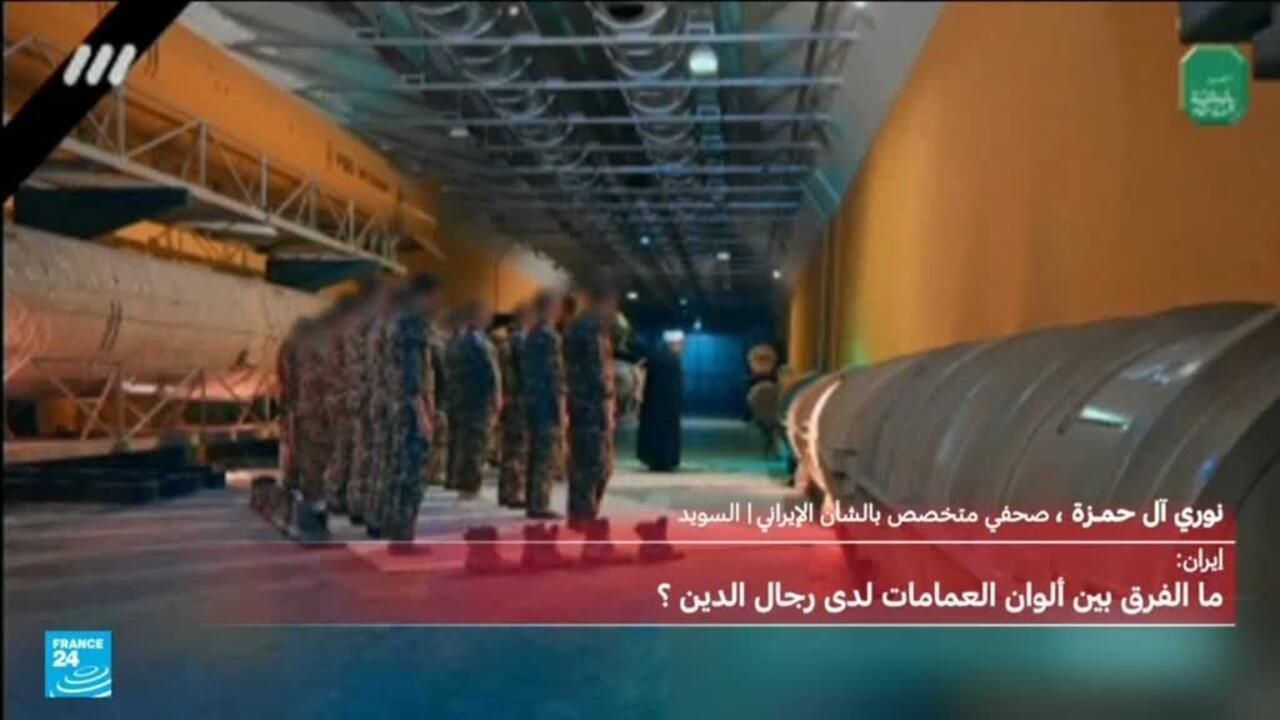
In an unusual event, a cleric led a prayer in front of a group of officers at an Iranian military facility, raising questions about the political and religious messages Tehran aims to convey amid current circumstances.
This scene, documented in a video, shows the cleric leading the prayer during a special ceremony inside the military facility, where several military officers were present. This event has sparked mixed reactions in political and media circles, with some considering it a reflection of the growing religious influence within Iranian military institutions.
Details of the Event
In the video that circulated on social media, the cleric is seen wearing his traditional attire, while the officers stand behind him in orderly rows. It appears that this prayer was part of a celebration or special occasion, adding another layer to understanding the message Tehran seeks to convey.
It is noteworthy that this is not the first time clerics have appeared in military contexts in Iran. The Islamic Republic has a history of intertwining religion with politics, viewing the Iranian military as one of the key arms of the regime and as the protector of the Islamic Revolution.
Background & Context
The Islamic Republic of Iran was established in **1979**, and since then, religion has become an integral part of the national and political identity of the country. Clerics have played a pivotal role in shaping both domestic and foreign policies, making them part of the ruling elite.
In recent years, Iran has experienced internal and external tensions, including popular protests against the regime and economic sanctions imposed by the United States. In this context, the regime seeks to strengthen the ties between religion and the military as a means to bolster national unity and maintain power.
Impact & Consequences
This event could have multiple implications for the Iranian political landscape. Firstly, this trend may reflect an attempt by the regime to boost morale among the armed forces, especially amidst the economic and social pressures facing the country.
Secondly, this event could be interpreted as a message to adversaries, both internal and external, that the Iranian military remains cohesive and capable of facing challenges. It can also be seen as a reaffirmation that religion will continue to be a fundamental element of Iranian military identity.
Regional Significance
Iran is a key player in the Arab region, involved in numerous conflicts and struggles. Strengthening the ties between religion and the military may influence Iran's strategies in supporting its allies in the region, such as Hezbollah in Lebanon and the Houthis in Yemen.
This trend may also raise concerns among neighboring Arab countries, which fear the rise of Iranian influence in the region. This could lead to increased tensions between Iran and Arab states, especially amid ongoing crises in Iraq, Syria, and Lebanon.
In conclusion, the question remains open regarding the true message Tehran seeks to convey through this event. Is it a demonstration of the regime's strength, or an attempt to reinforce the ties between religion and the military amid the multiple crises facing the country?