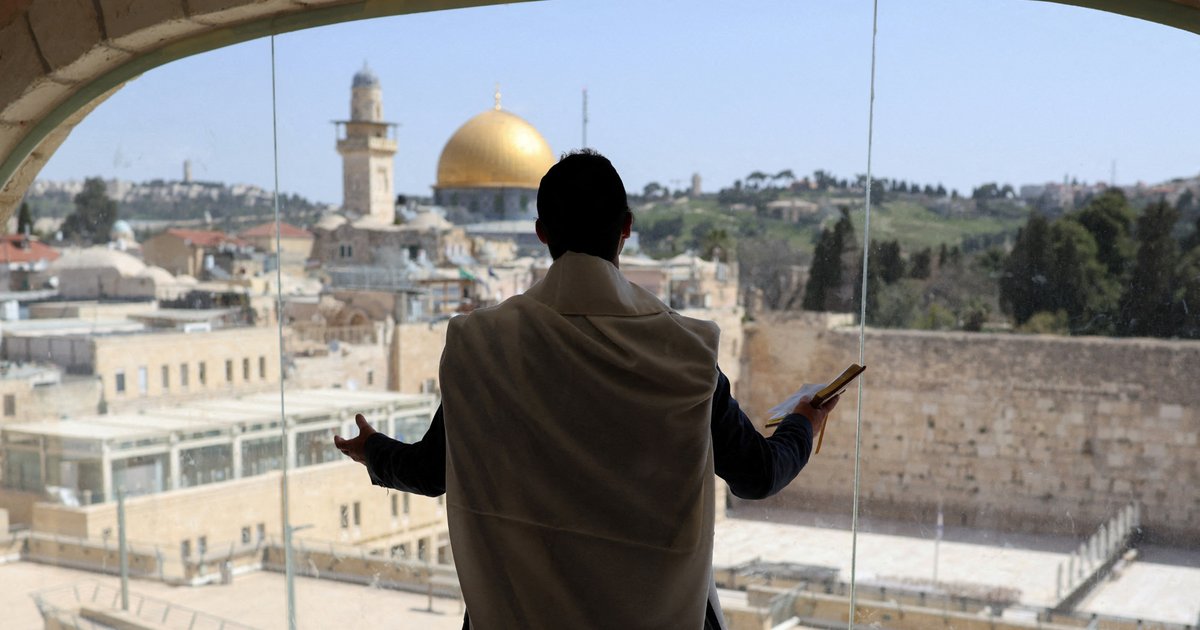
The Western Wall in occupied Jerusalem witnessed dozens of Jewish worshippers gathering for Passover prayers on Sunday, while the Al-Aqsa Mosque has been closed to Muslims since February 28. This closure marks the first of its kind since the beginning of the occupation in 1967, as Israeli authorities enforce strict restrictions on Palestinian access to one of the holiest Islamic sites.
These restrictions come at a time when Jews celebrate Passover, allowing around 50 Jewish worshippers to access the Western Wall, while Muslims are barred from entering the Al-Aqsa Mosque even during the holy month of Ramadan and the Eid al-Fitr holiday. Christian sites in the Old City, including the Church of the Holy Sepulchre, have also been closed, preventing worshippers from celebrating Christian Easter.
Event Details
Despite the imposed restrictions, several Jews managed to participate in traditional ceremonies, including the priestly blessing at the Western Wall. Meanwhile, Muslims were denied access to Al-Aqsa, with Israeli authorities claiming that this closure is a security measure to protect citizens from potential threats, while Palestinians view it as part of a larger plan to control the site.
At the same time, thousands of Jews gathered in Bnei Brak to celebrate Passover, despite the area having faced several rocket attacks from Iran amid the ongoing conflict between the United States and Israel on one side and Iran on the other. This disparity in handling celebrations raises questions about security standards and religious freedom.
Background & Context
Since the onset of the war on Iran, Israel has imposed a strict closure on the Old City of Jerusalem, preventing anyone not residing within the city walls from entering. This closure has faced widespread criticism, as many Palestinians consider it a violation of their rights to worship.
Ahmad Tibi, a Palestinian Knesset member, criticized these restrictions, noting that the Israeli Supreme Court has allowed demonstrations of up to 600 people, while strict limitations are placed on Muslims. He emphasized that these measures reflect clear discrimination against Palestinians.
Impact & Consequences
The implications of this closure extend beyond religious dimensions, affecting relations between Palestinians and Israelis. Israeli measures could exacerbate tensions in the region, especially amid rising national and religious sentiments. Additionally, these restrictions may heighten feelings of frustration and anger among Palestinians, potentially leading to an outbreak of unrest in the near future.
These events are part of the ongoing struggle for control over sacred sites, as each side seeks to assert dominance over locations of significant religious symbolism. This conflict could escalate violence in the region, impacting security and stability in Jerusalem.
Regional Significance
The issue of the Al-Aqsa Mosque is central to the Israeli-Palestinian conflict and has profound effects on relations between Arab states and Israel. Israeli actions may provoke strong reactions from Arab nations, complicating the situation in the region.
Moreover, these events remind Arabs of the importance of solidarity with Palestinians and supporting their rights to worship and live with dignity. The continuation of such policies could exacerbate humanitarian crises in the occupied territories, necessitating urgent Arab and international action.
In conclusion, the Al-Aqsa Mosque remains a symbol of religious and political conflict, and continuous efforts are needed to protect the rights of all worshippers and ensure freedom of worship for everyone.