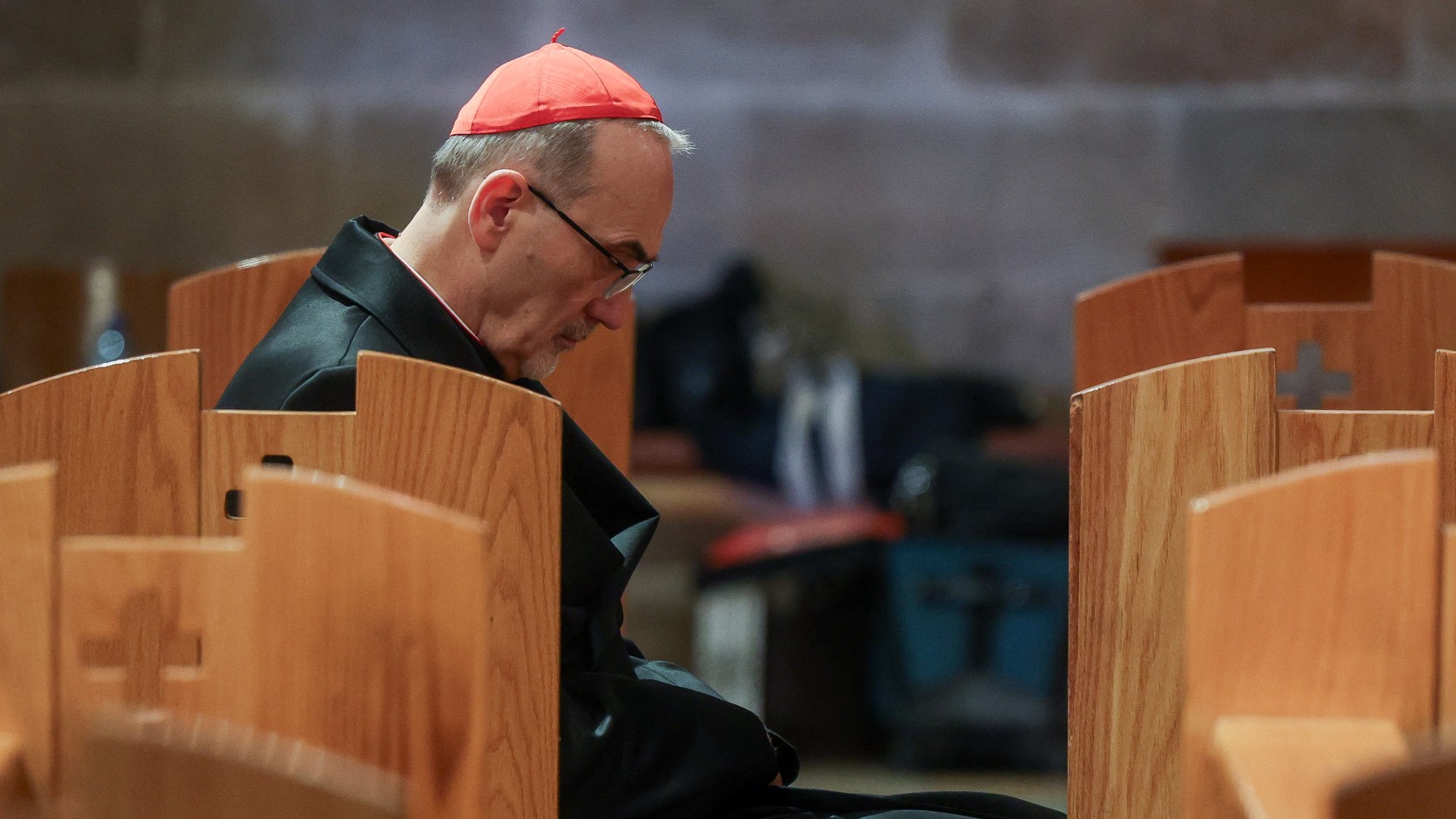
Israeli authorities closed the Church of the Holy Sepulchre, one of the most significant Christian sites in the world, on February 28, 2026, preventing Latin Patriarch Cardinal Pierbattista Pizzaballa from entering during Palm Sunday celebrations. This action was not merely an administrative act but a violent assault on the religious and historical ties of Palestinian Christians, severing them from the heart of their spiritual and social lives.
This closure affects not only Palestinian Christians but serves as a continuous reminder of the Israeli occupation controlling Jerusalem. The Latin Patriarchate deemed this action a dangerous precedent, noting that it disregards the sentiments of billions of people worldwide who look to Jerusalem during this holy week.
Details of the Incident
In a historic precedent, Cardinal Pizzaballa and Father Francesco Lilibo, Custos of the Holy Land, were barred from entering the Church of the Holy Sepulchre. This incident is considered the first of its kind in centuries, as church leaders were prevented from attending the Palm Sunday mass. The decision to close the church followed Israeli claims of security threats, with the Israeli Foreign Ministry alleging that a rocket fell near the Old City.
After facing widespread international criticism, including from close allies like Mike Huckabee, the U.S. ambassador to Israel, Israeli Prime Minister Benjamin Netanyahu reversed the decision, allowing for a "limited prayer" in the church. However, many viewed this reversal as not a genuine solution but merely a maneuver to alleviate international pressure.
Background & Context
Historically, the Church of the Holy Sepulchre has been under a status quo arrangement, an Ottoman-era system aimed at maintaining balance among Christian communities through shared guardianship. However, the suspension of this system under Israeli rule does not enhance security but reflects state dominance over holy sites, turning places of worship into arenas of conflict and control.
Palestinian church leaders warned last January that violence from Israeli settlers threatens the Christian presence in the Holy Land. In recent years, Israel has imposed increasing restrictions on Christians' access to religious celebrations, reflecting a daily reality that includes loss of land, regulation of time, rituals, and dignity.
Impact & Consequences
The closure of the Church of the Holy Sepulchre represents not only an assault on Palestinian Christians but also showcases a colonial structure designed to erase Palestinian presence. True freedom of worship cannot exist under occupation, as freedom necessitates dismantling the structures that allow Israel to impose control over holy sites in Jerusalem.
This action is not an isolated incident but part of a colonial system seeking to normalize exclusion. Closing the church under the pretext of "security" is a political choice, presented as an emergency management, reflecting an exercise of power aimed at legitimizing exclusion.
Regional Significance
The logic of exclusion extends beyond Christian sites, also affecting Muslims who remain barred from accessing the Al-Aqsa Mosque. Jerusalem has witnessed a system of exceptions, where access to holy places depends on the whims of the occupying power.
If Jerusalem is to remain a city of religions, its holy sites must be liberated from the grip of Israeli occupation. The international community must go beyond calls to open holy sites and ensure free and fair access for all religions to these locations. Opening the Church of the Holy Sepulchre and demanding the reopening of the Al-Aqsa Mosque is not a favor but a legal necessity aimed at restoring dignity and affirming Palestinian sovereignty over their spiritual and material heritage.