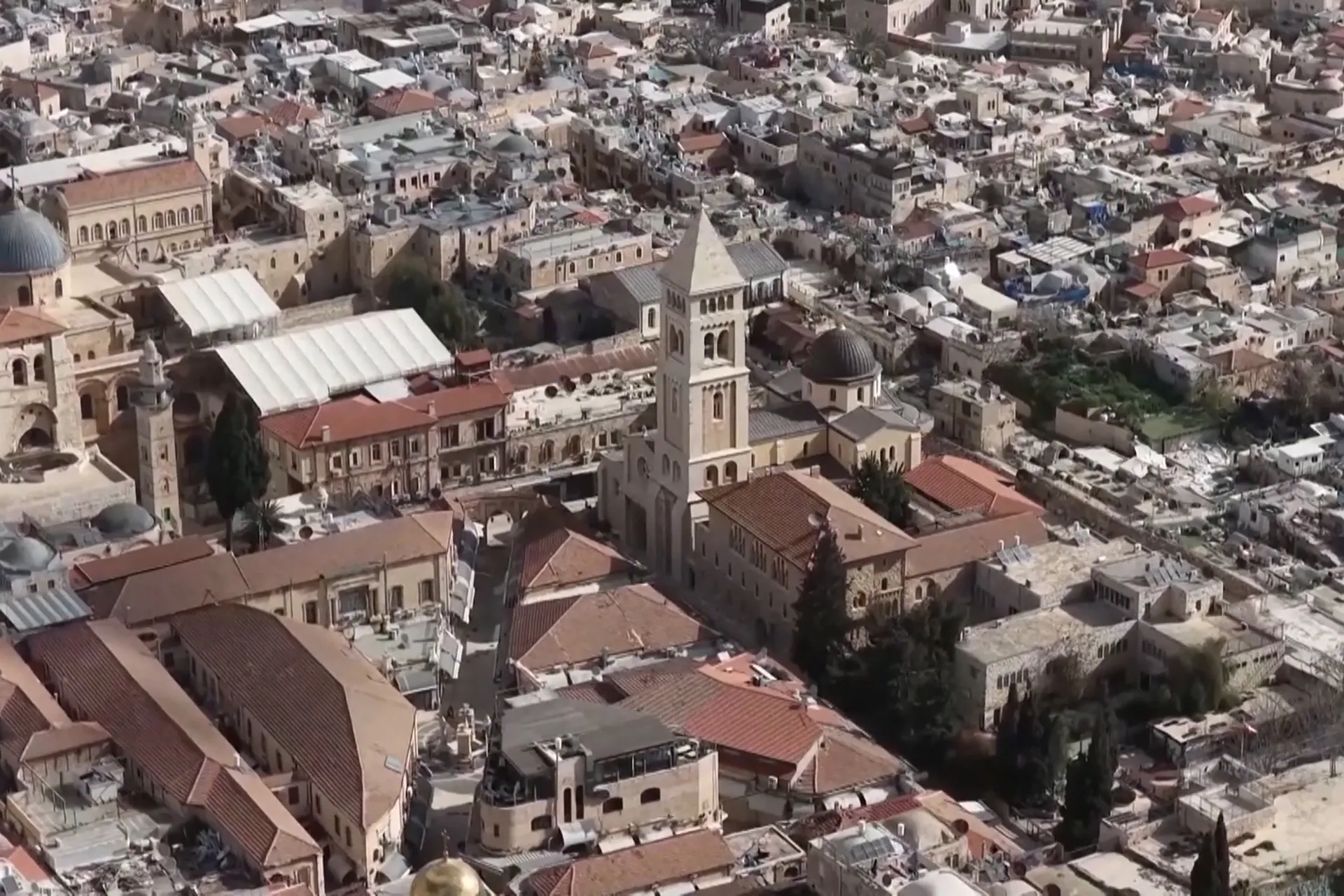
The suffering of Palestinians in Jerusalem is escalating as strict Israeli restrictions persist, affecting central religious practices this year. The Church of the Holy Sepulchre was closed for the first time in decades, coinciding with the closure of Al-Aqsa Mosque, transforming worship seasons into scenes of forced emptiness.
In this context, Al Jazeera correspondent Jivara Al-Budeiri reported a picture of the Old City that lost its usual vibrancy during Holy Week and Easter, which once buzzed with hundreds of thousands of pilgrims. Today, the city appears deserted due to occupation measures and the imposed state of emergency.
Details of the Incident
Data indicates that the occupation authorities closed the Church of the Holy Sepulchre for the first time in decades, surpassing historical norms that grant church leaders the sole authority to open and close it. As Christian and Islamic sanctities fall under Jordanian oversight, this closure reflects an unprecedented escalation in the restrictions imposed on worship.
After Arab and international pressures, Israeli authorities allowed a limited number of no more than 15 clergy from each denomination to perform prayers inside the church, provided they did not gather. Palestinians viewed this measure as an infringement on freedom of worship and a dilution of the occasion's symbolism.
Context and Background
The church doors have remained closed for over 37 days, alongside the closure of markets and alleys surrounding it in the Old City. This situation has deepened the sense of sadness and anger among Palestinians and foreign pilgrims who have been deprived of practicing their rituals.
One foreign pilgrim expressed this reality by stating that today is sad and difficult; although she managed to reach Jerusalem, she was not allowed to enter the church, which was once filled with thousands but is now completely closed, just like the markets.
Consequences and Impact
Al Jazeera's correspondent clarifies that the Palm Sunday and Holy Saturday processions, which traditionally headed towards the Church of the Holy Sepulchre, were absent this year, while Christians were forced to hold their prayers inside their local churches. This scene reflects the extent of the restrictions imposed on freedom of worship.
Clergy members believe that what is happening goes beyond security measures, as Father Elias Awad points out that these steps represent an infringement on the historical status quo and an attempt to alter the city's features and rituals, in a manner unprecedented before.
Impact on the Arab Region
In the church alleys, worshippers continued to perform their rituals in a limited manner, emphasizing that the double standards in dealing with religious occasions compared to what is granted to Jews reflect a policy aimed at distancing them from their sacred sites in the city.
A Palestinian woman stated that their deprivation of access to the church is part of efforts to Judaize Jerusalem, asserting that Palestinians are capable of protecting their presence, but Israeli measures have prevented them from reaching their places of worship this year.
Jivara Al-Budeiri notes that the restrictions were not entirely new, as Palestinians previously needed special permits to access Jerusalem before the war; however, the current state of emergency has exacerbated these restrictions and expanded their scope in an unprecedented manner.
In the vicinity of military checkpoints, tens of thousands of Palestinians were supposed to cross towards Al-Aqsa Mosque and the Church of the Holy Sepulchre, but the ground reality prevented that, amidst strict measures that Palestinians consider part of a policy to displace them.