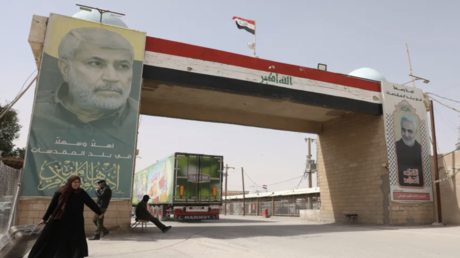
Iraq closed the southern Shalamcheh border crossing with Iran on Saturday, following airstrikes carried out by Iranian forces, which resulted in the death of an Iraqi citizen and serious injuries to five others, most of whom are in critical condition. This action comes at a sensitive time as security conditions are increasingly tense between the two sides.
The airstrikes on Saturday are part of a continuing escalation in tensions between Iraq and Iran, with military incidents along the border increasing in recent months. These strikes have raised widespread concern among political and public circles in Iraq, as such incidents are viewed as violations of Iraqi sovereignty.
Details of the Incident
According to local sources, the Iranian airstrikes targeted areas near the border, leading to civilian casualties. The border crossing was closed as a precautionary measure, as Shalamcheh is a vital crossing point between Iraq and Iran, used by many citizens for trade and travel.
The Iraqi government confirmed that it would take all necessary measures to protect its citizens and that it would investigate the incident. It also called for restraint from all parties involved, emphasizing the importance of dialogue to resolve disputes.
Background & Context
Historically, the Iraqi-Iranian border has witnessed numerous conflicts and tensions, especially following the U.S. invasion of Iraq in 2003. Iran has exploited this chaos to enhance its influence in Iraq, leading to ongoing tensions with certain Iraqi political factions.
In recent years, Iranian military activities in the region have increased, as Iran targets what it perceives as threats to its national security, including armed groups operating along the border. This situation reflects the complexities of relations between Iraq and Iran, where political and security interests are deeply intertwined.
Impact & Consequences
The closure of the Shalamcheh crossing could significantly impact trade movement between Iraq and Iran, as it is one of the most important trade points between the two countries. This closure may lead to rising prices and shortages of goods in Iraqi markets, affecting the lives of citizens.
Moreover, this incident may contribute to increasing political tensions within Iraq, as some political factions may exploit the incident to criticize the Iraqi government regarding its management of security and sovereignty. At the same time, it may increase pressure on the government to negotiate with Iran over border and security issues.
Regional Significance
The events at the Iraqi-Iranian border are part of a larger picture concerning regional security in the Middle East. Tensions between Iraq and Iran could affect the stability of the entire region, potentially leading to escalated armed conflicts or even the outbreak of new conflicts.
Additionally, these incidents may impact relations between Iraq and Gulf Arab states, as these countries closely monitor any escalation in tensions between Iraq and Iran, especially given the fragile political conditions in the region.