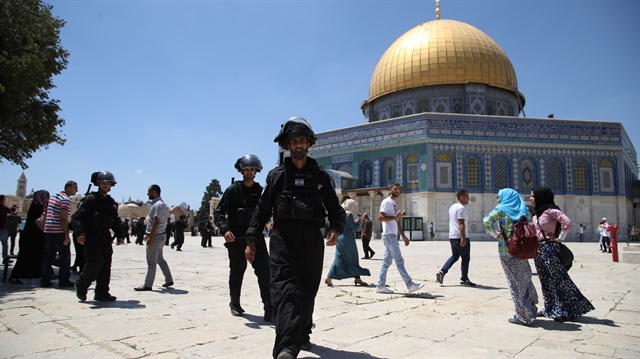
The Israeli occupation's closure of the blessed Al-Aqsa Mosque has entered its second month, amid warnings of the consequences of the occupation's unilateral actions to change the status quo, ultimately aiming to impose new realities and undermine the Islamic Waqf authority.
Under the pretext of the "state of emergency" declared since the onset of the joint American-Israeli attack on Iran on February 28, the occupation authorities continue to close the mosque and prevent worshippers from accessing it.
Details of the Event
The closure of the Al-Aqsa Mosque for a continuous month—marking the first time since the occupation of East Jerusalem in 1967—is an unprecedented measure aimed at imposing new realities on the ground, solidifying control over access and worship, and testing the limits of local and international reactions. Professor of International Law at Al-Quds University, Munir Nseiba, points out that the closure of Al-Aqsa Mosque represents more than one violation and reflects the occupation's policy of disregarding Palestinian rights.
Academic Abdullah Ma'arouf, former media and public relations officer at Al-Aqsa Mosque, asserts that the month-long closure is not merely an ordinary development in the course of the conflict, especially with ongoing reports about the occupation's decision to extend the closure until April 15, which he described as "extremely dangerous."
Context and Background
Historically, the Al-Aqsa Mosque has witnessed numerous attempts by the occupation to alter the existing situation, as it seeks to reinforce its control over Islamic holy sites. These measures have manifested in imposing restrictions on worshippers' access and altering the management of the mosque's affairs, raising significant concerns among Palestinian and Arab circles.
These events coincide with escalating regional tensions, where the occupation believes that the current circumstances provide it with the opportunity to implement its policies without effective resistance. Ma'arouf indicates that the occupation is making substantial modifications to how the affairs of Al-Aqsa Mosque are managed, reflecting its intentions to change the status quo.
Consequences and Impact
The repercussions of the closure of Al-Aqsa Mosque extend beyond local borders, affecting Palestinian-Israeli relations and exacerbating tensions in the region. Ma'arouf considers that the occupation does not value the Palestinian popular presence in Jerusalem, reflecting its disrespect for the Palestinians' will to manage their affairs.
The official Arab silence and the timid responses from Arab governments during this month encourage the occupation to continue its actions. Ma'arouf emphasizes that popular and official deterrence is needed now, as there should be an escalation in the stance in the region.
Impact on the Arab Region
The events at Al-Aqsa Mosque are part of the broader conflict in the region, contributing to fueling feelings of anger and resentment among Palestinians and Arabs. The continuation of the occupation's actions could lead to an explosion of the situation, necessitating effective Arab action to support the Palestinian cause.
In conclusion, Al-Aqsa Mosque remains a symbol of Islamic and Arab identity, and the international community must bear its responsibilities to protect this sacred place from the occupation's attempts to alter its features.