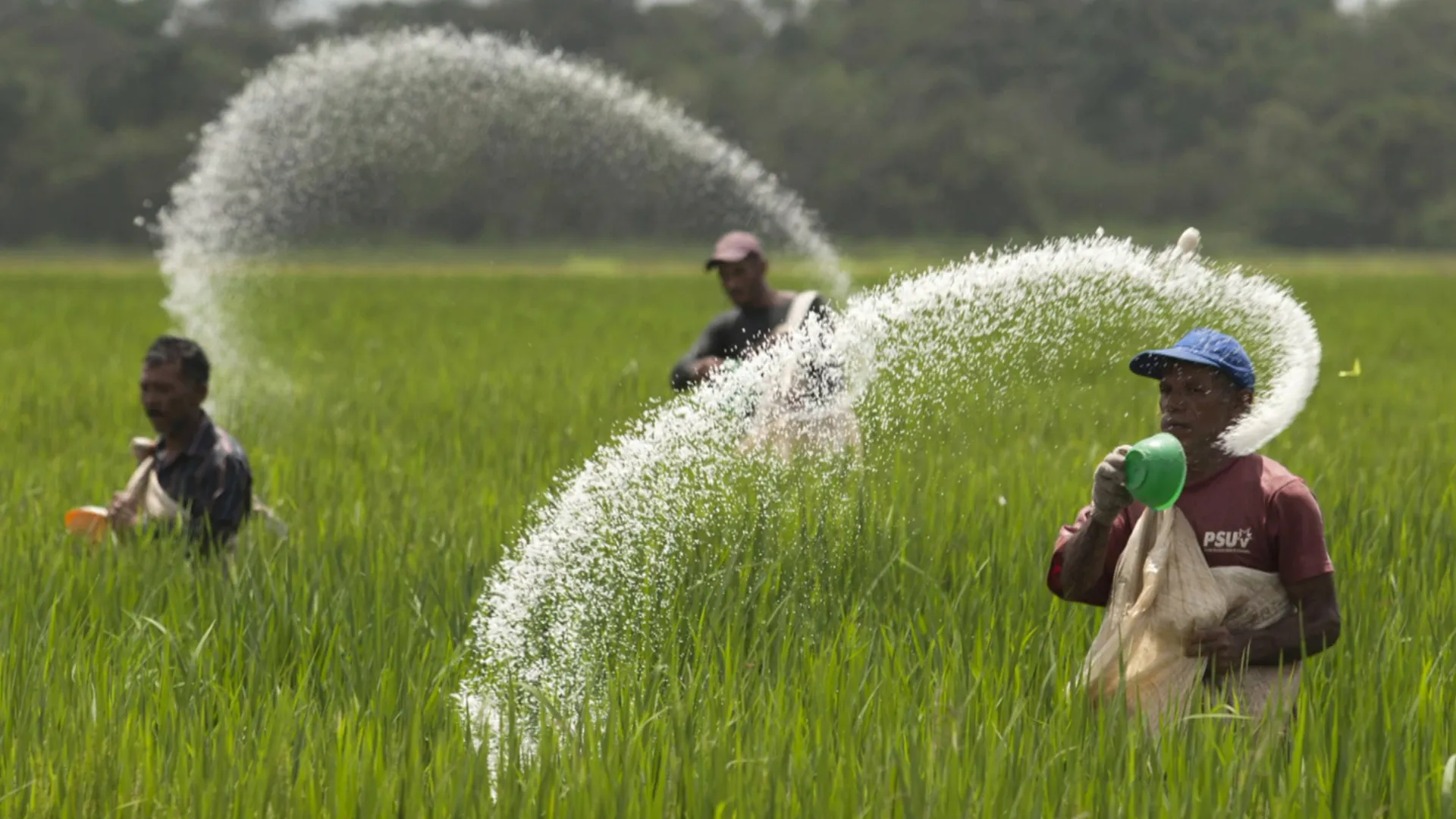
The crisis resulting from the closure of the Strait of Hormuz has significantly impacted global markets, as the repercussions of this closure are no longer confined to the energy sector but have extended to food security worldwide. The strait is considered a vital artery not only for oil transportation but also for essential agricultural materials, such as nitrogen fertilizers, which are a cornerstone of modern agricultural production.
Reports indicate that between 40% and 50% of global nitrogen fertilizer trade passes through the Strait of Hormuz, with Gulf countries and Iran producing over 15 million metric tons annually. With strategic crops like wheat, corn, and rice relying on these fertilizers, farmers in major countries like Brazil and India face significant challenges that could lead to sharp declines in yields.
Details of the Event
According to reports from Goldman Sachs, fertilizer prices have surged by 40%, while the United States is experiencing a supply shortage of up to 25%. This shortage raises increasing concerns about the possibility of a global food crisis, especially if the closure of the strait persists for an extended period.
An episode of the program "Networks" observed widespread interaction on social media platforms, where users discussed the various dimensions of this crisis that have transcended fuel issues to affect livelihoods. Blogger Ibrahim warned of the profound impact of this crisis, noting that the closure of the strait to fertilizer and agricultural nutrient shipments would have long-term effects on global food production.
Context and Background
The Strait of Hormuz is considered one of the most important waterways in the world, through which about 20% of the world's total oil passes. However, its impact is not limited to energy; it extends to agriculture and food security. In recent years, the region has witnessed increasing political tensions, heightening concerns about the stability of food supplies.
Historically, there have been several similar crises that affected global food security, such as the food crisis in 2008, which led to significant increases in food prices. Today, it seems that the world may be on the brink of a new crisis that could be even more severe.
Consequences and Impact
Reports predict that the continued closure of the Strait of Hormuz will lead to a sharp rise in food prices, such as bread, pasta, and rice. Additionally, most countries lack sufficient strategic reserves of fertilizers to cope with a prolonged disruption, meaning that the continuation of the crisis could exacerbate the situation.
Under these circumstances, farmers may be forced to cultivate lower-quality crops that rely less on fertilizers, threatening global food security. Suleiman warned that depleting reserves would lead to catastrophic problems in energy, manufacturing, and agriculture sectors.
Impact on the Arab Region
Arab countries are among the most affected by this crisis, as many of them rely on importing fertilizers and foodstuffs. If the closure of the strait continues, these countries may face significant challenges in securing their food needs, potentially leading to rising prices and increased economic pressures on citizens.
In conclusion, the crisis of the Strait of Hormuz remains a vital issue that requires urgent international attention, as its repercussions may extend to affect global food security, necessitating immediate action to ensure the stability of food supplies.