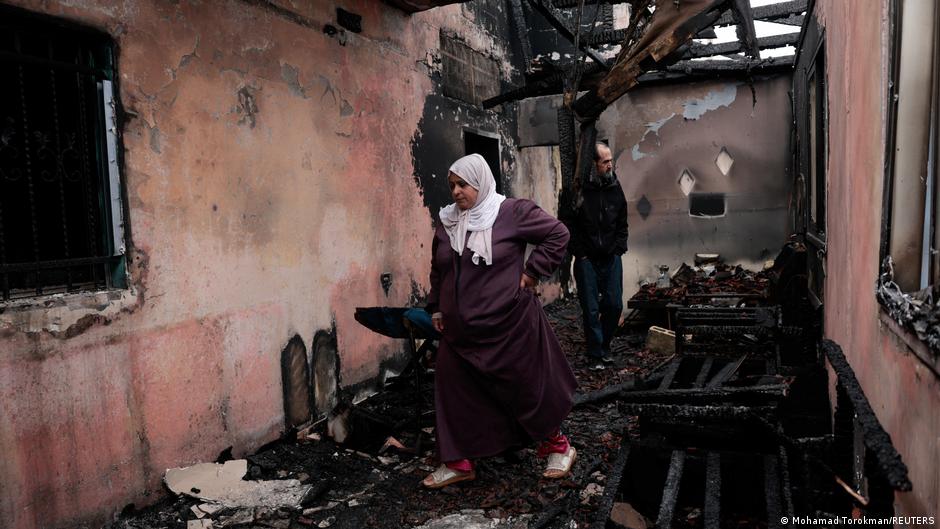
Last Saturday evening, the West Bank witnessed violent events when Israeli settlers attacked Palestinian areas, setting fire to several buildings, homes, and vehicles, leading to injuries among Palestinians who attempted to resist them. The Palestinian economy suffers from these ongoing attacks, which contribute significantly to the persistent tensions in the region. Meanwhile, Israeli security forces announced their deployment in Palestinian villages following the attacks, although no settlers were arrested.
These attacks come at a sensitive time, coinciding with Eid al-Fitr, which marks the end of Ramadan and is a period of high spiritual and cultural significance for Palestinians. Despite a continued rise in violence from settlers over the past years, the recent escalation is linked to increased settlement activity supported by the Israeli government, indicating a trajectory towards further violence and repeated assaults.
Historically, Israel captured the West Bank during the Six-Day War in 1967, and since then, the establishment of settlements in the occupied territories has become common. However, most countries worldwide, including Germany, consider these practices illegal under international law. In 2024, the International Court of Justice issued an opinion calling for Israel to cease all settlement activities and evacuate settlers from the occupied Palestinian territories.
As violence escalates, concerns grow among Palestinians about the lack of protection for themselves and their property, with human rights advocates accusing Israeli authorities of failing to take serious measures to protect civilians. In this context, Israeli Army Chief Eyal Zamir previously called for an end to attacks by extremist settlers, yet no progress has been made, as there were no arrests of the assailants on Saturday.
In response to these events, there has been international community reaction, as the ongoing assaults on Palestinians by Israeli settlers clearly affect the prospects for a political solution based on the two-state principle. Approximately 3 million Palestinians live in the West Bank, alongside more than 500,000 Israeli settlers, complicating any forthcoming diplomatic solution.
The current conditions in the West Bank are pivotal to the Israeli-Palestinian conflict, which still requires a fair settlement that includes a return to meaningful negotiations regarding a two-state solution, viewed globally as suitable for achieving lasting peace in the region. We are faced with a scenario that may necessitate urgent international efforts to restore the legitimate rights of the Palestinian people and ensure their protection from ongoing assaults.
Recent events reflect a bitter reality faced by Palestinians and remain a matter of significant importance for all Arabs, as they illustrate how existing tensions within the West Bank continue to pose a threat to regional security.
If the situation persists, we may witness further escalation, potentially plunging the region into deeper cycles of violence, affecting security across the entire Arab region and reigniting old tragedies still experienced in the Palestinian cause.