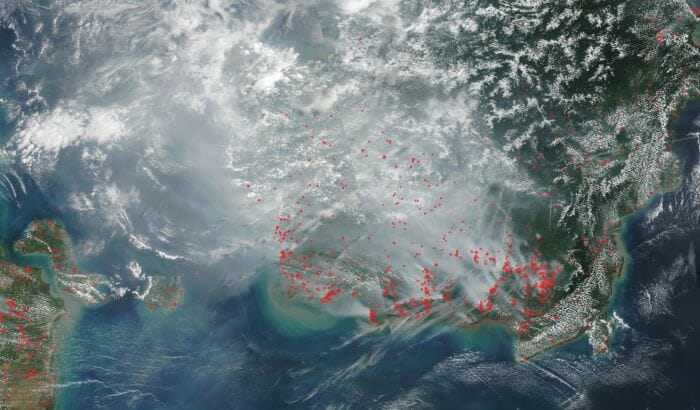
Indonesian firefighting teams, known as Manggala Agni, are facing considerable challenges in extinguishing forest fires raging in the Bengkalis region, where they are suffering from a severe shortage of water sources needed to douse the flames. This crisis was announced by Ferdian Krisnanto, head of the forest fire management agency in the Sumatra region, who noted that the teams are working diligently to find alternative water sources.
Under these difficult circumstances, a team from Manggala Agni has been dispatched to the Sikudi area to search for new water sources, as reports indicate that the small channels in the region have completely dried up. Coordination has been established with the local government to obtain necessary support, including heavy equipment to clear channels and dig for water.
Details of the Incident
Firefighting efforts continue despite the water shortage, as teams are collaborating with the Local Disaster Management Agency and the local community to extinguish the fires. Helicopters equipped with water-dumping equipment have been deployed to affected areas, in addition to implementing weather modification operations to increase the chances of rainfall.
In other parts of Bengkalis, teams have been reinforced by sending additional units from Daops Sumatera V/Dumai and support teams from other regions such as Jambi and Musi Banyuasin. Efforts are focused on creating safe zones to protect homes and farms from the flames.
Background & Context
Forest fires in Indonesia are a recurring problem, especially during the dry season. Part of these fires is attributed to unsustainable agricultural practices, where farmers burn land to prepare it for cultivation. These practices have exacerbated the environmental situation, making it more difficult to control the fires.
Historically, Indonesia has experienced numerous environmental disasters resulting from forest fires, negatively impacting public health and the environment. In recent years, the government has taken steps to improve forest management, but challenges remain.
Impact & Consequences
Forest fires pose a significant threat to the local environment, leading to deteriorating air quality and destruction of natural habitats. They also have negative effects on public health, as they can cause respiratory problems for individuals living near fire-affected areas.
This crisis requires a swift response from the government and the international community, as forest fires not only affect Indonesia but also extend their impacts to neighboring countries through air pollution.
Regional Significance
The forest fires in Indonesia exemplify the environmental challenges faced by many countries worldwide, including Arab nations. Arab countries may be affected by climate change and rising temperatures, increasing the risk of forest fires in arid regions.
It is crucial for Arab nations to learn from the experiences of other countries in managing forest fires and to develop effective strategies for addressing environmental crises.