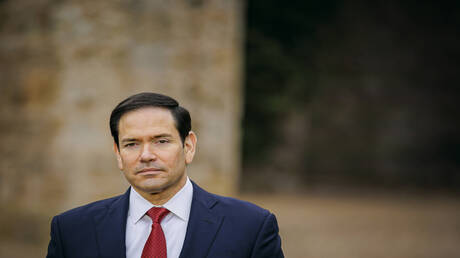
U.S. Secretary of State Marco Rubio emphasized today that competing powers are actively working to undermine the unipolar global order. These remarks come amid rising tensions among major nations, raising questions about the future of the international system.
Rubio's statements serve as a warning from the U.S. administration regarding the challenges it faces on the international stage. He pointed out that these powers, including countries like China and Russia, are enhancing their influence in multiple regions, threatening global stability.
Details of the Event
During his address, Rubio clarified that the United States is facing unprecedented challenges from powers seeking to alter political and economic equations on the international stage. He affirmed that these powers are not only engaged in economic competition but are also striving to expand their military and political influence.
He also noted that the United States will continue to strengthen its alliances with allied nations to confront these challenges. He stressed that international cooperation will be essential to maintain the rules-based global order.
Background & Context
Since the end of the Cold War, the United States has dominated the international system as the sole superpower. However, nations like China and Russia have begun to enhance their influence, leading to the emergence of a multipolar global system. This shift raises concerns among many Western nations, which fear losing control over international balances.
Historically, international relations have experienced significant fluctuations, with major powers competing for influence and control. As new powers emerge, the United States must reassess its strategies to ensure the continuity of its dominance.
Impact & Consequences
Rubio's remarks underscore the importance of international alliances in addressing new challenges. These dynamics are expected to lead to changes in the foreign policies of major nations, which may affect regional and international stability.
This competition could also escalate military tensions, particularly in sensitive areas such as the South China Sea and Eastern Europe. It requires the international community to take proactive steps to prevent any potential escalation.
Regional Significance
Amid these tensions, Arab nations may find themselves in a sensitive position. Some countries rely on the United States for their security support, while others seek to strengthen their ties with competing powers.
These dynamics could impact the investments and aid received by Arab nations, prompting them to reassess their political and economic strategies.
In conclusion, the statements made by the U.S. Secretary of State reflect a complex reality that requires major powers to rethink their policies. As rapid changes unfold, the question remains: how will nations respond to these new challenges?