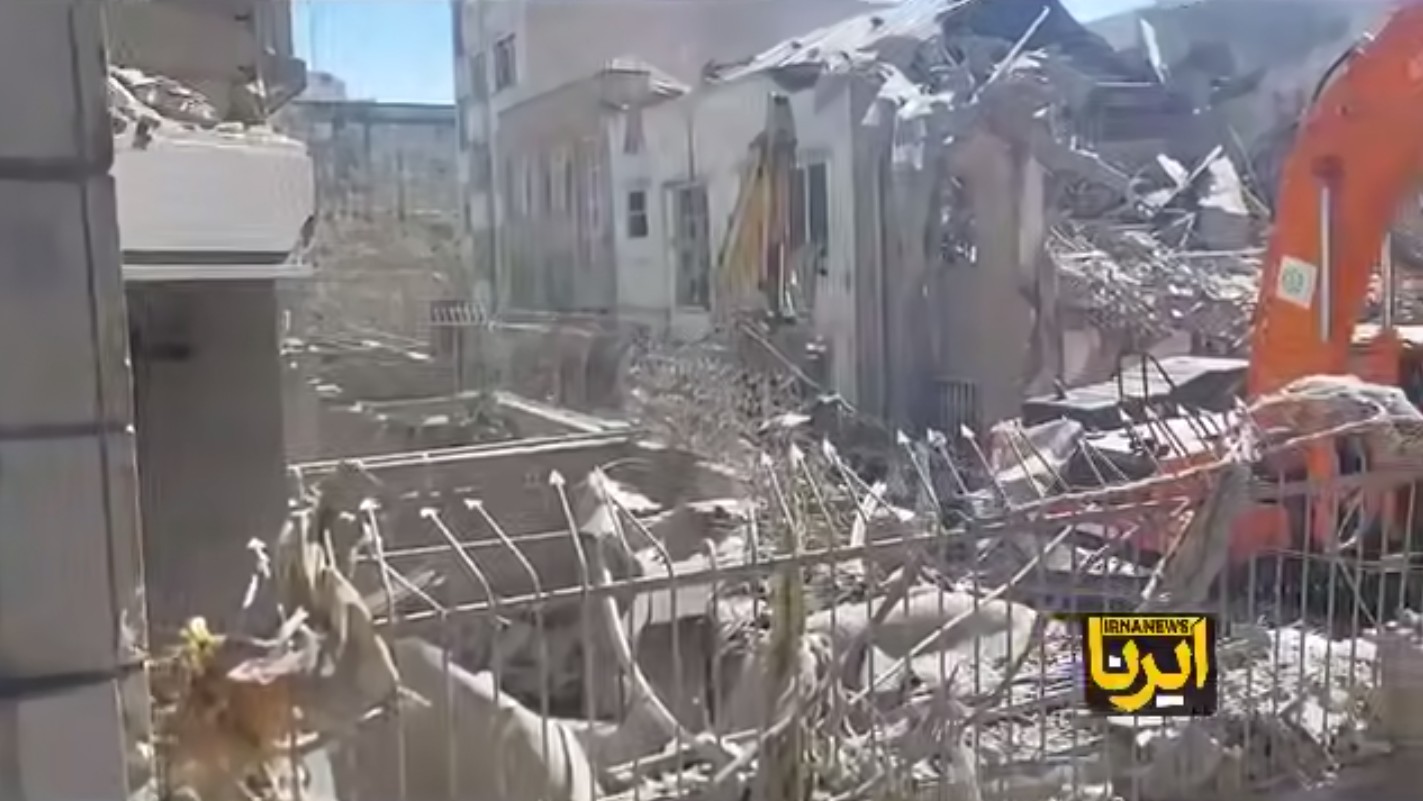
Iranian media announced the complete destruction of the Rafi-Nia temple in the capital, Tehran, due to airstrikes executed by the United States and Israel. The incident took place in the early hours of this morning, raising widespread concern within the Iranian Jewish community.
Footage circulated on social media showed rescue workers searching through the rubble of the temple, with Hebrew texts scattered on the ground. No injuries have been reported so far, but the damage to the temple is considered significant.
Details of the Incident
The Rafi-Nia temple is regarded as one of the most important gathering places for the Jewish community of Khorasan in Tehran, a community with a history spanning centuries. The airstrikes come at a sensitive time, coinciding with the Jewish Passover celebrations, complicating the situation further.
No official comments have been issued by the United States or Israel regarding these strikes, raising questions about the true motives behind this attack.
Background & Context
Iran is home to one of the largest Jewish communities in the Middle East, with approximately 9,000 Jews according to the 2016 census. However, some community members believe the actual number is higher. Despite political tensions, Jews in Iran enjoy legal protection, as Iranian law recognizes Judaism as a religion.
Since February 28, Tehran has faced several airstrikes from American and Israeli forces, resulting in the deaths of around 3,600 Iranians, including 1,665 civilians, according to a human rights activists' agency.
Impact & Consequences
This attack may heighten fears within the Jewish community in Iran, as many individuals have expressed concerns about their future in the country. In previous statements, a Jewish businesswoman from Shiraz remarked, "I am Jewish, but I cannot see my country as an enemy," reflecting the internal tensions experienced by the community.
The airstrikes occur amid escalating tensions between Iran and the United States, with growing fears of a larger escalation in the region. These events could exacerbate humanitarian conditions and increase civilian suffering.
Regional Significance
These strikes are part of the broader conflict in the Middle East, which directly affects Arab countries. The rising tensions between Iran and its allies on one side, and the United States and Israel on the other, could lead to negative repercussions for security and stability in the region.
In light of these circumstances, Arab countries must be prepared to face the challenges arising from these conflicts and work towards enhancing dialogue and understanding among the various parties involved.