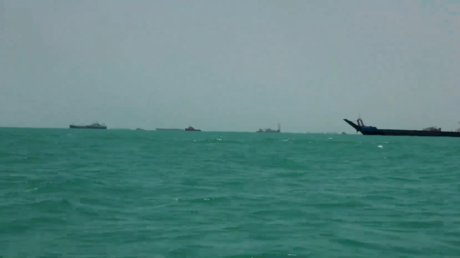
Exclusive footage captured yesterday from Bandar Abbas in southern Iran shows that several ships and oil tankers are stopped in the Strait of Hormuz, waiting to transit. These scenes reflect a state of complete paralysis in maritime navigation, raising concerns about the repercussions on the global oil market.
The Strait of Hormuz is a vital transit point for oil, through which approximately 20% of total global oil exports pass. The halt in tanker movements in this strategic area could have significant impacts on prices and international trade.
Details of the Incident
The images taken from Bandar Abbas show several vessels stuck in the waters, indicating issues with navigation. This stoppage may be due to multiple factors, including geopolitical tensions or adverse weather conditions.
It is known that the Strait of Hormuz has witnessed numerous incidents in recent years that have affected navigation, including attacks on ships and threats from certain countries. These events make the Strait of Hormuz an extremely sensitive area in the context of maritime security.
Background & Context
Historically, the Strait of Hormuz has been the scene of many conflicts and disputes, as it is a crucial transit point for oil. In recent years, tensions have increased between Iran and the United States, affecting navigation in the region.
These events come at a sensitive time, as fears of escalating tensions in the area are rising, which could lead to negative impacts on the global economy. Any disruption in transport through the strait could result in rising oil prices, affecting global economies.
Impact & Consequences
The halt of tankers in the Strait of Hormuz could lead to increased oil prices in global markets, impacting oil-importing countries. Furthermore, any disruption in supplies could negatively reflect on the economic stability of many nations.
Additionally, the continuation of this situation may lead to heightened tensions between the involved countries, potentially causing an escalation in military or economic conflicts. These dynamics can affect regional and international security.
Regional Significance
Arab countries, especially those dependent on oil exports, are likely to be the most affected by the halt in navigation in the Strait of Hormuz. Any increase in oil prices could have negative repercussions on the economies of these nations.
Moreover, the ongoing tensions in the region may impact the political stability of neighboring countries, complicating the security and economic situations in the area.
In conclusion, the complete shutdown of oil tankers in the Strait of Hormuz represents a significant challenge to maritime and economic security in the region. It requires close monitoring by the concerned countries and the international community to ensure that the situation does not worsen.