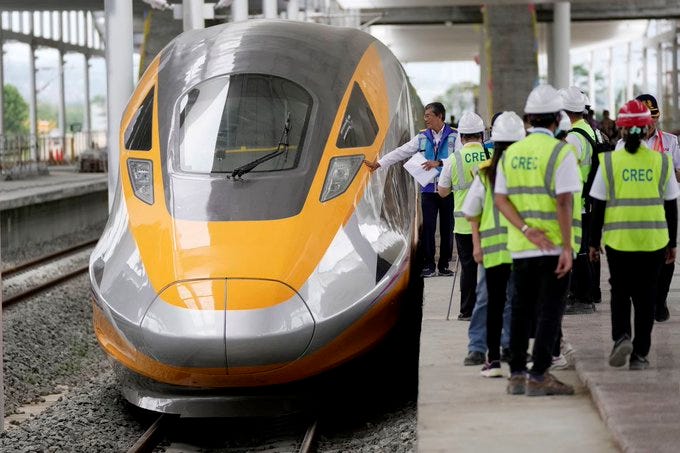
The agency responsible for managing state-owned enterprises in Indonesia (BP BUMN) has reported that the debt restructuring process for the high-speed train project between Indonesia and China, known as 'Whoosh,' has been completed. Official details are expected to be announced shortly. This statement was made by the head of the agency, Danantara Doni Oskaria, during a press conference at the presidential palace in Jakarta.
Oskaria explained that negotiations with Finance Minister, Bappaya Yudi Sadio, have reached the final stage of the restructuring process. He confirmed that all studies related to the debts have been completed and that an agreement has been reached among all parties involved. He noted that the next step will be the signing of official documents, which will be announced to the public in due course.
Details of the Announcement
Danantara Oskaria stated, "I have discussed with the Finance Minister, and a final agreement has been reached. All studies related to the restructuring have been completed, and we are now in the stage of formal procedures." He emphasized that the government is focused on solving issues comprehensively without delving into discussions about the historical causes of financial problems.
He also indicated that the management of the high-speed train project will remain under the supervision of PT Kereta Api Indonesia, and details regarding project ownership and financing will be announced at the next official press conference. He assured that the services provided to the public will not be affected, and improvements are expected following the clarification of the financing structure.
Background & Context
The high-speed train project between Indonesia and China is considered one of the major projects representing a strategic partnership between the two countries. The project has faced financial and administrative challenges since its inception, necessitating urgent debt restructuring to ensure its continuity. This project is part of Indonesia's efforts to develop its infrastructure and boost economic growth.
Historically, Indonesia has witnessed numerous major projects that encountered difficulties in financing and management, prompting the government to continuously seek innovative solutions to ensure the sustainability of these projects. The success of the current restructuring reflects the government's commitment to enhancing transparency and improving the management of state projects.
Impact & Consequences
The Indonesian government anticipates that the debt restructuring of the high-speed train project will improve the project's financial situation, thereby enhancing confidence among local and foreign investors. Additionally, the stability of the project will help create new job opportunities and promote economic development in the regions through which the train will pass.
On the other hand, the success of the project may open new avenues for cooperation between Indonesia and China in other fields, thereby strengthening economic relations between the two countries. Furthermore, improving transportation infrastructure in Indonesia could attract more tourists and investors.
Regional Significance
Although the project focuses on Indonesia, its success could have positive implications for the Arab region. Strengthening cooperation among developing countries in infrastructure can serve as a model for Arab nations seeking to develop their own projects.
Moreover, leveraging Indonesian experiences in managing major projects could provide valuable lessons for Arab countries, especially in light of the economic challenges facing many of these nations.