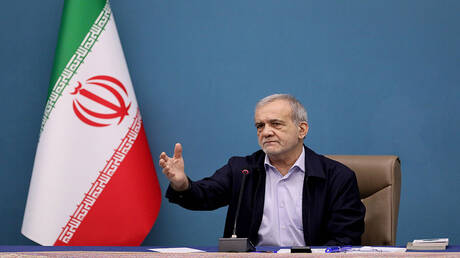
Iranian President Masoud Bezhakian has stated that the targeting and damage to hospitals, pharmaceutical companies, and the Pasteur Institute, which is considered a center for medical research in Iran, represents a blatant crime against humanity. This statement comes amid escalating regional and international tensions, where Bezhakian called on the World Health Organization to take a firm stance against these violations.
Hospitals and medical research centers are fundamental infrastructures that ensure the health and safety of the community. However, attacks targeting these institutions raise concerns about the safety of patients and healthcare workers, undermining the health system as a whole and negatively impacting the provision of medical services.
Details of the Incident
In statements made during a press conference, Bezhakian pointed out that attacks on hospitals are not merely assaults on buildings, but assaults on humanity as a whole. He emphasized that these actions contradict the fundamental principles of international humanitarian law, which prohibits targeting civilians and health facilities in armed conflicts.
Bezhakian also added that Iran faces significant challenges in public health, especially in light of economic sanctions that affect the country's ability to import medicines and medical equipment. He affirmed that these conditions make it essential to protect health institutions from any attacks.
Background & Context
Historically, Iran has witnessed numerous health crises, particularly during periods of conflict and political tensions. This has led to a deterioration of the health situation in the country, necessitating urgent measures to protect medical institutions. In recent years, many hospitals in conflict areas in the Middle East have been subjected to attacks, raising concerns in the international community.
Iran seeks to enhance its health capabilities by developing research and development centers, such as the Pasteur Institute, which plays a vital role in combating diseases and developing vaccines. However, ongoing threats could hinder these efforts and impact the health of millions.
Impact & Consequences
Attacks on hospitals could exacerbate health conditions in Iran, increasing the suffering of patients and affecting the health system's ability to provide necessary care. Additionally, these actions could lead to a deterioration of relations between Iran and other countries, particularly those that support human rights.
Moreover, targeting health institutions could provoke international reactions, as some countries may call for new sanctions against Iran or take diplomatic actions. This could complicate the political and economic situation in the country.
Regional Significance
Events in Iran are of significant importance to the Arab region, as they can affect regional stability. The deterioration of the health situation in Iran may lead to an influx of refugees into neighboring countries, increasing pressure on the health systems in those nations.
Furthermore, the targeting of hospitals may raise concerns among Arab countries regarding the safety of their health institutions, especially amid ongoing political tensions in the region. Therefore, enhancing regional cooperation in health is essential to address these challenges.
In conclusion, the targeting of hospitals and medical research centers in Iran constitutes a crime against humanity that requires urgent international action. The international community must take a firm stance to protect health institutions and ensure the safety of patients and healthcare workers.