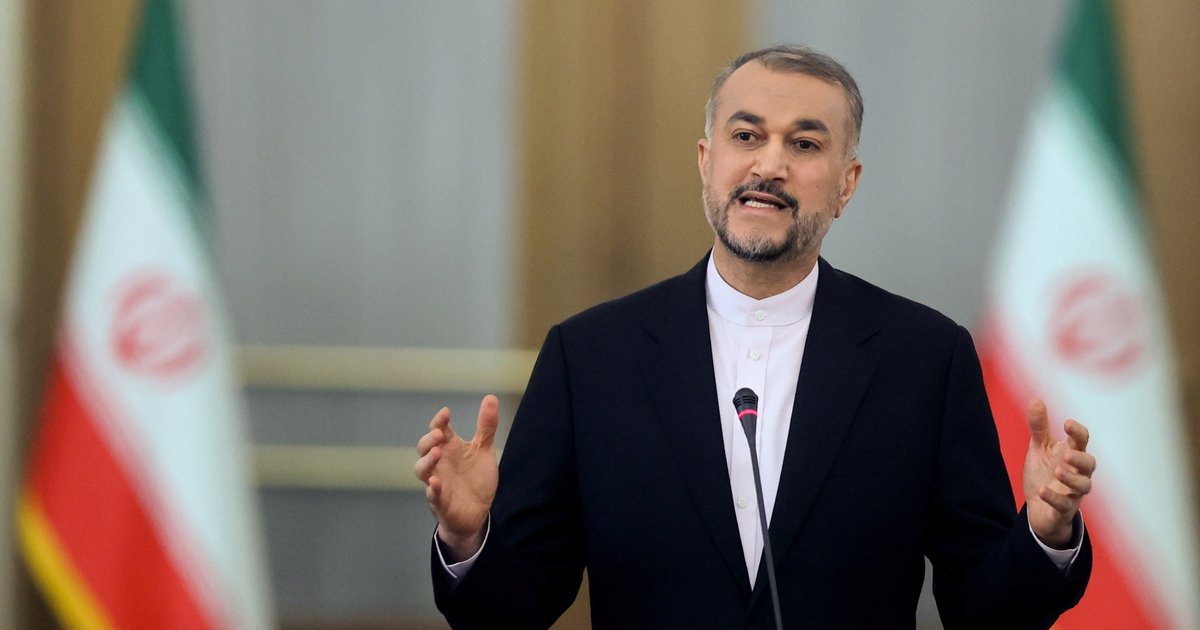
Jordan's Foreign Minister Ayman Safadi strongly condemned the Iranian aggressions against Arab countries, asserting that these actions threaten security and stability in the region. He also denounced the Israeli aggression against Lebanon, pointing out that such behaviors require a unified Arab stance to confront them.
Safadi's statements came during a press conference held in Amman, where he emphasized the importance of Arab cooperation to face the challenges currently confronting Arab nations. He noted that Iranian aggressions target the national sovereignty of Arab states, necessitating urgent action from the international community.
Details of the Incident
Safadi's remarks come at a sensitive time when the region is witnessing escalating tensions, with many Arab countries facing threats from Iran, either through its support for armed groups or through direct interventions in their internal affairs. In this context, Safadi affirmed that Jordan stands with Arab nations in confronting these challenges, calling for enhanced security and political coordination.
He also addressed the Israeli aggression against Lebanon, indicating that this aggression contradicts international laws and exacerbates the suffering of the Lebanese people. He urged the international community to take a firm stance against these violations and to work towards peaceful solutions to conflicts in the region.
Background & Context
Historically, relations between Iran and Arab countries have been marked by increasing tensions, especially following the 1979 Islamic Revolution in Iran. These tensions have contributed to fueling conflicts in the region, with Arab states accusing Iran of interfering in their internal affairs and supporting armed groups seeking to destabilize them.
On the other hand, the Israeli aggression against Lebanon dates back decades of conflict, during which the region has witnessed several wars and disputes leading to widespread destruction and significant humanitarian suffering. Lebanon is considered one of the countries most affected by regional conflicts, necessitating urgent international support.
Impact & Consequences
Safadi's statements highlight the importance of Arab unity in facing common challenges. The escalation of Iranian and Israeli aggressions could worsen the situation in the region, requiring an effective response from Arab states and the international community.
The continuation of these aggressions may negatively impact regional security and intensify existing conflicts. Additionally, the absence of a unified Arab stance could exacerbate humanitarian crises in affected countries, such as Lebanon and Syria.
Regional Significance
Safadi's statements serve as a call to unify Arab efforts to confront security and political challenges. Security and stability in the region are closely linked to enhancing cooperation among Arab states and working towards peaceful solutions to disputes.
In conclusion, there remains an urgent need to strengthen dialogue and understanding among Arab nations and to build a comprehensive strategy to address common threats. Arab unity is the only way to achieve security and stability in the region.