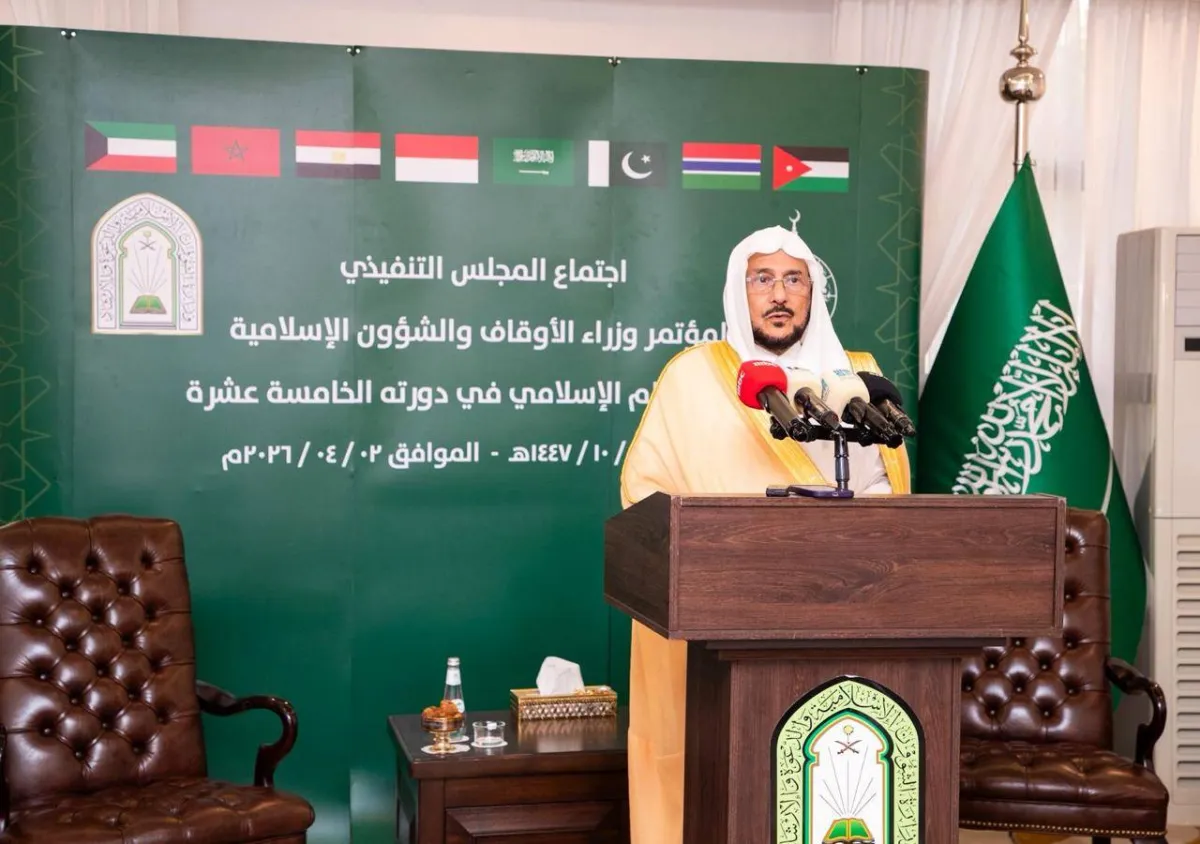
The Executive Council of the Conference of Ministers of Awqaf and Islamic Affairs from the Islamic world condemned the deliberate Iranian attacks on the Kingdom of Saudi Arabia, Gulf countries, and Jordan during a meeting held via video conference. The attendees affirmed that these actions represent a blatant violation of Islamic values and international principles, posing a threat to peace and regional security.
The final statement of the meeting, which took place in the city of Jeddah, described these attacks as terrorizing the innocent and destroying vital facilities, including water desalination plants and airports. It also pointed out that these actions cannot be justified in any way, calling on Iran to immediately cease its support for affiliated militias.
Details of the Meeting
During the meeting, the Minister of Islamic Affairs, Call and Guidance in Saudi Arabia, Dr. Abdul Latif bin Abdul Aziz Al Sheikh, emphasized the necessity of condemning the Iranian attacks, indicating that they represent a violation of Islamic values and international treaties. He explained that these attacks aim to destabilize the region and ignite discord.
The minister stressed Saudi Arabia's capability to protect its security and sanctities, affirming that the Saudi leadership is working to enhance national unity and confront any threats. He noted that the current circumstances facing the Islamic nation require concerted efforts to address challenges.
Background & Context
These condemnations come at a time when the region is witnessing an escalation in tensions due to repeated Iranian attacks, which include launching drones and missiles towards Gulf countries. Security reports have shown the seizure of several cells affiliated with Iran in Gulf states, reflecting the scale of the threats these countries face.
Furthermore, recent statements by Ukrainian President Volodymyr Zelensky regarding his country's readiness to assist in opening the Strait of Hormuz highlight the strategic importance of the region in the international context, especially amid global economic crises.
Impact & Consequences
The Iranian attacks demonstrate a negative impact on regional security, reinforcing the need for greater cooperation among Gulf countries to confront these threats. Additionally, these events may affect relations between Arab states and Iran, complicating the political landscape in the region.
Moreover, the continuation of these attacks could lead to military escalation, threatening regional stability and impacting the global economy, particularly given the heavy reliance on energy resources from these countries.
Regional Significance
The Iranian attacks on Gulf countries and Jordan pose a significant challenge to Arab security, necessitating a unified response from Arab nations to confront these threats. These events may also enhance security cooperation among Arab states, contributing to regional security enhancement.
In conclusion, the situation in the region remains sensitive, requiring a concerted Arab effort to address security and economic challenges, alongside the need to promote dialogue and understanding among nations to achieve stability and peace.