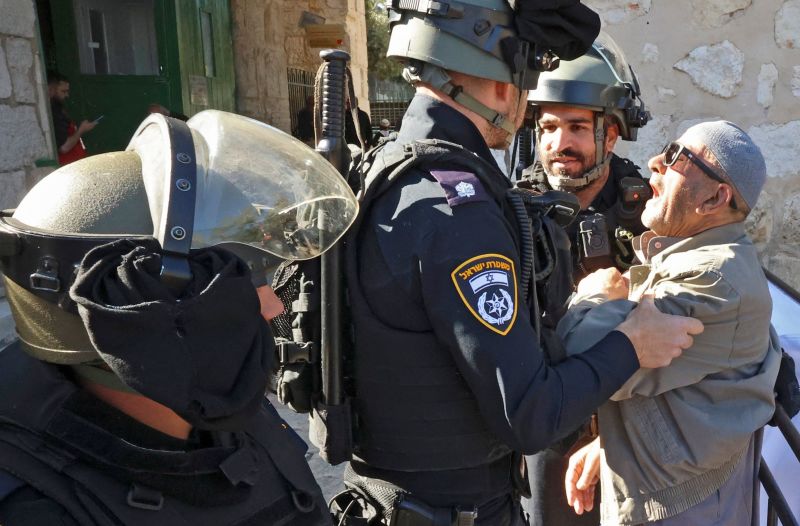
The Muslim Council of Elders (MHM), chaired by Sheikh Ahmed Al-Tayyeb, has condemned the incursion of Israeli National Security Minister Itamar Ben Gvir into the Al-Aqsa Mosque, which was supported by the occupying Israeli forces. The council stated that this act represents a blatant violation of international laws and constitutes a clear provocation to the feelings of Muslims around the globe.
In an official statement, the Secretary-General of the Muslim Council of Elders, Counselor Mohamed Abdel Salam, emphasized that such actions threaten the historical and religious status of the Al-Aqsa Mosque, which is regarded as an exclusive place of worship for Muslims. He also noted that the Al-Aqsa Mosque spans an area of 144 dunams, reflecting its religious and cultural significance.
Details of the Incident
These statements came after Ben Gvir's raid on the Al-Aqsa Mosque, which sparked angry reactions in the Islamic world. The Muslim Council of Elders warned of the dire consequences that could result from these violations, stressing the need to respect the status quo in holy sites.
The council also called on the international community to assume its moral and legal responsibilities and to take immediate action to stop the repeated violations against the Al-Aqsa Mosque and the city of Jerusalem. It emphasized the importance of protecting holy sites and ensuring freedom of worship for all Muslims.
Background & Context
Historically, the Al-Aqsa Mosque is considered one of the holiest places in Islam and has witnessed numerous historical events that have shaped the Arab-Israeli conflict. Since the occupation of Jerusalem in 1967, the Al-Aqsa Mosque has faced several violations and attempts to alter the status quo, leading to increased tensions in the region.
It is worth noting that the Muslim Council of Elders was established in 2014 with the aim of promoting interfaith dialogue and protecting the rights of Muslims worldwide. The council comprises a group of scholars and thinkers from various Islamic countries, reflecting the diversity of opinions and perspectives on Islamic issues.
Impact & Consequences
Analyses indicate that the incursion of the Al-Aqsa Mosque by Israeli officials may lead to an escalation of violence in the region, especially given the already tense situation. Many experts have warned that such actions could provoke strong reactions from Palestinians, complicating the security situation in Jerusalem.
Moreover, these violations could negatively impact relations between Islamic countries and Israel, as pressures on Islamic governments to address these violations are expected to increase. Some countries may take diplomatic or economic steps to pressure Israel to halt these actions.
Regional Significance
The issue of the Al-Aqsa Mosque is central to the Arab world, evoking strong sentiments among Muslims. Israeli violations may lead to a unification of Arab and Islamic ranks against these actions, potentially enhancing Arab solidarity.
In light of these circumstances, Arab countries must adopt clear positions regarding these violations and work to support the rights of Palestinians in establishing their independent state with Jerusalem as its capital. Additionally, enhancing dialogue among Islamic countries can contribute to finding peaceful solutions to the conflict.