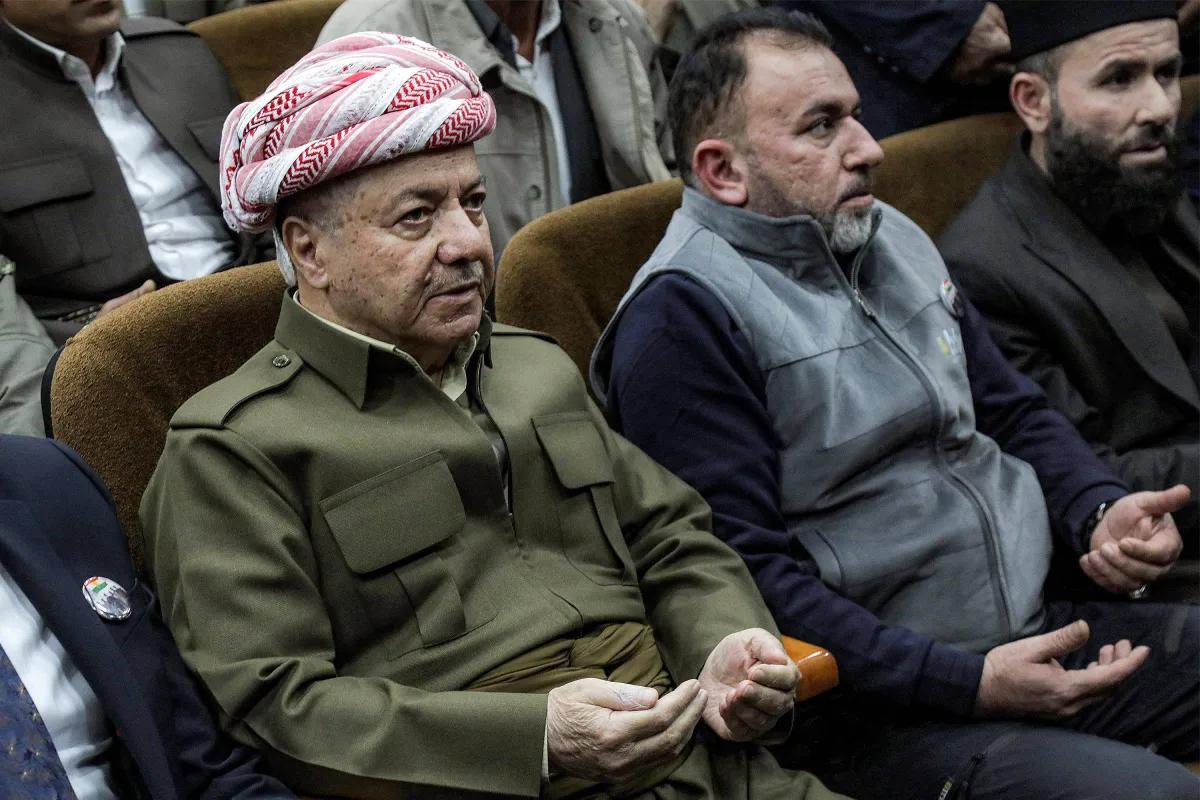
Masoud Barzani, the leader of the Kurdistan Democratic Party, condemned the five attacks on his private headquarters, holding the Iraqi government responsible for these assaults. This statement follows the targeting of the home of the President of the Kurdistan Region, Nechirvan Barzani, in Duhok, which has provoked angry reactions at both local and international levels.
In his statement, Barzani emphasized that there is a group of individuals working against the Kurdistan Region without any deterrent, indicating that the primary focus of these groups is to create chaos in the region. He clarified that despite the attacks on his headquarters, they chose to remain silent to avoid causing panic among the public.
Details of the Incident
Barzani reported that his headquarters had been attacked five times, reflecting the escalating tensions in the area. He called on the Iraqi government to take a firm stance, either by declaring its inability to prevent these lawless groups or by seriously taking responsibility. He also pointed out the necessity of implementing effective measures to prevent the recurrence of such attacks.
This escalation comes at a sensitive time, as Iraq is experiencing increasing political and security tensions. The targeting of Nechirvan Barzani's home, a prominent figure in the region, has raised concerns about the potential for increased violence in the area.
Background & Context
Historically, the Kurdistan Region of Iraq has faced recurring tensions with the central government in Baghdad, especially following the independence referendum held in 2017. Since then, attacks by armed groups have increased, exacerbating the security situation in the region.
These attacks are seen as part of the ongoing struggle between various political forces in Iraq, each seeking to enhance its influence in the absence of stability. These events serve as a reminder of the fragility of the security situation in Iraq, especially amid the economic and social challenges the country faces.
Impact & Consequences
These events raise fears of escalating violence in the Kurdistan Region, which could affect stability in Iraq as a whole. If these attacks continue, they may provoke strong reactions from Kurdish forces, complicating the security situation further.
Moreover, these incidents could impact the relationships between the Kurdistan Region and the Iraqi government, potentially leading to further escalation. At the same time, they may invite external interventions from regional countries seeking to enhance their influence in Iraq.
Regional Significance
These events are indicative of the increasing tensions in the region, where many Arab countries are suffering from internal and external conflicts. The rise of violence in Iraq could have negative repercussions for neighboring countries, especially given the fragile security situations in Syria and Lebanon.
Ultimately, the situation in Iraq requires swift action from the international community to ensure regional stability. Coordinated efforts are essential to prevent the escalation of violence and protect civilians, particularly under the current conditions affecting the region.