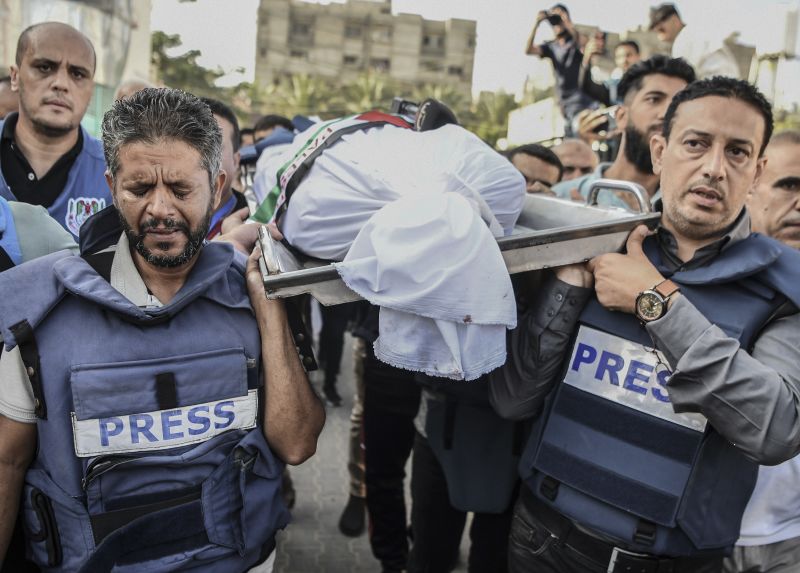
The Lebanese Journalists' Syndicate condemned the execution of three Lebanese journalists by the Israeli army, describing the incident as a "complete war crime." The incident, which occurred in southern Lebanon, sparked outrage from human rights organizations and the international community, as such acts are considered a blatant violation of human rights and press freedom.
The three journalists, who were covering events in the region, were subjected to direct gunfire from Israeli forces, resulting in their immediate deaths. This incident comes at a sensitive time as the region experiences heightened tensions, raising fears about the safety of journalists working in conflict areas.
Details of the Incident
According to reports, the three journalists were covering clashes between Israeli forces and Lebanese resistance when they came under attack. The Syndicate confirmed that the journalists were wearing their official attire and were operating within the framework of their journalistic duties, making their targeting a clear crime under international law.
The journalists were part of a team aimed at documenting ongoing events in Lebanon and were known for their high professionalism and commitment to conveying the truth. The incident has drawn widespread condemnation from their colleagues in the profession, who have called for accountability for those responsible for this crime.
Background & Context
Historically, Lebanon has witnessed numerous violations against journalists, especially during periods of conflict. Since the onset of the Israeli-Lebanese conflict, many journalists have faced assaults, resulting in loss of life or injury. This incident is part of a series of violations against press freedom in the region.
The situation in Lebanon is complex, with various political and military forces overlapping, making journalists vulnerable to danger. Unions and international organizations have repeatedly called for the protection of journalists and ensuring their safety while performing their duties.
Impact & Consequences
This incident serves as a wake-up call for the international community regarding the need for action to protect journalists in conflict zones. The Lebanese Syndicate confirmed that it would raise the issue with international organizations, demanding a thorough investigation and accountability for those responsible for this crime.
The potential repercussions of this incident could lead to escalating tensions between Lebanon and Israel, as it may be used as a pretext to justify further military operations. Additionally, it may impact press freedom in the region, as journalists may feel apprehensive about covering events under such dangerous circumstances.
Regional Significance
This incident exemplifies the challenges faced by journalists in the Arab world, where freedom of expression is under constant threat. Many Arab countries suffer from repression of press freedom, leading to a decline in independent media coverage.
Moreover, this incident could affect relations between Arab countries and the international community, as strong reactions from human rights organizations and countries supporting press freedom are expected. Under these circumstances, hope remains pinned on the international community to pressure for the protection of journalists and ensure their rights.