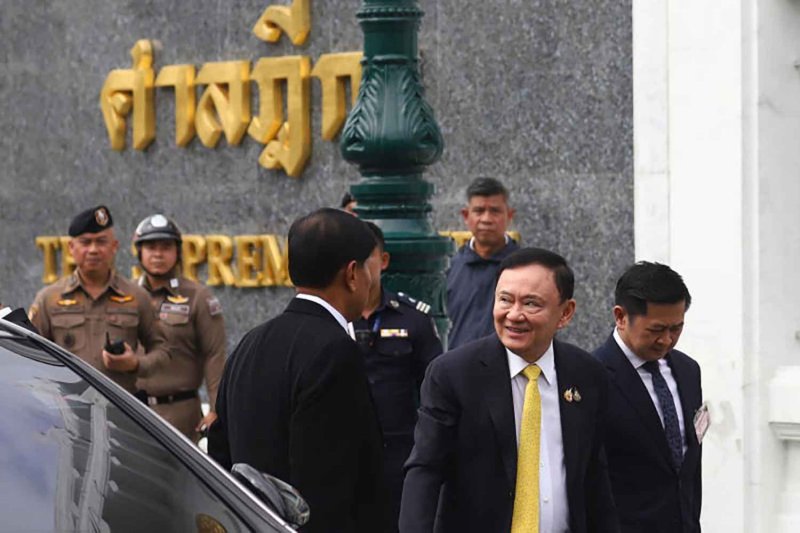
Sources from the Thai Ministry of Justice have indicated that former Prime Minister Thaksin Shinawatra may be among the prisoners set to be released as part of a conditional release review. Shinawatra has been included in a list of ten inmates whose cases have been approved for review, with expectations that he will be released under electronic monitoring on May 11.
Sources confirmed that the Klong Prem Central Prison Committee has completed its review of the inmates' cases and determined that the ten names meet the necessary criteria for conditional release. The list will now be sent to the Department of Corrections for further scrutiny.
Details of the Event
Thaksin Shinawatra is serving a one-year prison sentence and has spent over six months in custody. He is expected to meet the two-thirds requirement necessary for conditional release by May. Sources noted that factors such as age, health, behavior during detention, and the suitability of the supervision environment will be taken into account during the review process.
If all goes as planned, Shinawatra could be released on May 11 and would undergo an additional monitoring period of four months until the completion of his sentence.
Background & Context
Thaksin Shinawatra is a prominent figure in Thai politics, having served as Prime Minister from 2001 to 2006. He was ousted in a military coup in 2006 and has since lived in exile for a long period before returning to Thailand in 2023. He was sentenced to prison on corruption charges, which sparked widespread controversy in the country.
Historically, Thailand has witnessed numerous political coups and internal conflicts, making the political situation in the country volatile. Shinawatra's return to the political arena after years of absence reflects the ongoing tensions between various political factions in the country.
Impact & Consequences
If Thaksin Shinawatra is released, it could have significant implications for the political landscape in Thailand. He is seen as a symbol for many pro-democracy supporters in the country, and his release may increase pressure on the current government. Additionally, his return could reignite discussions surrounding political and economic reforms in Thailand.
Moreover, this move could affect Thailand's international relations, as many countries are closely monitoring the political situation in the country. Shinawatra's release could be viewed as a sign of the current government's openness to dialogue with opponents.
Regional Significance
Although the situation in Thailand may seem distant from events in the Arab region, the political and social issues faced by countries in both regions share similarities in some aspects. Political conflicts and popular protests are global issues that require attention from all nations.
Furthermore, Thailand's political experiences may offer lessons for Arab countries, especially in how to handle political opposition and avenues for reform. Following events in Thailand may help Arab nations better understand the dynamics of governance and protests.