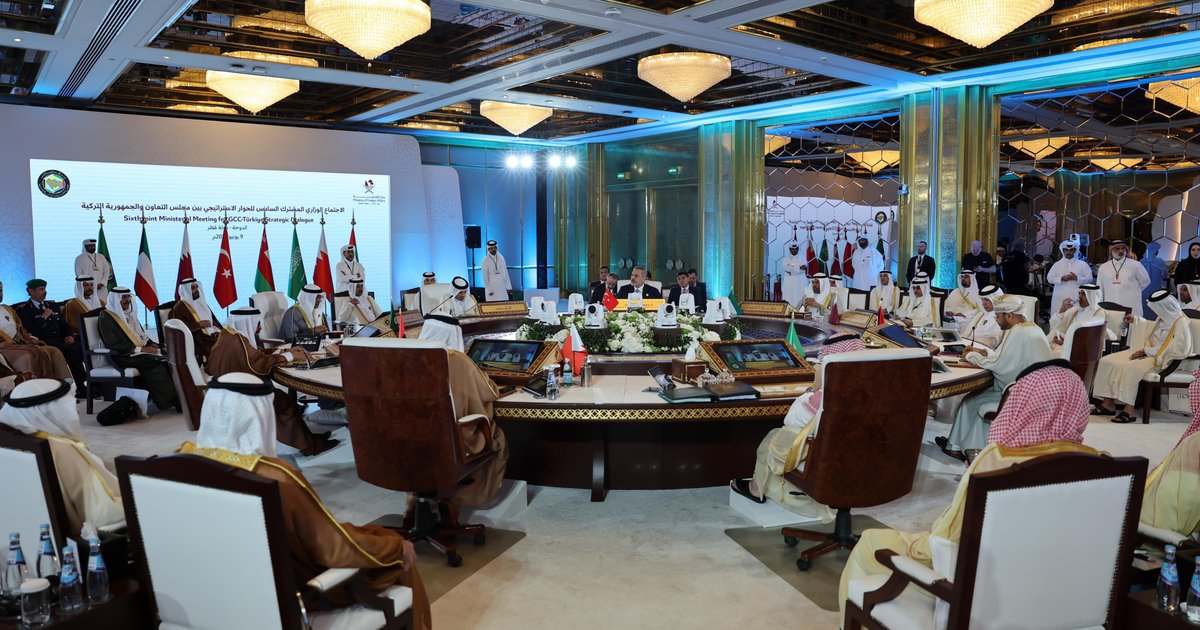
Gulf Cooperation Council (GCC) foreign ministers and Jordan held a video conference with Russian Foreign Minister Sergey Lavrov, discussing a range of regional and international issues that concern the involved parties. The meeting occurs amid various global challenges that necessitate increased international coordination.
During the meeting, the ministers emphasized the importance of enhancing cooperation between their countries and Russia, stressing the need for dialogue and understanding in addressing regional crises. They also exchanged views on the situations in the Middle East, including the crises in Syria, Yemen, and Iraq.
Details of the Meeting
The foreign ministers' meeting is part of ongoing efforts to strengthen relations between the GCC countries and Russia, where several important files were reviewed. Lavrov highlighted the significance of the strategic partnership between Russia and the Gulf states, affirming the necessity of joint action to confront security and economic challenges.
The meeting also addressed issues related to regional security, emphasizing the importance of cooperation in combating terrorism and enhancing stability in the region. The ministers discussed ways to boost economic and trade relations between their countries and Russia, contributing to sustainable development.
Background & Context
These meetings come amid significant geopolitical changes in the region, as the GCC countries seek to enhance their role in international politics. Relations with Russia have become increasingly important in recent years, especially in light of tensions with the West.
Russia, for its part, aims to expand its influence in the Middle East, viewing the Gulf states as strategic partners in various fields. This cooperation serves to achieve mutual interests for both parties and reflects a desire to build balanced relationships amid global challenges.
Impact & Consequences
The meeting reflects a shift in regional dynamics, as Gulf countries strive to diversify their strategic partnerships. Cooperation with Russia may open new horizons in energy and trade, enhancing these countries' ability to face economic challenges.
Furthermore, strengthening relations with Russia could contribute to greater stability in the region, where Russia could play a mediating role in regional conflicts. This collaboration may also lead to reduced reliance on Western powers in certain areas.
Regional Significance
The meeting has wide-ranging implications for the Arab region, reflecting the Gulf states' desire to enhance their role in regional and international politics. Cooperation with Russia could contribute to achieving a greater balance of power, potentially leading to increased stability in security situations.
This collaboration may also encourage other countries in the region to reassess their international relations, possibly resulting in changes in regional alliances. Amid ongoing crises, dialogue and cooperation become urgent necessities for achieving peace and development.
The meeting held between the foreign ministers of the GCC and Jordan with Russia represents an important step towards enhancing regional and international cooperation, reflecting new trends in the foreign policy of Gulf states.