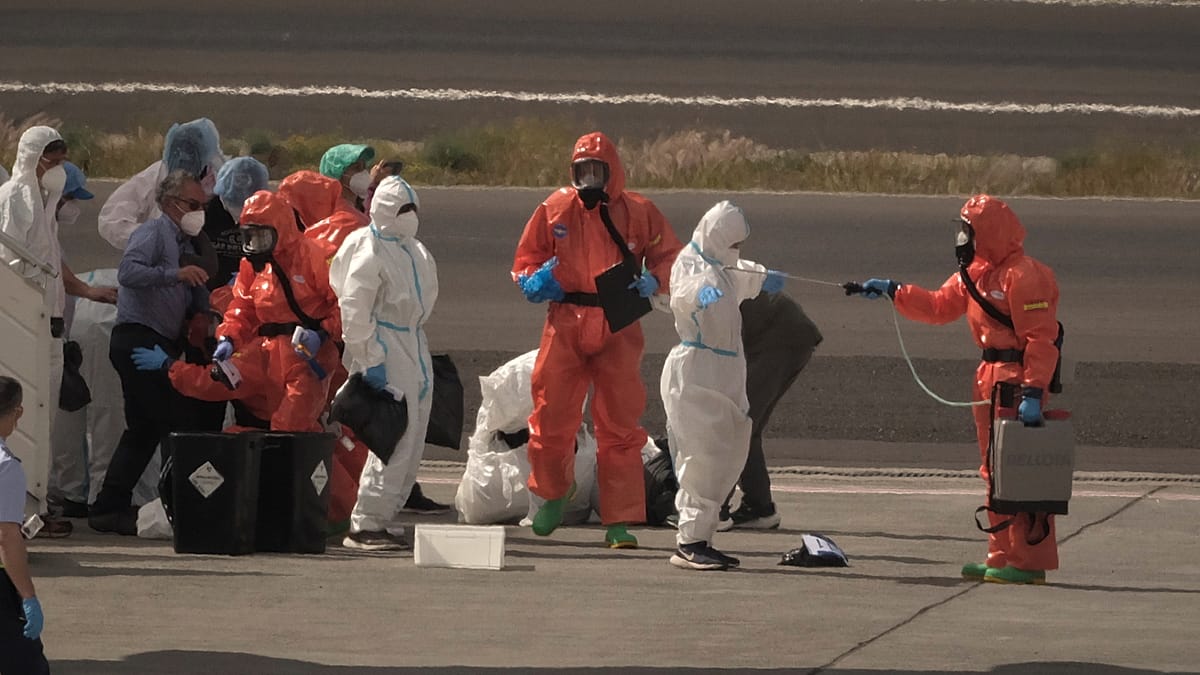
French Health Minister Stéphanie Rist announced the confirmation of a woman infected with the Hanta virus, who was evacuated from the cruise ship MV Hondius, which was docked off the coast of the Cape Verde Islands. This woman was evacuated during the operation that took place last weekend, where remaining passengers were transported back to their countries for medical examinations.
At the same time, the Spanish Ministry of Health confirmed that two suspected cases tested negative, indicating that the situation is under control. The MV Hondius arrived at the Granadilla de Abona port in Tenerife on Sunday, where passengers were sent back to their home countries.
Details of the Situation
Concerns are growing regarding the spread of the Hanta virus, as the World Health Organization confirmed six cases linked to the outbreak on board the ship. The organization warned that more infections could emerge, given that the virus's incubation period can last up to six weeks. In a press conference, WHO epidemiologist Maria Van Kerkhove explained that the Hanta virus does not spread in the same way as coronaviruses but requires close contact.
On the other hand, the United States reported a passenger showing mild symptoms and another confirmed to be infected with the Andes virus, another type of virus. Javier Badía, the Secretary of State for Health in Spain, clarified that laboratory results for American passengers were inconclusive, leading to varying assessments between Spain and the United States.
Background & Context
The Hanta virus is a group of viruses carried by rodents, primarily transmitted to humans through inhalation of airborne particles from rodent droppings. The virus can cause serious illnesses such as Hanta virus pulmonary syndrome, which affects the lungs and can lead to acute respiratory failure.
Historically, outbreaks of the Hanta virus have been recorded in various parts of the world, but this case aboard the cruise ship raises particular concerns due to the nature of mass travel and direct contact among passengers. The ship had departed from Argentina on April 1 and was scheduled to make stops in Antarctica and the Falkland Islands, but its route was altered due to the virus outbreak.
Impact & Consequences
Concerns are rising about the impact of this outbreak on tourism and travel, as many countries have begun taking precautionary measures to monitor travelers coming from affected areas. There are also calls to intensify health screenings on cruise ships, especially given the increasing number of cases.
This case serves as a reminder of the importance of preparedness in facing pandemics, as viruses like Hanta can spread rapidly in enclosed environments such as ships. Health experts have emphasized the need to raise awareness about how viruses spread and the necessary precautions.
Regional Significance
The implications of this case extend beyond immediate health concerns, affecting tourism dynamics in the region. Countries may implement stricter health regulations for incoming travelers, impacting the cruise industry significantly.
As the situation develops, ongoing monitoring and communication between health authorities will be crucial in managing the outbreak and ensuring public safety.