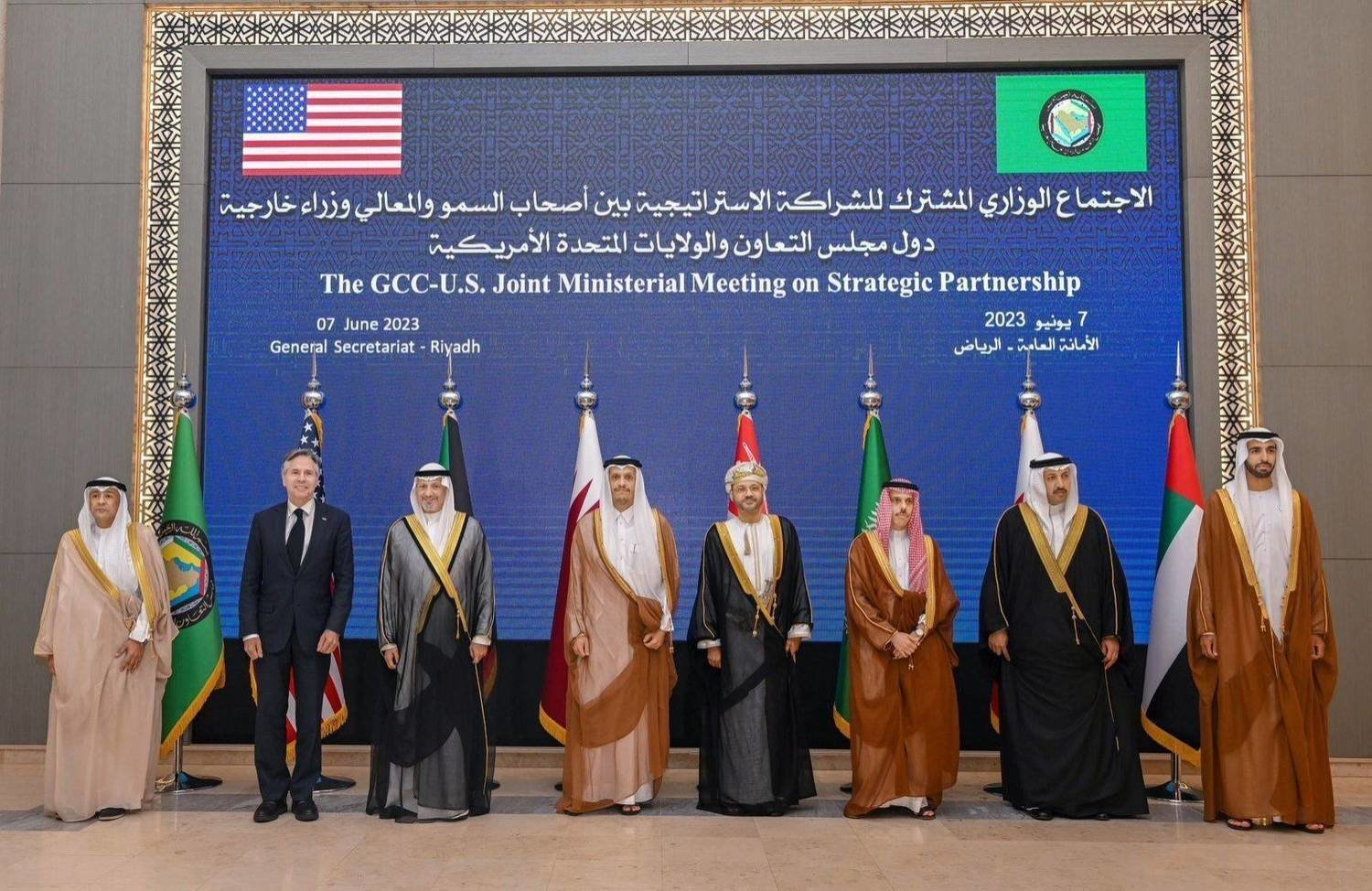
The strategic challenges facing the Gulf Cooperation Council (GCC) countries are intensifying amid the escalating military conflict between the United States and Israel on one side and Iran on the other. As a month has passed since this confrontation began, it is evident that the conflict does not follow traditional models of wars between states, but rather manifests as a multidimensional war involving non-state actors.
Iran employs a network of proxies as a strategic tool to enhance its presence in the region, complicating the security landscape. This pattern began in Lebanon, where Hezbollah is the most prominent front, and has extended to Iraq and Yemen, reflecting a qualitative shift in the structure of the conflict.
Details of the Event
In Lebanon, Hezbollah acts as Iran's military arm, enabling it to strike military targets in Israel without engaging in direct confrontation. As events escalate, armed Iraqi factions have begun targeting Gulf states from Arab territories, marking a turning point in the conflict.
This strategy exemplifies an advanced model of what is known as "plausible deniability," where Iran maintains a margin of denial regarding its direct responsibility while achieving its objectives through its proxies. This pattern of conflict reflects a transformation in how wars are managed, as sovereign borders become less significant in the face of rising non-state actors.
Context and Background
Historically, the region has witnessed multiple conflicts, but the current situation is marked by greater complexity. The war in Yemen, where the Houthis control the Bab al-Mandab Strait, adds a new dimension to the conflict. The Houthis' warnings of military intervention in the U.S.-Israeli conflict indicate the potential for an expansion of hostilities, increasing risks to maritime security.
These fronts, stretching from Lebanon to Iraq and Yemen, create an integrated threat system extending from the Mediterranean Sea to Bab al-Mandab. This expansion of fronts reflects the weaknesses of traditional security strategies, making it difficult for Gulf states to address the rising threats.
Impact and Consequences
The conflict cannot be separated from its economic dimensions, as oil prices have risen due to uncertainty in the region. While this increase may seem beneficial for Gulf states, it carries structural risks related to ensuring the continuity of export flows.
The security of maritime corridors, such as the Strait of Hormuz and Bab al-Mandab, remains under increasing pressure. Any escalation in these areas could have profound implications for oil prices and global supply chains, threatening the economic stability of Gulf states.
Significance for the Arab Region
The Gulf economies face compounded challenges as they strive to achieve their developmental goals amid escalating conflict. The depletion resulting from these confrontations may affect foreign investment flows and constrain economic growth.
History tends to repeat itself; just as in the tanker war of the 1980s, current conditions may lead to greater military escalation, threatening both regional and international security. The lessons learned from that period suggest that conflicts that begin limited rarely remain so, necessitating a reassessment of security strategies by Gulf states.