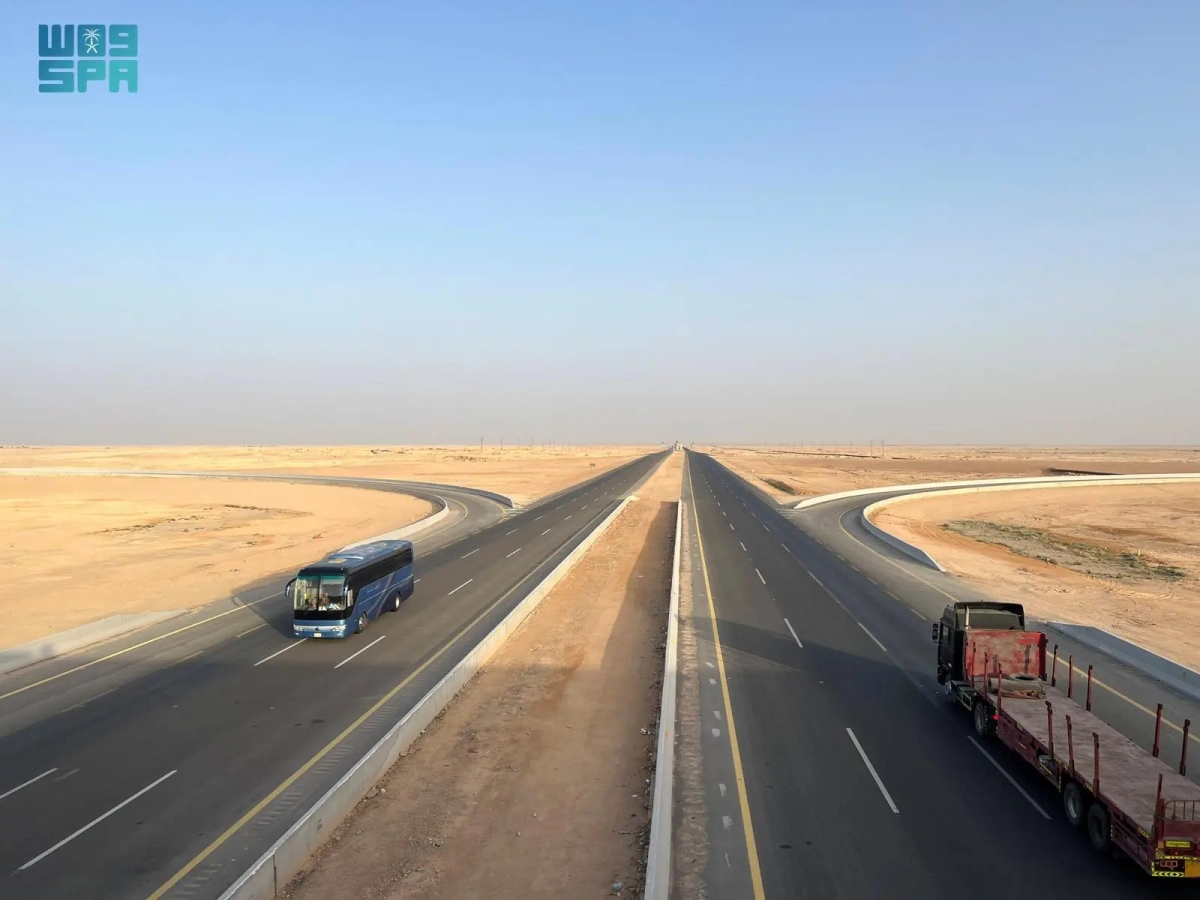
The Northern International Road begins in the capital, Riyadh, and extends through several provinces, facilitating the movement of travelers and the efficient transport of goods. Developed according to the highest standards of quality and safety, it is an essential part of the national transport and logistics strategy.
Established in 1950 as a dirt path, the road was paved in 1967 to support the Arab pipeline project. Since then, it has become a vital hub for transport and development, witnessing continuous traffic year-round, utilized by millions of travelers and commercial trucks.
Road Structure and Route Details
The road consists of dual lanes originating from Riyadh and Dammam, converging in the Al-Hafr Al-Batin province. It then heads north towards the Al-Rafha province, where a dual branch extends for approximately 300 kilometers towards Hail. The road continues northward through the provinces of Al-Owais, Arar, and Turaif, reaching the Al-Haditha port with Jordan.
This road is part of Saudi Vision 2030, which aims to enhance transport infrastructure and improve road quality.
Background & Context
Historically, the road has played a significant role in connecting remote areas with urban centers, contributing to economic and social development in the Kingdom. The plan to develop the road network in Saudi Arabia includes improving road quality and increasing traffic safety, with the General Authority for Roads aiming to reduce road accidents to less than 5 per 100,000 people by 2030.
Impact & Consequences
The Northern International Road represents a vital meeting point between Gulf countries and neighboring nations, enhancing trade and investment opportunities. It also fosters regional cooperation by facilitating the movement of goods and people, reflecting Saudi Arabia's importance as a bridge between East and West.
Regional Significance
The road's strategic location and its role in connecting various countries underscore its importance in promoting regional integration and economic collaboration. By improving transport links, it not only boosts trade but also strengthens diplomatic ties among the nations involved.
In conclusion, the Northern International Road is a cornerstone for enhancing transport infrastructure in the Kingdom, contributing to improved living standards and economic growth.